

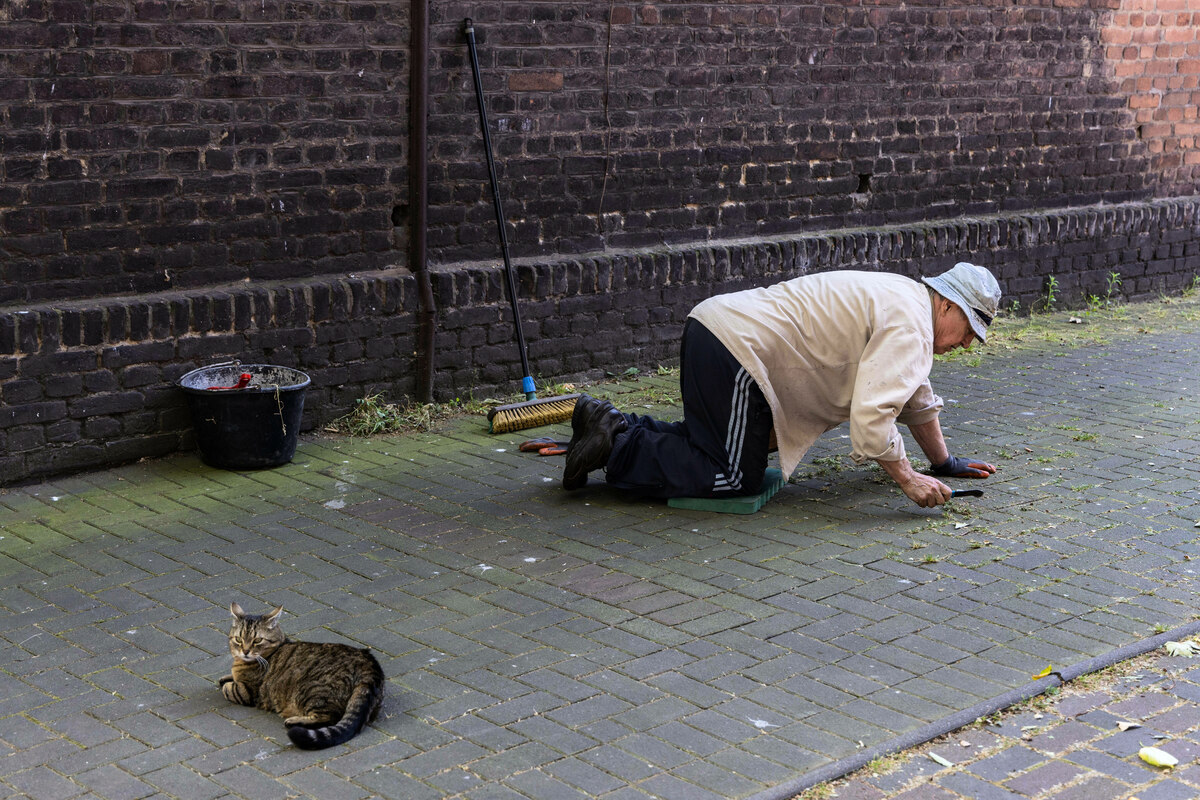
Reuters/dpa/taz | In no other member state of the European Union is the working population as old as in Germany. In 2024, of the approximately 40.9 million people in employment, a good 9.8 million were between 55 and 64 years old, as the Federal Statistical Office announced on Tuesday. This corresponds to a share of almost a quarter (24 percent) – “the highest value of all EU states,” as it was said. For comparison: on average in the EU, the proportion of this age group was 20.1 percent.
Italy has the second-highest share in the EU after Germany: there, 55 to 64-year-olds made up 23 percent of the workforce. In Bulgaria the proportion was also high at 22.3 percent. Proportionately, the fewest older workers in the EU were in Malta: only around one in nine (10.8 percent) of the island state’s workers were between 55 and 64 years old. This age group also made up a comparatively small proportion of the workforce in Luxembourg (12.8 percent) and Poland (15.2 percent).
“A central reason for the high proportion of older workers in Germany is the increasing aging of the population,” explained the statisticians. “In addition, people in this country are retiring later and later.” The average retirement age for women and men in 2024 was 64.7 years. In 2004 it was 63 years for women and 63.1 years for men.
One reason for the increase is the gradual increase in the statutory retirement age to 67 by 2029. The expiry of two early retirement pension models, some of which could be claimed at the age of 60, also plays a role, according to the information.
Merz announces fundamental reform of pension provision
The industrialized nations organization OECD sees considerable burdens on the German pension system. The working-age population will shrink over the next 40 years, according to research published at the end of 2025. “Therefore, extending working life will be crucial to financing pensions in the future,” advises the OECD. The statutory retirement age could be linked to life expectancy. At the same time, early retirement regulations should be made less attractive.
The federal government wants the pension reform approach preferentially. “By the end of the year we will have implemented the first major social reforms, and we have prioritized pensions,” said Chancellor Thorsten Frei (CDU). Daily Mirror. But not everything will be finished by December. Upcoming reforms will certainly be divided into proposals that can be implemented very quickly and others that require a little longer lead time.
Chancellor Friedrich Merz had one yesterday evening at the German Stock Exchange’s New Year’s reception in Eschborn near Frankfurt fundamental reform of pension provision announced. “The statutory pension insurance will remain. But it will only a building block of a new overall level of care “in which private pension provision and company pension provision will play a much larger role than before,” said the CDU leader. He added: “This is a paradigm shift in German pension policy, in German pension policy.”
The Green politician Andreas Audretsch accused Merz of wanting to weaken the statutory pension. “If the pension level falls, that means old-age poverty in Germany. That can’t be a solution,” he said in the RTL/ntv “Early Start”. The left-wing chairwoman Ines Schwerdtner accused Merz of further promoting social division. “Anyone who further privatizes old-age security wants to undermine the statutory pension and accepts increasing poverty in old age,” she said. Because millions of people would have no money left at the end of the month to make private provisions. She pointed out that old-age poverty in Germany has almost doubled since the pension level was lowered from 53 to 48 percent.