

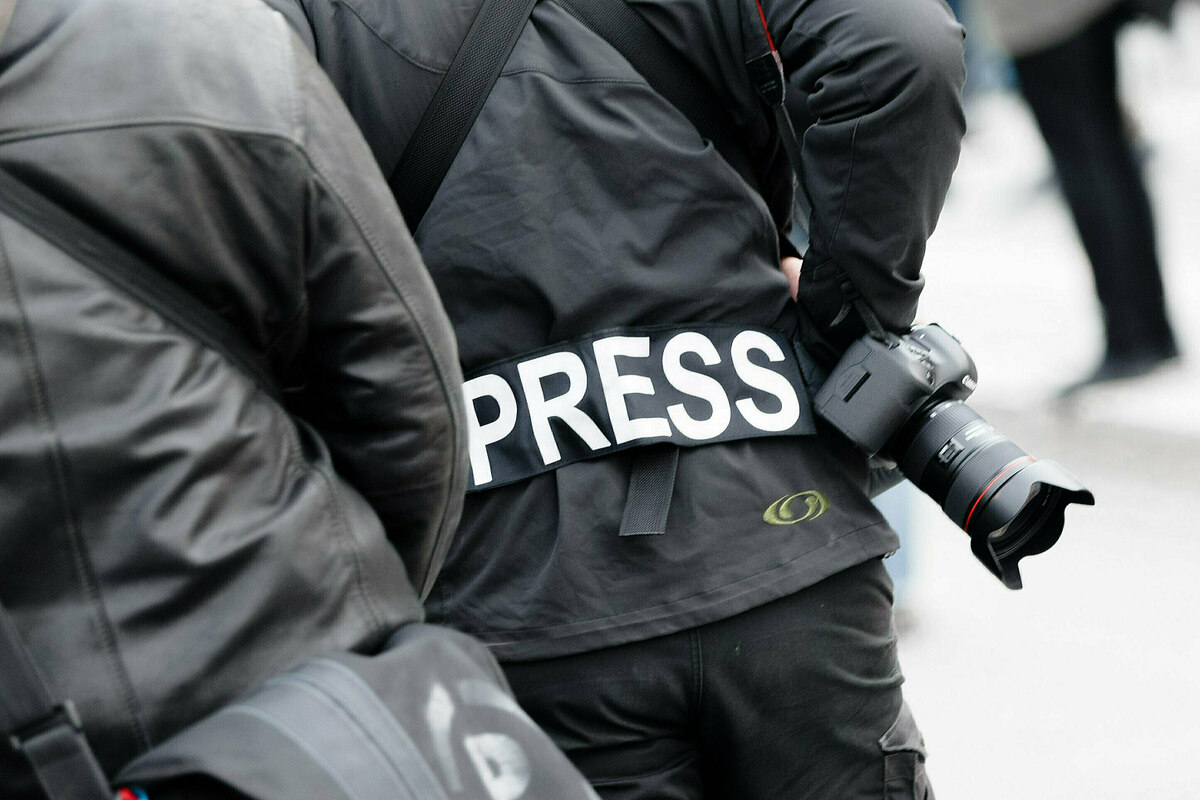
11th place out of 180. On paper, Germany is still doing comparatively well when it comes to press freedom. But this number obscures the reality of journalistic work in Germany. Especially those who report on right-wing extremist networks or follow the Middle East war are increasingly working in a climate of intimidation, targeted defamation and open rejection. Attacks come from the digital space, but also from the street.
In its current report on the situation in Germany, the organization Reporters Without Borders (RSF) describes how deeply social polarization now extends into everyday media life. Journalism is increasingly rarely perceived as a necessary part of the democratic public sphere, but rather as a political opponent – with increasing effects on the daily work of journalists.
Free journalism is coming under pressure from several directions. RSF sees threats from political actors, digital hate campaigns and new, high-reach publications that systematically spread disinformation. A look at the USA serves as a warning example: It has become clear there how political power can be used to discredit critical reporting, exclude journalists or intimidate them with lawsuits. German media professionals were also affected by this, for example through publicly demanded visa withdrawals, such as in the case of the ZDF studio manager in Washington in 2025, or stricter visa requirements. RSF sees such measures as targeted means of exerting pressure against unpleasant reporting.
RSF observes the increasing professionalization of right-wing populist and right-wing extremist media networks internationally and in Germany. A new generation of extremist online journalists are taking their cues from international role models and are increasingly influencing opinions in Germany.
Targeted misinformation
The think tank Polisphere, reports RSF, used data analysis to show how portals such as Apollo News, Nius and Compact deliberately spread false information about the alleged stance of the lawyer Frauke Brosius-Gersdorf on abortion. The campaign had concrete political consequences: Parts of the CDU/CSU faction then canceled the planned approval of their candidacy for the Federal Constitutional Court – Brosius-Gersdorf withdrew from the candidacy.
The increasingly harsh political climate is not without consequences. RSF documented a total of 55 attacks on journalists and editorial offices in 2025, and 89 in 2024. Most of the attacks occurred during research and demonstrations in right-wing extremist environments. RSF speaks of a “growing self-confidence” in the scene and “a normalization of violence” and intimidation towards media representatives.
Another central area of conflict remains reporting on the Middle East war. The extreme escalation has weakened somewhat compared to 2024, “since the issue has been increasingly addressed in editorial departments and reflected within particularly polarized communities, especially since spring 2025,” RSF press officer Katharina Weiß told the taz. Nevertheless, it is a persistent, stressful issue. Media professionals in Germany have repeatedly been publicly defamed – including by Israeli officials. A prominent example was the ARD Israel correspondent Sophie von der Tann, who was the then Israeli army spokesman Arye Shalicar described as “the face of new German hatred of Jews and Israel”.
The extent to which individual journalists are attacked in the context of Middle East reporting is also shown by the threats against taz journalist Nicholas Potter in the course of his work on Israeli perspectives and anti-Semitism: posters with his portrait and the inscription “they can be humiliated and eliminated” appeared in Berlin. In 2025, the taz reported several times about how journalists came under pressure between political fronts when reporting on the Middle East.
Rejection of large German media
RSF 2025 registered eleven attacks on media workers around demonstrations in solidarity with Palestine, ten of which were repeatedly directed against the same two reporters. RSF observes that demonstrators are increasingly rejecting major German media outlets and accusing them of complicity with Israel.
At the same time, journalists reported to RSF from what was sometimes a disproportionately harsh approach by the policefor example through expulsions or lengthy identity checks. RSF therefore advocates a renegotiation of the rules between the media and the police as well as a structured dialogue between known demo film participants and security authorities in order to avoid escalations. In some attacks, the violence could have been prevented if the police had offered such a dialogue, according to RSF.
This is also necessary because it is increasingly independent demo observers who report on demonstrations. According to RSF, they close a gap where large media companies do not report regularly. The observers have increasingly professionalized their work in the last year and made attacks by police officers visible. They expressed their desire for greater recognition to RSF and criticized racist mechanisms within the German media landscape, such as the rejection of migrant reporters.
Freelance journalists and media professionals with a Muslim, Arab or Palestinian background in particular reported that they often received little support for differentiated or critical perspectives and felt increasingly marginalized.
In 2025, media professionals also reported to RSF that there were fundamental difficulties in addressing Israel’s human rights crimes in a comparable way to other wars. Germany is still in the highest places in the international press freedom ranking. But the developments in 2025 show how fragile this position has become – and how much press freedom is under pressure here too.