

Drop Site is a reader-funded, independent news outlet. Without your support, we can’t operate. Please consider becoming a paid subscriber or making a 501(c)(3) tax-deductible donation today.
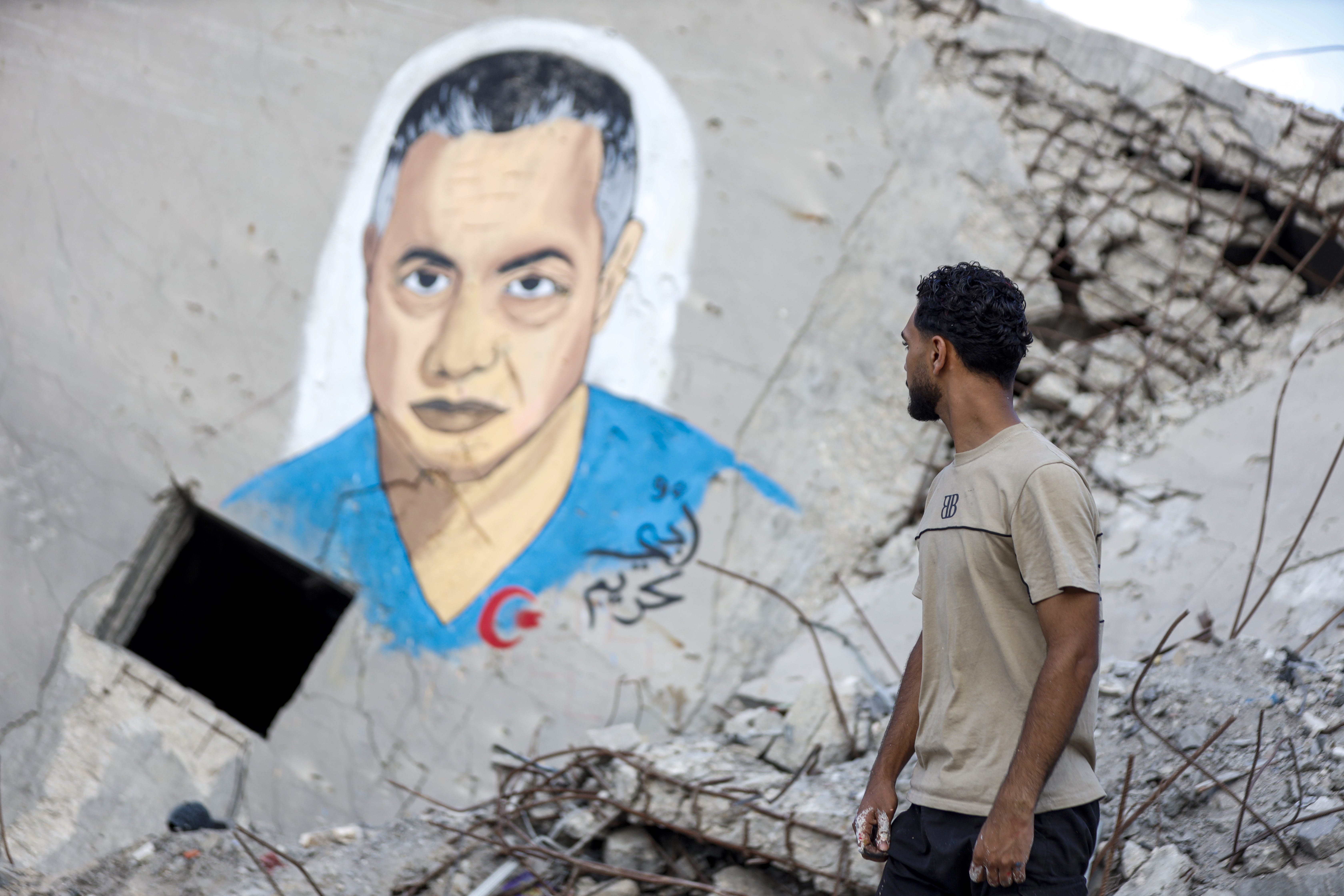
GAZA CITY—Dr. Hussam Abu Safiya, the former director of the Kamal Adwan Hospital in northern Gaza, suffered multiple injuries, including fractured ribs, after enduring severe beatings by Israeli prison authorities on July 27, according to the Palestinian Prisoners’ Media Office. The group described it as the “most difficult day” of his imprisonment since being detained without charge over a year and a half ago.
In a statement issued on Wednesday, the office said Abu Safiya, who suffers from heart disease and high blood pressure, has been subjected to “brutal torture” since June 24, when he was transferred to Rakevet—an underground detention facility within the Ramla prison complex in central Israel—including spending 21 days in solitary confinement.
Previously, Abu Safiya told his lawyer, Nasser Odeh, during a prison visit on July 2, that following an appeal filed with the Israeli Supreme Court at the end of April, the assaults and abuse against him escalated dramatically. Abu Safiya told Odeh that after a court hearing in June, where he appeared via a video link looking gaunt, several prison guards entered his cell and beat him with batons and a hammer.
Abu Safiya’s son, Elias, 27, told Drop Site News that Odeh found his father in extremely critical condition during the July 2 visit—unable to breathe normally and speaking with great difficulty, with marks of beatings and torture visible on his face and body.
According to Elias, Abu Safiya told Odeh that this might be the last time he would see him. For the family, it felt like “a farewell message from a human being who feels his life is nearing its end,” said Elias. “Since that moment, we have been living every day in genuine fear of receiving the news of his martyrdom at any moment.”
The apparent repercussions against Abu Safiya in prison following the legal challenge to his detention and similar cases involving detained medical workers have sent a chilling message to the families of Palestinian detainees—particularly doctors—that seeking justice, either through legal means or public campaigns, can have severe consequences.
As director of the Kamal Adwan Hospital, Abu Safiya gained prominence for his refusal to abandon patients as the hospital came under heavy assault by the invading Israeli military. He was detained in December 2024 when Israeli forces raided the facility, arresting him and hundreds of other healthcare workers, many of whom, like Abu Safiya, remain in Israeli prison without charge.
Abu Safiya’s family filed the Supreme Court appeal in a bid to improve his legal circumstances and prison conditions, but the opposite occurred.
“We thought we would see an improvement in his legal and health situation, but unfortunately, we witnessed a massive deterioration in his condition and an escalation in the violations he was subjected to,” said Elias.
On June 16, Israel’s Supreme Court rejected the appeal and said the state could hold him without charges based on “confidential materials” that were not shared with his lawyer. At least 14 other doctors have been held for more than a year without charges.
“Whenever we tried to resort to the law and justice to protect him, our fear increased that he would pay the price inside the prison,” Elias said. “We began to fear that demanding his rights would be a cause for further revenge and torture against him.”
Islam Abdo, spokesperson for the Prisoners and Ex-Prisoners Affairs Commission in Gaza, told Drop Site that Abu Safiya’s case has created widespread fear among families of detained medical workers, who are now are now hesitant to pursue legal or media campaigns because Israeli authorities react to public attention brought on detainees by increasing pressure inside prison.
“The case of Dr. Hussam Abu Safiya has created a state of great anxiety,” he said, particularly among families of other detained doctors and medical staff.
“The fear is that Israel uses this symbolic status to increase the suffering of the prisoners,” he said, adding that many families are even afraid to participate in solidarity protests or public statements out of concern that it will lead to more isolation, beatings, or medical neglect for their detained relatives.
When asked whether resorting to Israeli courts or international organizations poses additional risks rather than protection, Abdo replied: “Absolutely.” He described the Israeli judicial system as “a cover for practicing more repression and abuse against prisoners,” saying it has caused families to lose whatever confidence they had left in Israel’s so-called justice system.
Dr. Hassan Khalil Al-Muqayyad, a senior physician from Kamal Adwan hospital, was detained by Israeli forces in October 2024. Like most Palestinian prisoners, he was subject to physical and psychological abuse and was transferred between several prisons, including Sde Teiman, Ofer, and Negev Prison where he remains imprisoned without charge.
Al-Muqayyad’s wife, Nadia, told Drop Site she was advised by lawyers that filing a legal appeal for her husband’s release or even hiring an attorney for him could lead to repercussions. In April 2025, six months into his detention, she considered retaining a lawyer to try and secure a prison visit every two months instead of every six months but was advised against it. “We are afraid. I wanted to appoint a lawyer for him, but they told me ‘No, this could harm him,’ so I stopped, honestly,” Nadia said. “I became afraid that using [legal procedures] could actually work against him or negatively affect him.”
She continued: “Whenever there is a lawyer visit…there is harassment, torture, and oppression. Moving the prisoner from the prison to the court is suffering in itself. He is restrained, blindfolded, and the torture is present for all the prisoners.”
Another case in point is Dr. Marwan Al-Hams, who was detained by undercover Israeli forces outside a Red Cross field hospital in Rafah in July 2025 and has remained in prison without charge for more than a year. Al-Hams has been subjected to repeated, lengthy and intense interrogations lasting over 1,000 hours, his daughter Tasneem, a 24-year-old nurse, told Drop Site. Al-Hams was often severely tortured during these interrogation sessions, Tasneem said. At one point, he suffered a cardiac arrest and had to be resuscitated with a defibrillator.
Al-Hams has also suffered from psychological isolation and medical neglect inside prison, including never receiving treatment for injuries to his feet, and being denied requests for medication and an electrocardiogram, his daughter said.
Tasneem also stressed that her father is subjected to beatings before every lawyer visit and said she fears any public campaign for his release may trigger Israeli authorities. “There are genuine fears that any legal or human rights move will backfire on my father inside the prison, and many times we hesitated out of fear for his safety,” she told Drop Site.
In October 2025, less than three months after her father’s arrest, Tasneem was detained by Israeli forces on her way to work at a medical point in Al-Mawasi, Khan Younis. She said interrogators informed her that her imprisonment was intended to pressure her father.
“They sat me down with my father in the interrogation room to pressure him, and I realized that what happened to me was part of an attempt to coerce him,” she said. Tasneem was eventually released nearly six weeks later. She added that her father’s case, along with Abu Safiya’s, has deepened her conviction that Israel was engaging in systematic retaliation against families for speaking out.
“After what happened with Dr. Hussam Abu Safiya, a bitter reality materialized before us,” she continued. “The occupation respects neither medical immunity nor international law, but rather takes revenge on anyone who raises their voice. This reality has created an extremely cruel equation for us.”
Israeli forces have killed approximately 1,700 health care workers since October 2023 and arrested more than 370 others, 82 of whom remain in custody, including Dr. Hussam Abu Safiya, Dr. Marwan Al-Hams, Dr. Nahed Abu Taima, and Dr. Mohammed Obaid, along with several surgeons and specialized doctors, according to the director general of the Ministry of Health in Gaza, Dr. Munir Al-Bursh. Every hospital in Gaza has come under attack by the Israeli military and less than half are partially functioning while the rest have been closed down. The absence of these doctors has led to the suspension of vital medical services that thousands of patients rely on, Al-Bursh told Drop Site.
“In light of the complete collapse of the health sector, the absence of a doctor like my father, who managed hospitals and led the response to emergency cases, does not only mean stripping him of his freedom, but also depriving thousands of patients of his expertise at a time when they need it most,” Tasneem said. “Enough silence in the face of the targeting and arrest of medical staff. We demand that international organizations take urgent action to break the isolation imposed on imprisoned doctors and save them before it is too late.”
Al-Bursh warned that previous cases—like the death of Dr. Adnan Al-Bursh in prison in April 2024 apparently as a result of severe torture—give the health ministry clear reason to fear for the lives of the doctors still being held in detention, particularly high-profile cases like Abu Safiya.
Abu Safiya’s family said despite the risk of retaliation, they refuse to back down.
“We still believe in justice and institutions, and that every voice can make a difference. We are the rightful owners of our cause, and my father is being tortured even though he has not been charged with anything,” his son, Elias, said. “We no longer ask for anything greater than my father’s right to life.”
This article was published in collaboration with Egab.