

Friday, August 7, 2026 – Explosions heard near Qeshm. Iran deal on Hormuz with Oman nears. Iran parliament speaker Mohammed Baghar Ghalibaf slams U.S. President Donald Trump’s “theater diplomacy.” Tehran sent Gulf countries list of power plants that it could strike if U.S. attacked its infrastructure, report says. Trump says Iran war “going very well,” to end “pretty soon.” Iranian President Masoud Pezeshkian discusses effects of war, leadership of country. Mossad fires two senior officials over Iran war failure. White House tells Emiratis to silence Iran war critic. Traffic through Hormuz drops sharply. Ansarallah clashes with Saudi-backed government in Marib and Hadramout. Traffic increases through Bab Al-Mandab. UNICEF reports one Palestinian child killed every day in Gaza since “ceasefire.” Israeli forces withdraw from Qalandia as attacks continue across occupied West Bank. Number of Palestinian children held in Israeli prisons without charge sharply rises. Lebanese soldier wounded, water station set ablaze in Israeli attacks on southern Lebanon. U.S. says Hezbollah did not violate ceasefire in Majdal Zoun. Trump issues new executive orders targeting birthright citizenship. U.S. economy shed 23,000 jobs in July. Trump says he’ll keep Todd Blanche as acting attorney general if Senate confirmation fails. ICE will release body camera footage only when in “agency’s best interests.” Democratic National Committee autopsy author says Gaza war hurt Kamala Harris in 2024. University of Minnesota to pay pro-Palestine professor after nixing job offer. Turkey, Saudi Arabia, and Pakistan sign defense deal. U.S. intelligence claims Russia could test NATO with limited attack. Bombing near Damascus wounds 14. Former Mexican governor arrested for evidence destruction in missing students case. Uganda’s parliament approves potential military deployment to Gaza. Attack on former Bangladesh cricketer Shakib Al Hasan’s home follows his appearance alongside exiled Prime Minister Sheikh Hasina. Secretary of State Marco Rubio announces new sanctions on Cuba. Iraqi resistance leader urges pause to operations against Saudi Arabia. Pro-Palestine protester acquitted in UK court.
Iran
-
Explosions heard near Qeshm: Two explosions were heard on Qeshm Island on Thursday, Iran’s Tasnim News Agency reported, and were reportedly caused by Iranian forces engaging with “hostile enemy targets” near the entry to the Strait of Hormuz.
-
Iran deal on Hormuz with Oman nears: Hassan Ghashghavi, a spokesperson for the National Security Commission and an MP, said on Friday that a “framework of understanding” with Oman regarding the Strait had been agreed upon. “The general framework of the understanding with Oman has been determined, and the final text and details will be announced soon,” Ghashghavi told the official IRNA news agency, noting that the “final decision” would be made at “higher levels.”
-
A senior Iranian official told Drop Site’s Jeremy Scahill that Iran and Oman have finalized technical talks and agreed on temporary rules for the “security, supervisory, and economic management” of the Strait of Hormuz, following several rounds of negotiations.
-
The official said Iran’s implementation of the agreement remains conditional on the “full and tangible return” of the United States to the temporary ceasefire understanding, stressing that merely suspending the naval blockade would not be sufficient.
-
-
Iran parliament speaker slams Trump’s “theater diplomacy”: Iranian Parliament Speaker Mohammad and lead negotiator Mohamed Bagher Ghalibaf criticized President Donald Trump’s repeated shifts between threatening a major attack on Iran and announcing negotiations, calling it “theater diplomacy on loop.”
-
Ghalibaf said, in a post on X, that using “bullying + broken promises + fake news as leverage” was a failed strategy and urged Washington to “acknowledge the facts and fulfill your commitments,” adding: “We don’t need more theater.”
-
-
Tehran sent Gulf countries list of power plants that it could strike if U.S. attacked its infrastructure, report says: Iran sent Gulf mediators a detailed list of power plants and desalination facilities it could strike if the U.S. attacked Iranian energy infrastructure earlier this week, the AFP reported on Thursday, threatening to “black out the Gulf, country by country” in response to Washington’s potential attacks. Saudi Arabia, Qatar and the UAE subsequently urged Trump not to launch the planned strikes, according to the agency.
-
Trump says Iran war “going very well,” to end “pretty soon”: In a post on Truth Social on Thursday, Trump claimed that the war on Iran was going “very well,” adding that the country was “decimated.” He also said he was “extremely happy” with War Secretary Pete Hegseth, who he reportedly confronted during a Cabinet meeting last week about low munitions supplies. “Everything has been extraordinary.”
-
While taking questions in the Oval Office from reporters, U.S. President Donald Trump said that the war on Iran would end “pretty soon,” speculating that the Iranian government could not “go much longer.”
-
Trump also asserted that the Strait of Hormuz remained “sort of open” right now, despite acknowledging the previous day that Iran maintained its ability to threaten shipping through the waterway with its naval power.
-
-
Pezeshkian discusses effects of war, leadership of country: Iranian President Masoud Pezeshkian said in an interview with Iran’s IRNA news service that attacks on the country’s power infrastructure caused “a daily shortage of approximately 230 million cubic metres of gas,” and that the U.S. exerted “maximum pressure” on Iran, “expecting the country to collapse.”
-
He also discussed his relationship with Supreme Leader Mojtaba Khamenei, saying that communication with Khamenei, who has not appeared publicly since his appointment in March, is currently “very difficult,” but calling him a “major asset” in allowing Iran to continue its successful defense of the country.
-
-
Mossad fires two senior officials over Iran war failure: Israel’s Mossad chief, Roman Gofman, fired two of the spy agency’s top officials over a failed plan to topple Iran’s government, Israel’s Channel 12 and Haaretz reported on Thursday.
-
One of the officials had served as the head of Mossad’s intelligence directorate since September, and the other was the head of the agency’s Iran division.
-
The two drafted the written plan to remove Iran’s leadership by mobilizing the country’s minority groups to rebel and whip up mass protests to oust the government.
-
-
White House tells Emiratis to silence Iran war critic: The White House has reportedly told the government of the United Arab Emirates to “shut down” Amjad Taha, a political strategist and journalist with ties to the government and a staunch advocate of Israel and the Abraham Accords, whose criticism of the U.S.’s war in Iran has “irked” Trump and his allies, according to a report from the Washington Times on Thursday.
-
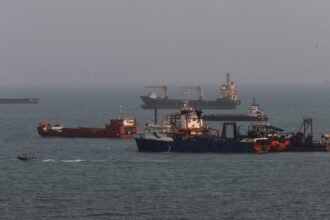
Traffic through Hormuz drops sharply: Traffic through the Strait of Hormuz dropped to 33 vessels between Monday and Thursday, down from 50 the previous week, according to data published by the maritime tracking firm Kpler on Friday.
-
Citing data from ship-tracking company Kpler, Reuters said that only four vessels transited the strait on Thursday, including the very large crude carrier Nissos Kea, which was carrying about two million barrels of crude oil from Iraq.
-
Several Chinese and Indian refiners have unsuccessfully sought vessels this week to enter the Strait and load crude at Iraq’s Basrah Oil Terminal, following steep discounts offered by Iraq’s state oil marketer.
-
Yemen
-
Ansarallah clashes with Saudi-backed government in Marib and Hadramout: Saudi-backed Yemeni forces reported that Ansarallah missile and drone attacks on the Yemeni provinces of Marib and Hadramout on Thursday killed at least 18 of its soldiers, with other reports putting the death toll as high as 58.
-
The health minister of the Saudi-backed government later announced that a second round of attacks on Friday had killed two civilians and wounded 14 others.
-
An Ansarallah political bureau member described Thursday’s operations as a “preemptive” response to alleged plans by Saudi forces to attack Sana’a. Ansarallah’s Supreme Political Council claimed Saudi Arabia had been preparing a ground invasion to create internal chaos and prevent an end to the country’s “12-year siege,” according to Tasnim.
-
The Saudi-backed government said that its army had shot down multiple Ansarallah drones launched towards Marib on Friday, with several explosions reported.
-
In the southwestern Saudi city of Najran, the Saudi-led coalition said projectiles launched by Ansarallah wounded 11 civilians, seven of whom were Saudi nationals and one of whom was a 4-year-old child.
-
-
Traffic increases through Bab Al-Mandab: 26 vessels transited the Bab Al-Mandab Strait on Thursday, up from 19 the previous day, according to Kpler data.
Palestine
-
UNICEF reports one Palestinian child killed every day in Gaza since “ceasefire”: “At least 300 children have been killed in Gaza in the 300 days since a ‘ceasefire’ went into effect on October 10, 2025, UNICEF said in a statement on Thursday. “A ceasefire that leaves an average of one child dead each and every day is failing children,” UNICEF’s Regional Director for the Middle East and North Africa, Edouard Beigbeder, said. “With hundreds more children injured, many severely, children in Gaza are still waiting for the end to the violence they were promised.”
-
Israeli forces withdraw from Qalandia as attacks continue across occupied West Bank:
-
Qalandia: Israeli forces withdrew from Qalandia refugee camp and Kafr Aqab in Jerusalem late Thursday after a two-day military raid that left 51 Palestinians injured and more than 60 detained or subjected to field interrogation, including women and children, according to the Jerusalem Governorate. Israeli troops also demolished seven shops and a car wash, damaged dozens of homes and businesses, and converted homes into military posts. Families also reported money and gold jewelry stolen during raids.
-
Jenin: Israeli forces shot and wounded two Palestinians in Jenin on Thursday, including a 14-year-old, who soldiers shot in the lower back, according to WAFA. The Israeli military closed off a roundabout, detained a group of young Palestinian men, and raided multiple shops. The military also issued a series of new orders targeting land in several towns in Jenin on Thursday, including orders to uproot trees and seize more land in the town of Marka.
-
Ramallah: Israeli settlers attacked a Bedouin community near the town of Taybeh on Thursday, injuring three people from a single family, one international activist, and arresting a Palestinian, WAFA reported. In another attack on Thursday evening, Israeli forces beat and fired stun grenades at an 80-year-old Palestinian-American man near Turmus Ayya. He sustained cuts and bruises from the attack.
-
Sen. Chris Van Hollen demanded on Thursday that U.S. Ambassador to Israel Mike Huckabee resign, pointing to the attack, following reporting from Zeteo that the man who was attacked is an American citizen.
-
-
Tubas: Israeli forces stormed the city of Tamman, near Tubas, early Friday morning, raiding the town and ransacking a house, according to WAFA. On Thursday, Israeli forces released the body of a 28-year-old Palestinian who had been shot in Tubas in April, and whose body had been withheld from his family since.
-
Drop Site’s Mohamed Awad interviewed residents from Tuba in Masafer Yatta, who were attacked by Israeli settlers on Wednesday. “They smashed and burned everything,” one resident said, describing the attack that wounded five Palestinians, including a child whose nose was broken, and burned at least four homes.. “They left nothing untouched.” Watch Mohamed’s video dispatches here and here.
-
-
Hamas urges mediators to prevent Israel from derailing Gaza agreement: Hamas called on mediators and the U.S. administration on Thursday, asking them to intervene to prevent Israel from derailing the Gaza agreement, saying continued Israeli violations threaten implementation of its second phase.
-
The movement said Palestinian factions have engaged “positively and responsibly” with efforts to complete the agreement and presented their position on the roadmap “in a national spirit” that clears the way for implementing Phase 2.
-
-
Number of Palestinian children held in Israeli prisons without charge sharply rises: At least 191 Palestinian children are being held in “administrative detention” in Israeli prisons in March 2026, according to data from the organization Parents Against Child Detention, up from 103 in January of 2025, the Times of Israel reported on Friday..
-
Palestinians in administrative detention can be held indefinitely and without trial, are not informed of the allegations against them, and evidence presented against them in court is routinely classified and withheld from the accused and their attorneys.
-
Lebanon
-
Lebanese soldier wounded, water station set ablaze in Israeli attacks on southern Lebanon: Israeli forces carried out a series of attacks across southern Lebanon on Friday, continuing near-daily violations despite the U.S.-backed ceasefire.
-
An Israeli drone carried out an airstrike on Al-Mansouri, south of Tyre (Sour) district, according to Lebanon’s National News Agency.
-
A Lebanese soldier was wounded when an Israeli attack targeted an army bulldozer in Al-Mansouri while it was clearing roads and removing rubble, according to the Lebanese Army.
-
Israeli artillery shelled Meiss Al-Jabal, in Marjayoun district, while Israeli forces simultaneously fired machine guns toward the town, NNA reported.
-
Israeli forces set fire Friday to the Shaqra water station in the Bint Jbeil district.
-
-
U.S. says Hezbollah did not violate ceasefire in Majdal Zoun: Washington informed Israel that Hezbollah did not violate the ceasefire in Thursday’s incident in Majdal Zoun, in which an IED explosion killed two Israeli soldiers and wounded several others, an Israeli security source told Israel’s public broadcaster, as reported by Al Jazeera.
-
Israeli assessments also indicate that the explosive device in Majdal Zoun was planted before the ceasefire took effect, according to the broadcaster.
-
The comments come as U.S. State Department spokesperson Tommy Pigott told Sky News Arabia the Rome talks between Lebanon and Israel were “effective and positive,” saying progress was made on several technical issues.
-
U.S. News
-
Trump issues more executive orders attempting to rewrite birthright citizenship law: President Donald Trump signed two executive orders Thursday seeking to deny birthright citizenship to children born to certain foreign diplomatic staff, alleged “alien enemies” including those tied to designated terrorist groups, mothers who deceptively enter the U.S. for commercial “birth tourism,” and, contingent on future congressional action, people born in U.S. territories such as Puerto Rico, according to Axios.
-
A second order directs the secretaries of state and homeland security to issue rules targeting the “birth tourism” industry both domestically and abroad.
-
The move marks Trump’s second attempt to curb birthright citizenship after the Supreme Court struck down his broader executive order on June 30.
-
Legal experts expect the new orders to face 14th Amendment challenges.
-
-
U.S. economy shed 23,000 jobs in July: The U.S. economy lost a seasonally adjusted 23,000 jobs in July, according to a Bureau of Labor Statistics report released Friday.
-
The figure is well below the Dow Jones consensus forecast, which had anticipated a gain of 83,000.
-
The unemployment rate slipped to 4.1%, while the labor force participation fell to 61.4%, its lowest level in more than five years.
-
-
Trump says he’ll keep Blanche as acting AG if confirmation fails: President Donald Trump said he would keep Todd Blanche as acting attorney general if his Senate confirmation fails, telling Punchbowl News, “We’ll try it again,” as Blanche’s path narrowed following Alaska Sen. Lisa Murkowski’s decision to join Maine Sen. Susan Collins in opposing him. Murkowski cited the Justice Department’s handling of Jeffrey Epstein-related files, sweeping immunity promised to Trump and his family, and statements to anti-abortion groups as reasons for her opposition, saying, “I simply do not have confidence” Blanche would check “the worst impulses of this administration.”
-
ICE will only release body camera footage when in “agency’s best interests”: Immigration and Customs Enforcement, which plans to equip all field officers with body cameras by the end of September, has adopted a policy that allows release of footage from shootings or serious confrontations only when the agency’s director determines it is “in the best interests of the agency,” according to an Associated Press investigation.
-
ICE officers shot two men in Houston and Maine last month, and neither incident was recorded, despite the $20 million Congress previously allocated to ICE for body camera equipment in an April spending bill.
-
ICE spent $30.9 million in July purchasing camera equipment from Axon, one day after the killing in Maine.
-
-
DNC autopsy author says Gaza war hurt Harris: Paul Rivera, author of the Democratic National Committee’s 2024 election autopsy, confirmed to Axios that he concluded the Gaza war hurt Kamala Harris politically, particularly costing her votes in Michigan communities with large Arab American populations such as Dearborn.
-
Rivera said he privately shared the assessment with a pro-Palestinian group, the IMEU project, but did not include it in the autopsy’s final draft.
-
-
University of Minnesota to pay pro-Palestine professor after nixing job offer: The University of Minnesota will pay Israeli-American Holocaust scholar Raz Segal $250,000 after withdrawing an offer to lead its Center for Holocaust and Genocide Studies following backlash over his description of Israel’s assault on Gaza as “a textbook case of genocide,” the Guardian reported on Thursday.
📥 Have a tip on Capitol Hill? Email DC Correspondent Julian Andreone at Julian@dropsitenews.com
Other International News
-
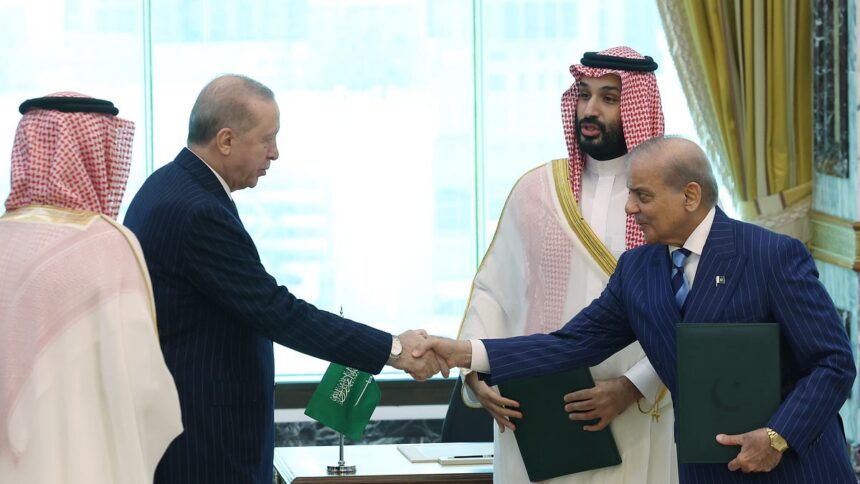
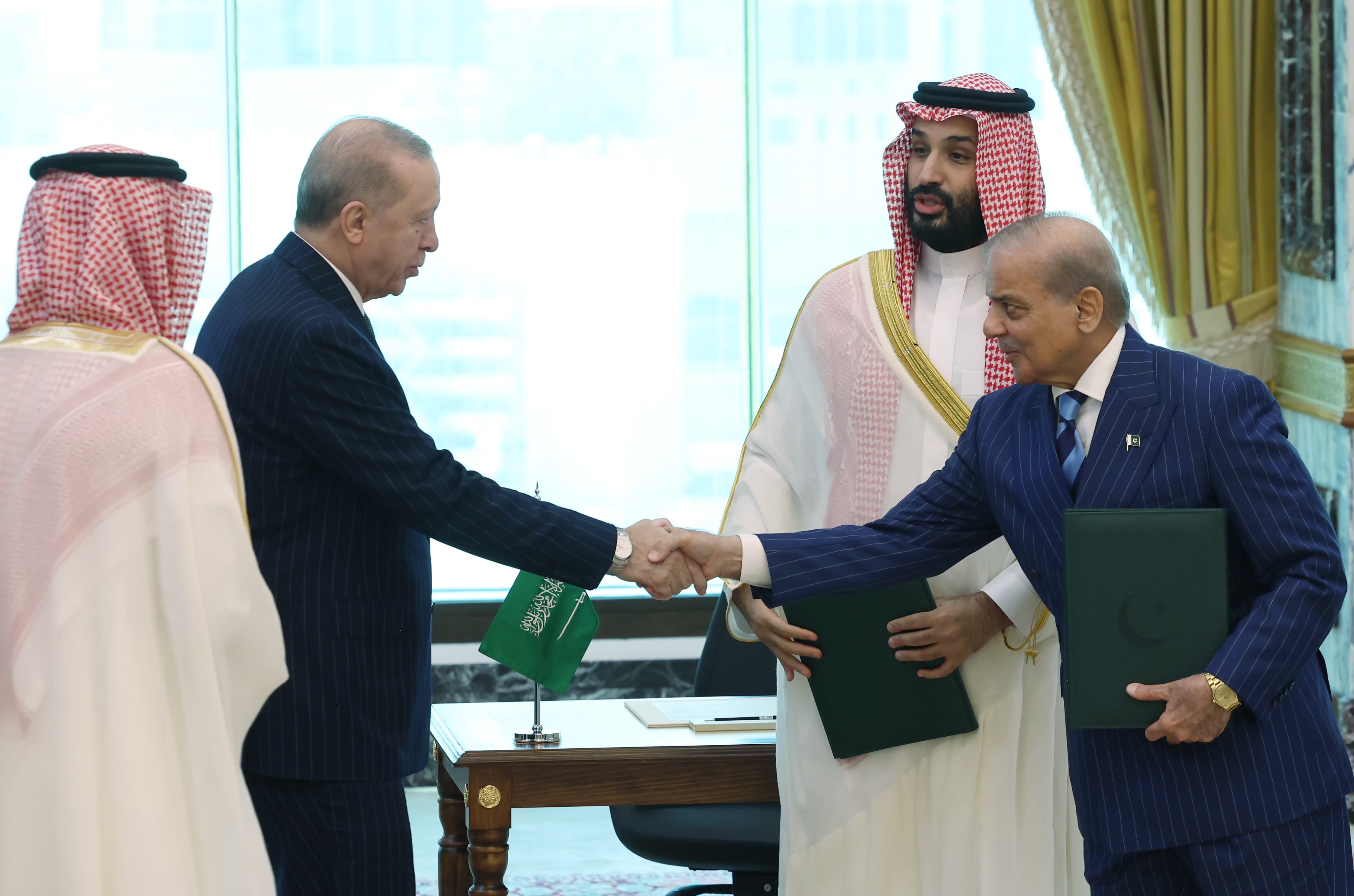
Turkey, Saudi Arabia, and Pakistan sign defense deal: Turkey, Saudi Arabia, and Pakistan signed a trilateral defense agreement in Saudi Arabia on Friday, aiming to “promote peace, security, and stability in the region and beyond,” according to a statement announcing the deal from Pakistan’s Foreign Ministry.
-
The agreement “stipulates that any armed attack against any one of the three states shall be regarded as an attack against them all,” according to the FM statement.
-
A Turkish official told the NYT that the deal only covered mutual defense, and is “not directed against any other country.”
-
-
U.S. intelligence claims Russia could test NATO with limited attack: New U.S. intelligence assessments reportedly warn that Russian President Vladimir Putin could attempt to fracture NATO by launching a calibrated attack on an allied country between this fall and 2029.
-
Possible scenarios in the assessments range from a cyberattack or deployment of unmarked armed groups to a limited incursion along NATO’s eastern flank, with a full land assault the least likely scenario.
-
The assessment comes amid increasing incidents in which Russian missiles and drones have struck or flown over NATO countries in what U.S. and European officials have described as probes of NATO’s willingness to respond.
-
-
Bombing near Damascus wounds 14: An explosive device planted on a minibus wounded 14 people Thursday night in Jaramana, a predominantly Druze suburb of Damascus, according to Syrian officials.
-
Authorities initially reported two fatalities after finding what appeared to be body parts at the scene, but the Health Ministry later said they belonged to people who had been severely wounded. Some of the victims remain in serious condition, including the minibus driver.
-
Authorities have not attributed responsibility for the bombing. Jaramana has experienced clashes between Druze residents and Islamist militants aligned with Syria’s new authorities since the 2024 overthrow of Bashar al-Assad.
-
-
Former Guerrero governor arrested for evidence destruction in missing students case: Angel Aguirre, a former governor of Mexico’s southern Guerrero state, was arrested on charges of obstruction of justice and forced disappearance for allegedly ordering the destruction of evidence that could have shed light on the whereabouts of 43 students who disappeared in 2014, Mexican Attorney General Ernestina Godoy announced Thursday.
-
Godoy said new testimony from two witnesses helped establish that Aguirre may have ordered the destruction of security camera footage during a meeting with senior officials the night of the students’ disappearance.
-
International probes have determined the students, who were on their way to a protest in Mexico City, were killed by organized crime members working with police.
-
-
Pakistan expands press restrictions to cover Pakistani nationals working for foreign media: Pakistan announced new restrictions on journalists on Sunday, imposing routine movement controls on Pakistani nationals working for foreign media outlets for the first time.
-
Journalists now require government permission to travel and report outside Islamabad, Lahore, and Karachi.
-
The guidelines, whose motivation officials have not explained, come amid protests over recent multi-round elections in Pakistan-administered Kashmir and widening insurgencies in the country’s western provinces.
-
The country also ordered foreign outlets without reporting permits to immediately leave Pakistan-administered Kashmir. on Monday.
-
Human Rights Watch called the curbs “an alarming step” in Pakistan’s “narrowing space for press freedom.”
-
-
Uganda’s parliament approves potential military deployment to Gaza: Uganda’s parliament voted Thursday to approve deploying its military to the Gaza Strip if needed as part of a proposed multinational security force under President Donald Trump’s ceasefire plan, Reuters reported.
-
Defense Minister Kiryowa Kiwanuka told lawmakers before the vote that Trump had contacted Ugandan President Yoweri Museveni through emissaries in July seeking Kampala’s participation.
-
The move marks the first public acknowledgment by Uganda, which has peacekeeping contingents in Somalia, South Sudan, and the Democratic Republic of Congo, that it might join the International Stabilization Force envisioned under Trump’s plan.
-
-
Attack on former Bangladesh cricketer Shakib Al Hasan’s home follows his appearance alongside Hasina: A group attacked and set fire to former Bangladesh cricket captain Shakib Al Hasan’s ancestral home in Magura town Wednesday, hours after he joined ousted Prime Minister Sheikh Hasina’s first public media event since her 2024 removal, Al Jazeera reported.
-
During the virtual event, held on the second anniversary of her ouster, Hasina, who has been sentenced to death in absentia by Bangladesh’s war crimes tribunal, said she would return to the country in December despite the risk of imprisonment or death.
-
Shakib, a former Awami League lawmaker who has remained abroad since the uprising that toppled Hasina’s government, faces multiple investigations over allegations of murder and money laundering.
-
-
Rubio announces new sanctions on Cuba: Secretary of State Marco Rubio announced new sanctions on Thursday against five Cuban companies and eight individuals, including Defense Minister Alvaro Lopez Miera and Chief of the General Staff Roberto Legra Sotolongo.
-
The sanctions target firms including Tecnoimport, which the State Department says imports Russian and Chinese military equipment for Cuba’s armed forces, and Union de Industria Militar, a weapons manufacturer.
-
-
Iraqi resistance leader urges pause to operations against Saudi Arabia: Hadi al-Amiri, head of the Iraqi Badr Organization, part of the Popular Mobilisation Forces (PMF), urged Iraqi resistance groups on Friday to postpone retaliatory operations against Saudi Arabia in a video address carried by Iraqi media.
-
He called groups to overlook “American-Saudi” aggression for the “sake of Iraq’s highest interest.”
-
The U.S. and Saudi Arabia attacked the PMF headquarters in Iraq on July 29, killing more than 20 people and wounding at least 30 others.
-
-
Pro-Palestine protester acquitted in UK court: Paula Akpan, one of the 10 British pro-Palestine protesters charged with criminal damage for spraying red paint across the entrances of Scotiabank in June 2024, was found not guilty in court on Thursday.
-
At the time of the protest, the bank was the largest foreign shareholder in Elbit Systems, holding a $500 million stake in Israel’s leading weapons manufacturer, whose military hardware has been used to kill and injure Palestinian civilians.
-
Seven of Akpan’s codefendants have been acquitted.
-

🛒 SHOP for your Drop News/Not Bombs Hoodie
💬 JOIN our Whatsapp Broadcast Channel for the latest reporting, podcasts, and breaking news, delivered directly
⚠️ TOO MANY EMAILS? You can go to your account settings to unsubscribe from the Drop Site Daily newsletter—while still getting the rest of our reporting