

The news sounds great at first: According to figures from the Hamburg transport authority, Hamburg residents are cycling more. In 2025, the number of trips increased by four percent, while the number of car trips decreased. If you go back further into the comparative years, the development becomes even clearer. However, the numbers have been stagnating since 2020.
Increasing cycling traffic should help to decarbonise transport and thus dampen the greenhouse effect. In 2023, 28 percent of Hamburg’s carbon dioxide (CO2-)Emissions from the transport sector, such as the recent one Status report from the Hamburg Climate Advisory Board can be seen. The rest comes from private households, trade and industry – with transport producing the most CO of all sectors2 blows into the air.
Nevertheless, the traffic reduction targets of 54 percent by 2030 are comparatively modest compared to 1990. The other sectors are expected to reduce their emissions by 70 to 80 percent by 2030. To date, transport has reduced its emissions by 38 percent, significantly less than industry (49 percent), commerce (46) and households (39).
The fact that this was possible at all is due not least to a change in the modal split, i.e. the distribution of journeys across the different modes of transport: walking, cycling, buses and trains, and private motorized transport. The proportion of journeys made by car, motorcycle or truck has fallen from 39 to 29 percent since 2008. By 2030 it should be reduced to 20 percent.
More and more pedestrians
In 2023, Hamburg residents made 32 percent of their journeys on foot, 23 percent by public transport and 16 percent by bicycle. Compared to 2008, when the share of cycling traffic was 13 percent, the growth appears particularly impressive. According to the transport authority, the increase in 2025 was around 32 percent compared to the pre-Corona year 2019 and even 118 percent compared to the year 2000.
Motor vehicle traffic, on the other hand, has decreased by 12 percent since 2019 and by 19 percent since 2000. In 2025, the number of cars registered in Hamburg fell by 3,000, even though the population continued to grow.
However, the growth in cycling traffic obscures the fact that cycling traffic numbers have stagnated since their peak. In 2023 and 2024 they even fell. The peak in 2020 is likely to be due to the Corona crisis, as the Climate Advisory Board states. But compared to the Senate’s goal, it is not enough to maintain this level. He wants to do it by 2030 Senate achieve a cycling share of 25 to 30 percent.
One way to do this is Expansion and new construction of cycling facilities. According to the transport authority, a total of 343 kilometers of cycle paths were newly built or renovated in Hamburg from 2020 to 2025. However, at just 50 kilometers, there was less construction last year than ever since 2020.
The basic trend is that people are discovering cycling for themselves.
Dirk Lau, spokesman for ADFC Hamburg
While the transport authority explains this with the usual fluctuations, for example due to the weather, the Left and the General German Bicycle Club (ADFC) suspect that it could be due to the parking moratorium that Mayor Peter Tschentscher (SPD) announced during the last election campaign. All planning involves checking whether parking spaces can be eliminated or not.
Hamburg’s ADFC press spokesman Dirk Lau doesn’t see the situation all that pessimistically. “The basic trend is that people are discovering cycling for themselves,” he says. Now it is important to support this through an active transport policy. Unfortunately, the transport authority, led by the Green Senator Anjes Tjarks, is being slowed down by the Interior and Lower Road Traffic Authorities as well as by the coalition partner SPD.
It is also important to make cycling attractive and safe for everyone, which could often be achieved through complex construction such as elevated cycle paths but also through simple administrative acts such as designating a cycle route.
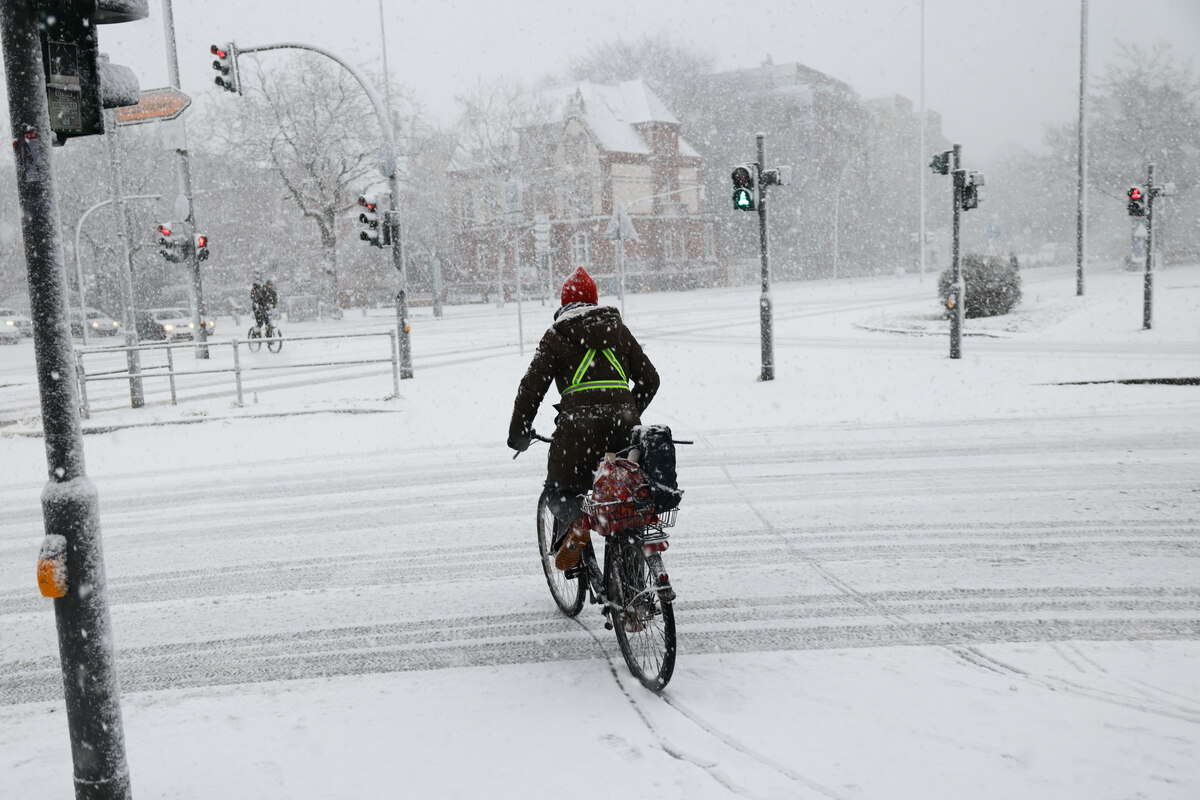
In Laus’s eyes, it didn’t work out so well promised winter service on the most important cycle paths. These were partially cleared, but not consistently, and there were repeated interruptions due to mud or sheets of ice. “This is still not a priority,” says Lau. To do this, the roadways would be cleared, although the cars could usually fight their way through on their own.