

Settling Into The Summer Uniform
We are at the point in summer where the uniform is starting to settle in, for better or worse. The things that feel easy solidify their places at the top of the drawers or the front of the closet and I get less stressed about the weather (for dressing purposes, I’m extremely scared of the extreme weather, don’t get me wrong!)
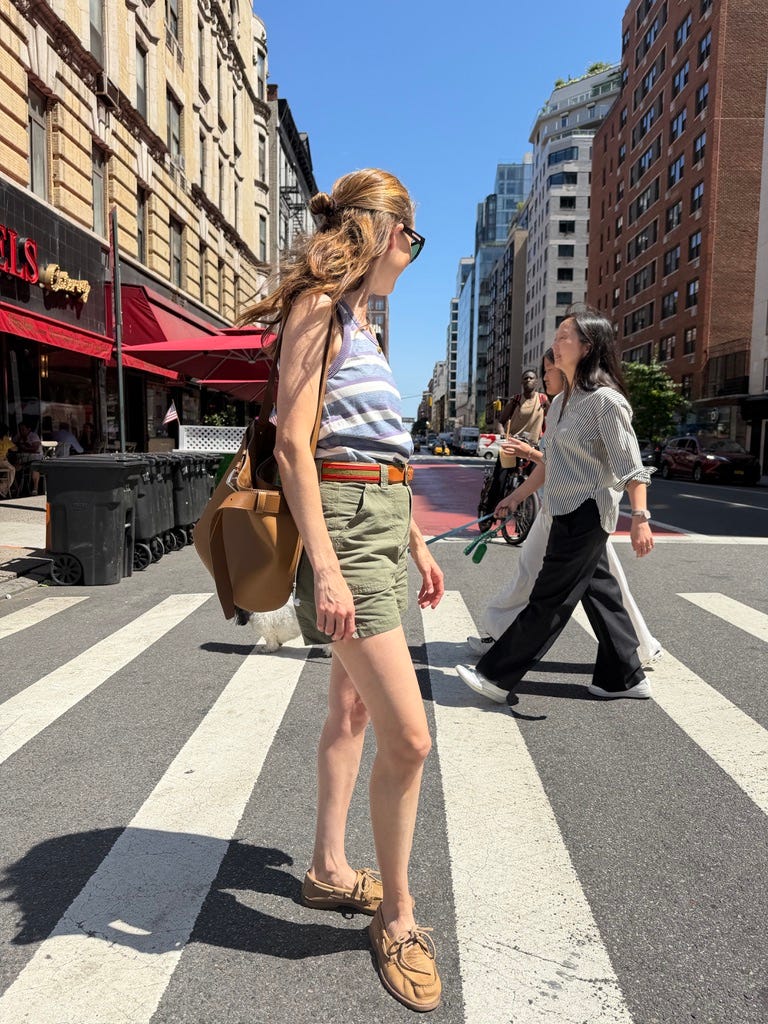
Last summer was all about the white short for me. All I wanted was to wear my Ozmas, every single day. And while they’re still very much in the rotation, this summer, it’s a tighter fitting camp short that has nudged its way to the top of the pile.
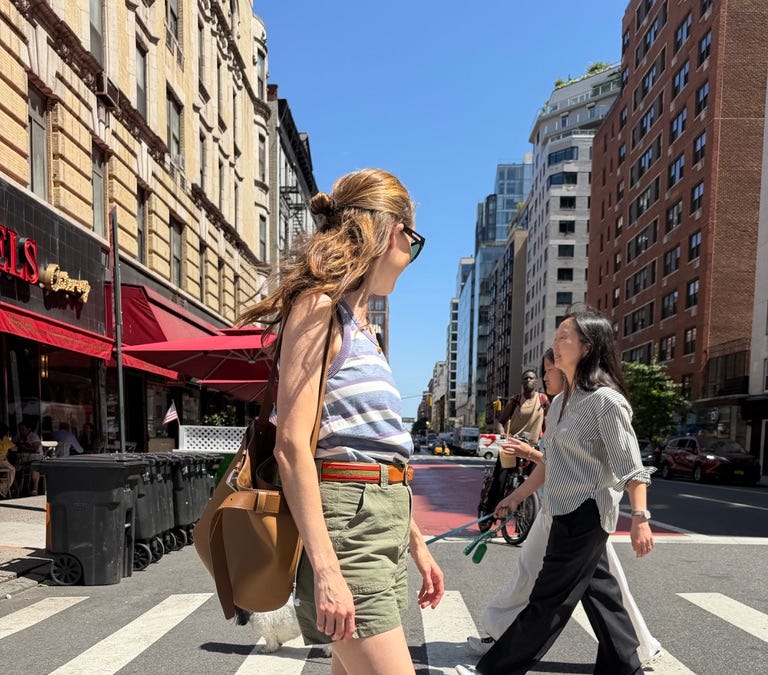
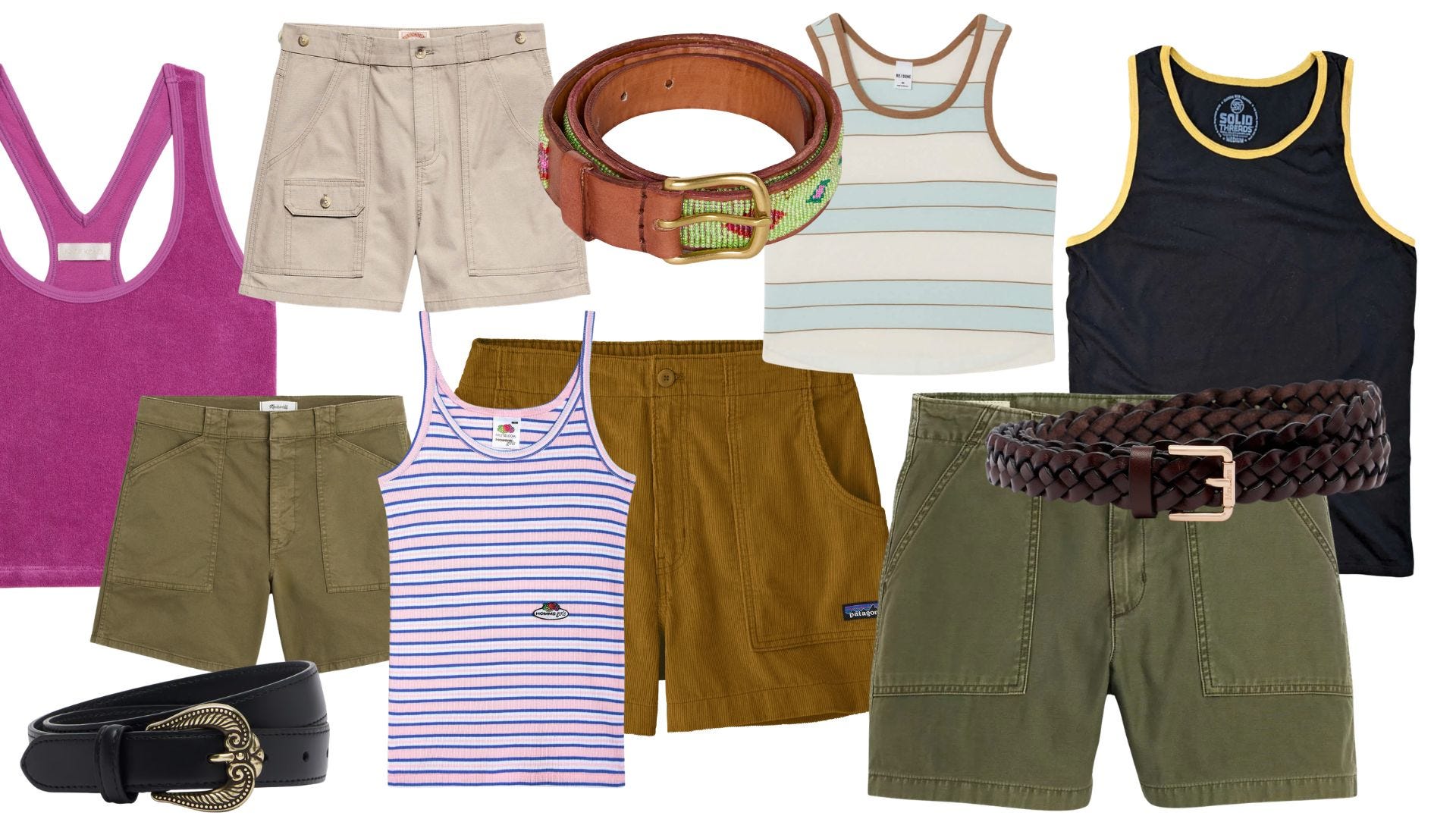
1A: The camp counselor uniform
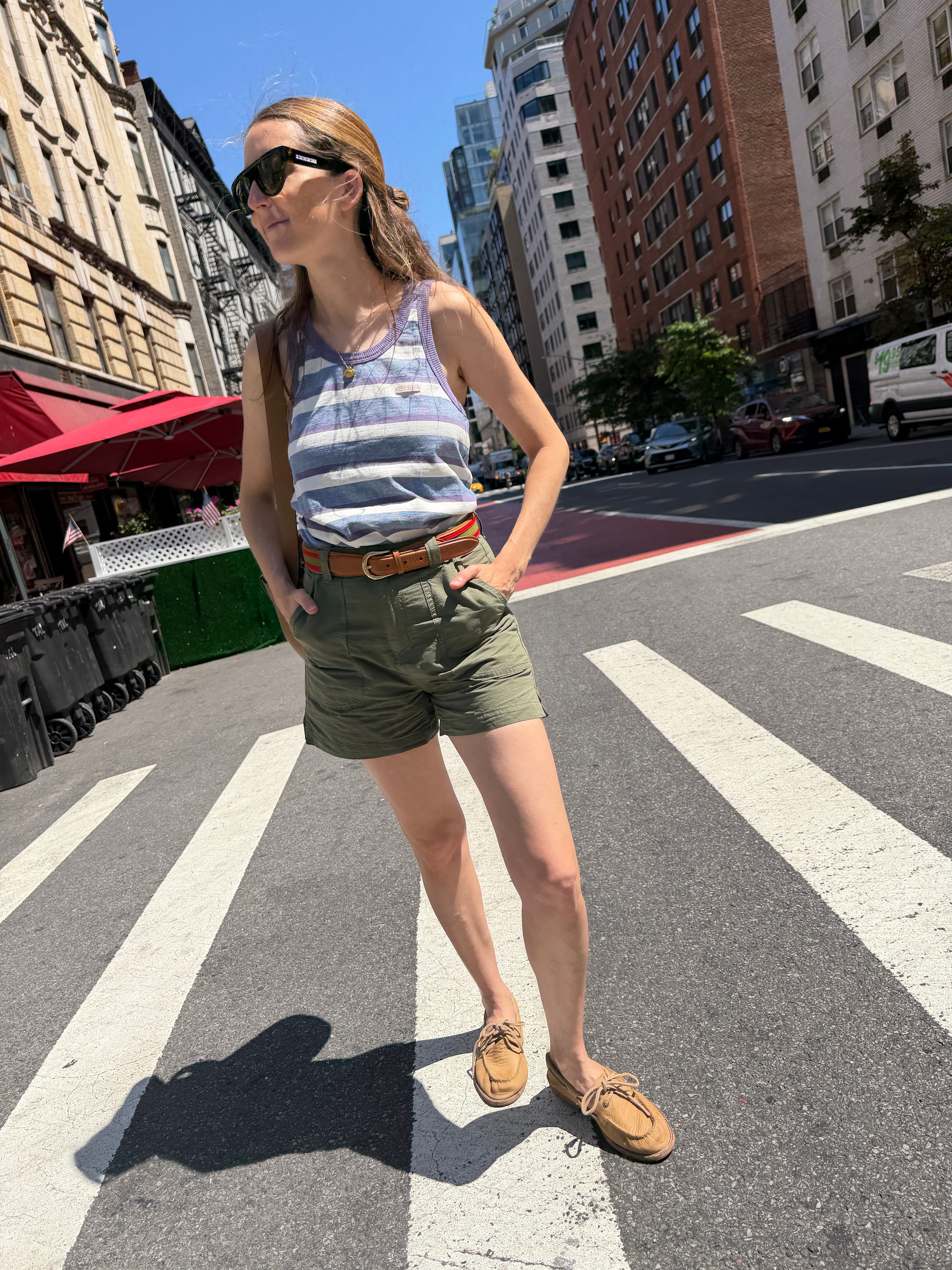
I still size up of course, these are a size 6 from Aether. But something about the extreme utilitarian fit of these shorts, juxtaposed with “vintage” seeming everything else gives me energy. Of course, nothing I’m wearing is actually vintage but chosen for it’s “old” sensibility: a tank that feels intentionally faded. Boat shoes that are so soft they look like they’re 10 years worn in. A belt that could very easily have been stolen from your grandfather. It’s all giving me American summer, which is the summer I’m having.
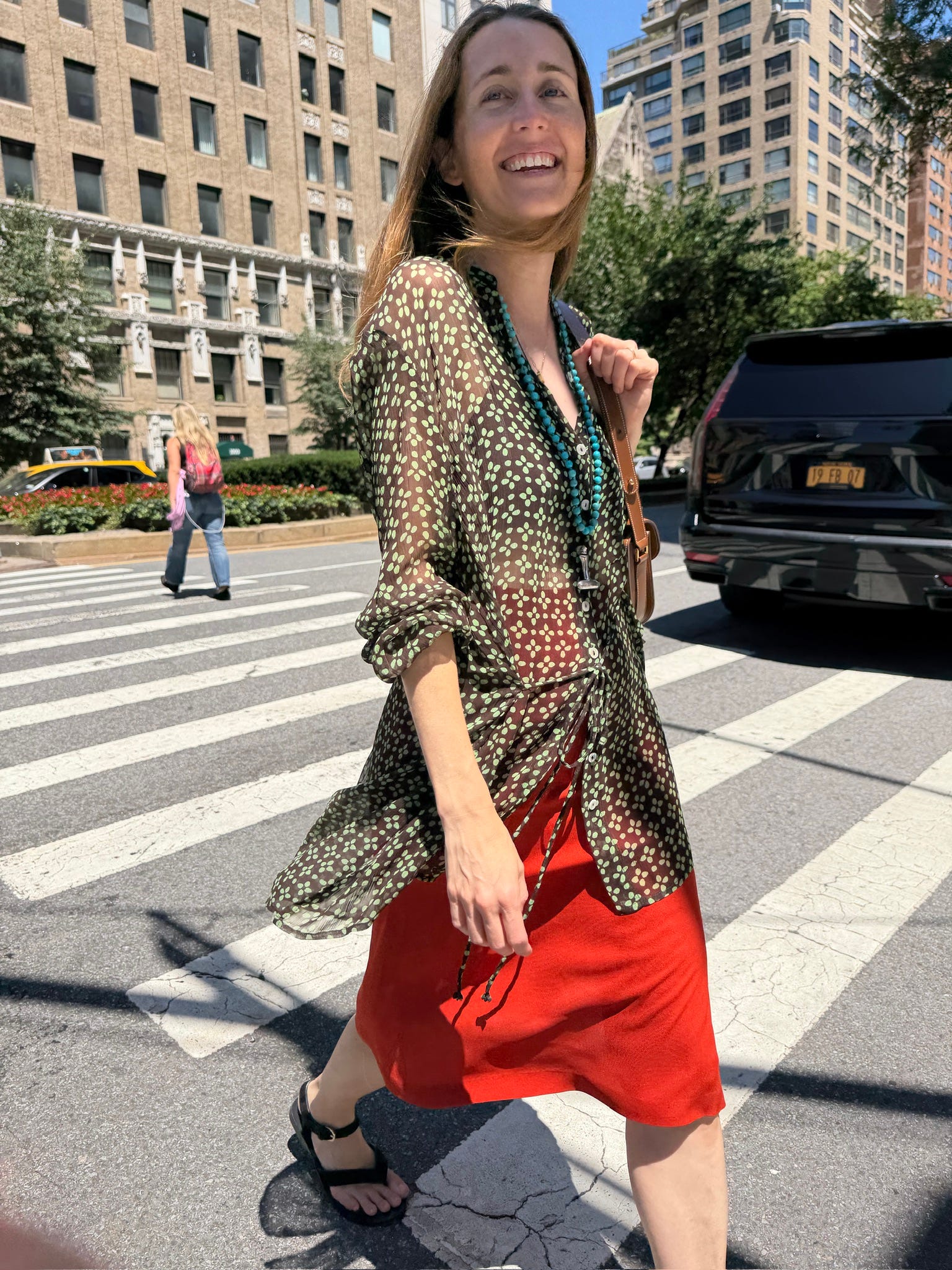
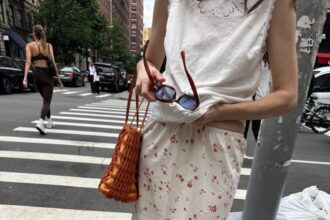
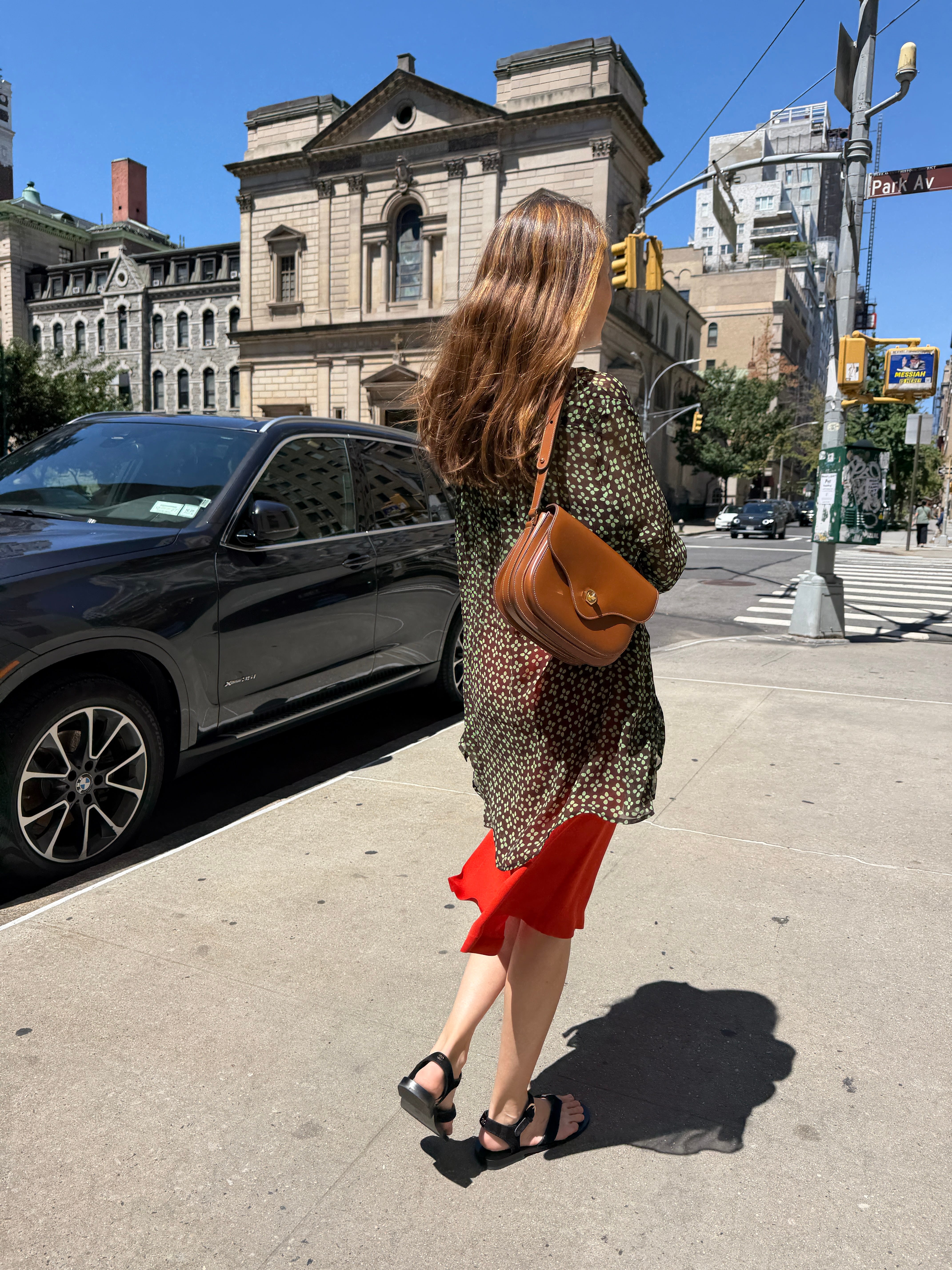
1B: Red Skirts/Green Tops
For the days when I’m getting more dressed up, I seem to be circulating my two red skirts. Last month’s 5GT Alex Mill skirt and this one pictured. And mostly, paired with greens and khakis on top. The color combo is somehow bright enough for the summer I want but not as overtly poppy as when pairing red with another primary color. Try it!!
Our Future Is A Pair of Under-Cuffed Jeans (yay!)
Remember Michael’s first Celine show last June when the jeans were all cuffed under and the internet went ablaze with conspiracy theories…did they do that on purpose!? Did they run out of time backstage!? Well, those jeans have been in stores now for months (which I was first in line to buy and LOVE them) and it appears the cuff under is going to be a thing now. Because look what I just bought from Cos!
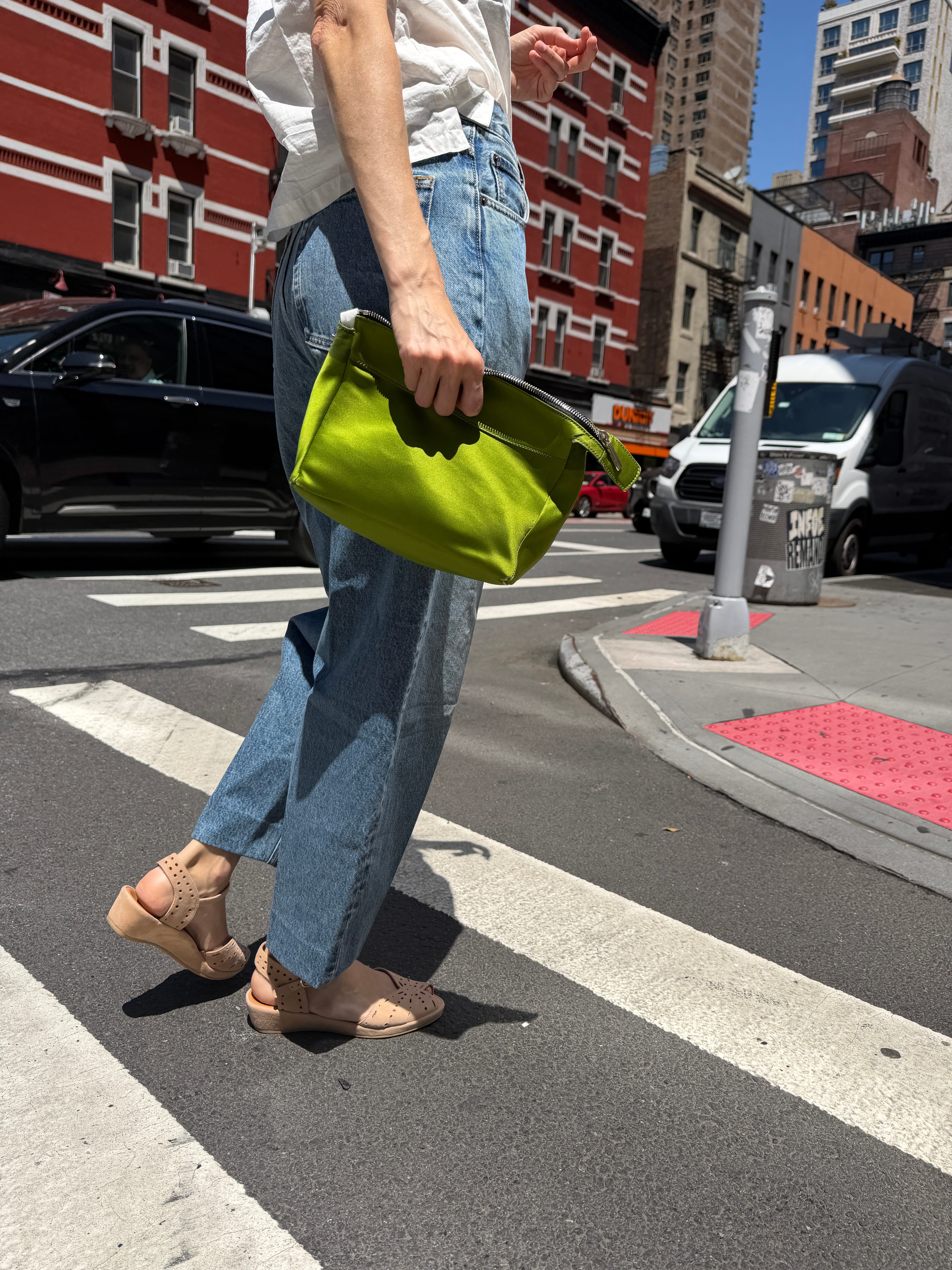
We all owe Mr. Rider a debt of gratitude. As someone who is too short for standard inseams, I always need to either cut or hem. And I despise hemming jeans! The idea that I can just fold under and press!?!?! OR that jeans will now come this way intentionally is MUSIC to my ears!!!! I love these. True to size in a 27. Same as with the Celine boyfriend #2 which I also love love love – and highly recommend in the dark wash so you can get that nice side stitching detail.
The Cutest Laptop Case In the World
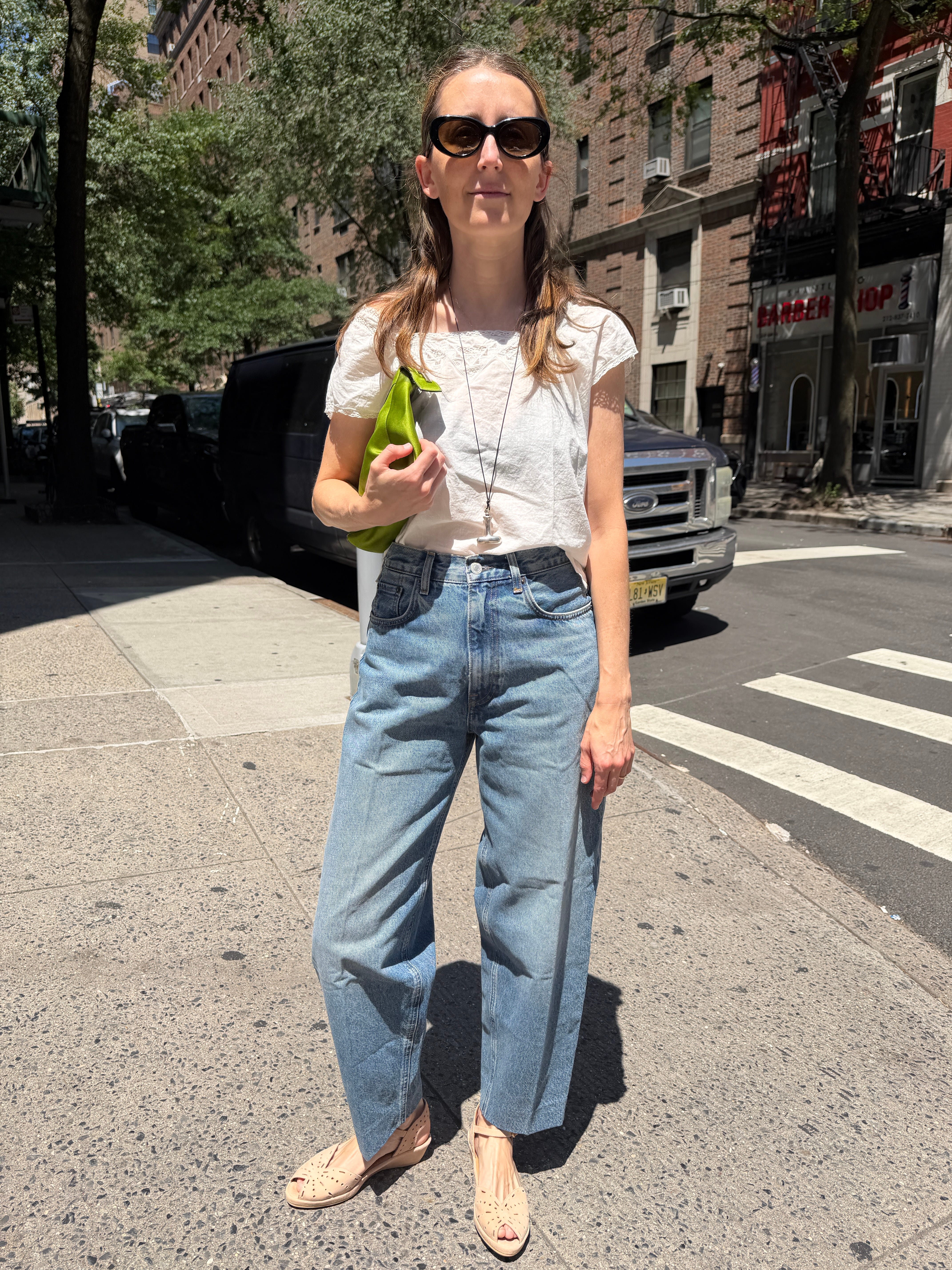
I’ve done it. I’ve found the laptop case of my (and your?) dreams!!! I stopped by Muji last week to re-up on my ride or die to-do list notebooks and I stumbled on this perfect little specimen. I was so giddy that I chatted the sales associate’s ear off. “It’s basically Prada!!!” She giggled.
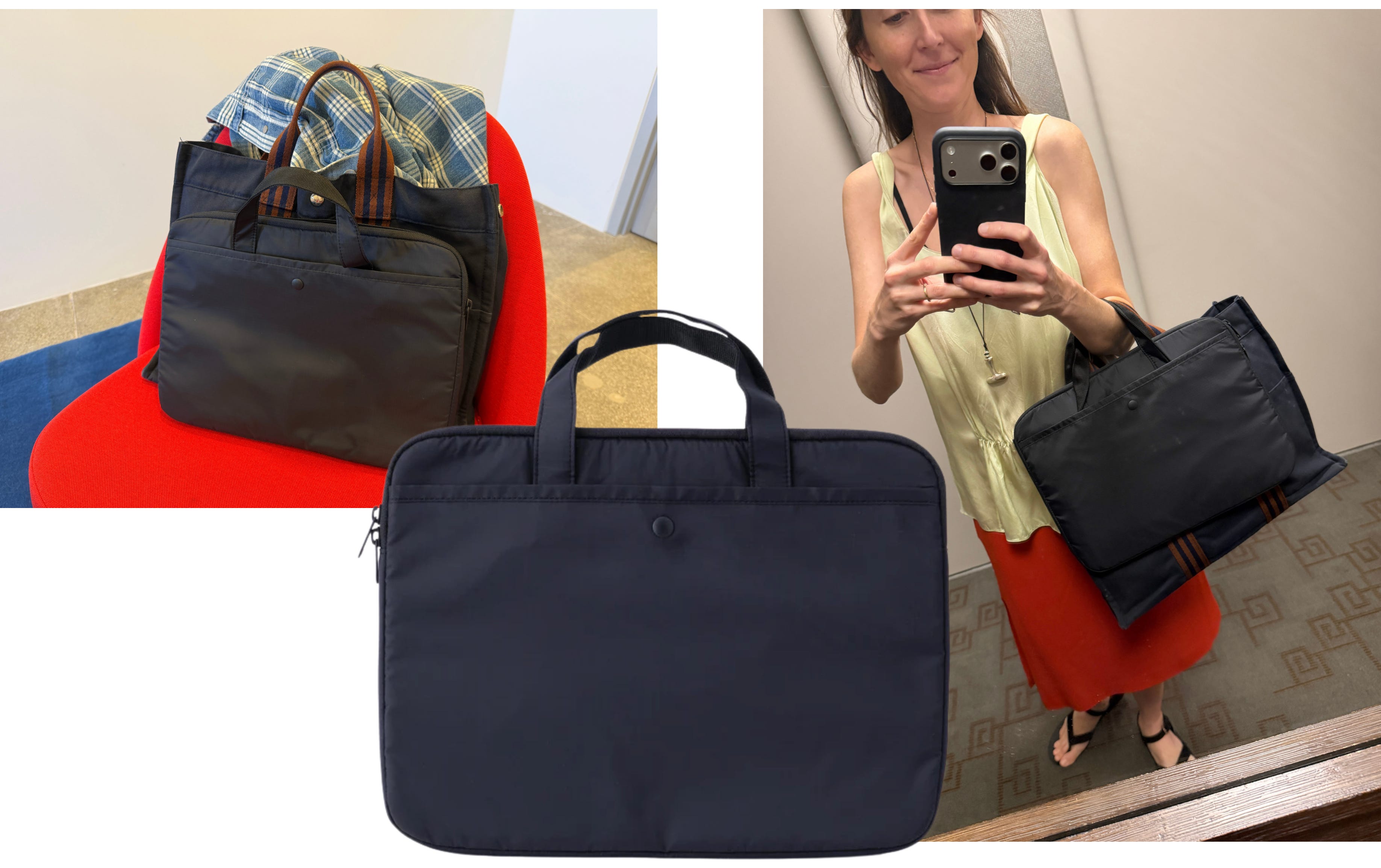
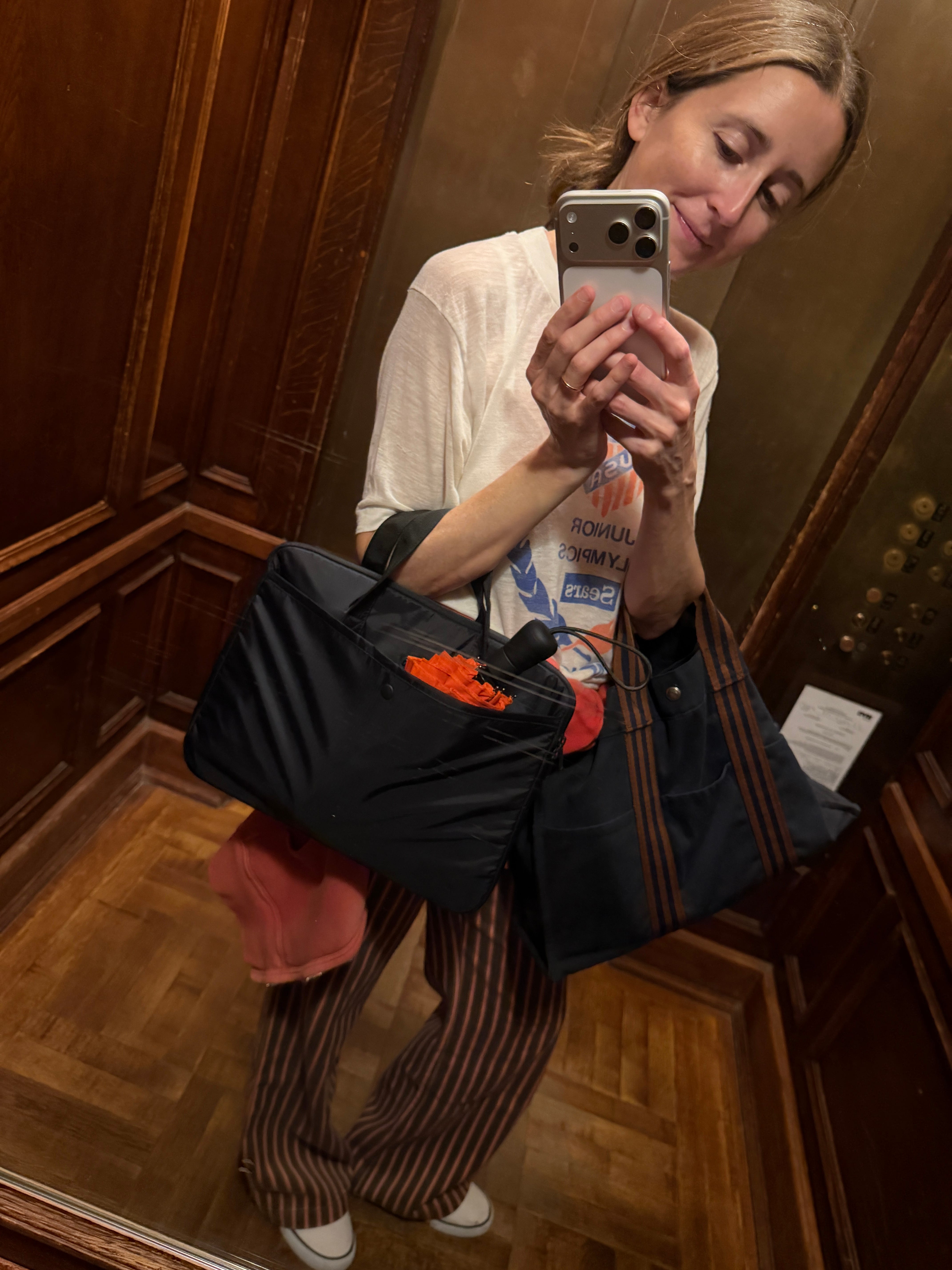
Here is why I love her. 1. I can use her on her own and still feel like I look good. Meaning I can throw the laptop in and put a notebook and headphones and my phone in the front pocket and go.
I could also slide her into my bigger tote bags like a standard sleeve, but then when my shoulder can’t take the weight anymore, I can split the load into two.
Plus, she is just very streamlined, logo-free and the parachute material I love to pair with leather and canvas and all the things.
Extreme Prep As White T-Shirt Fodder
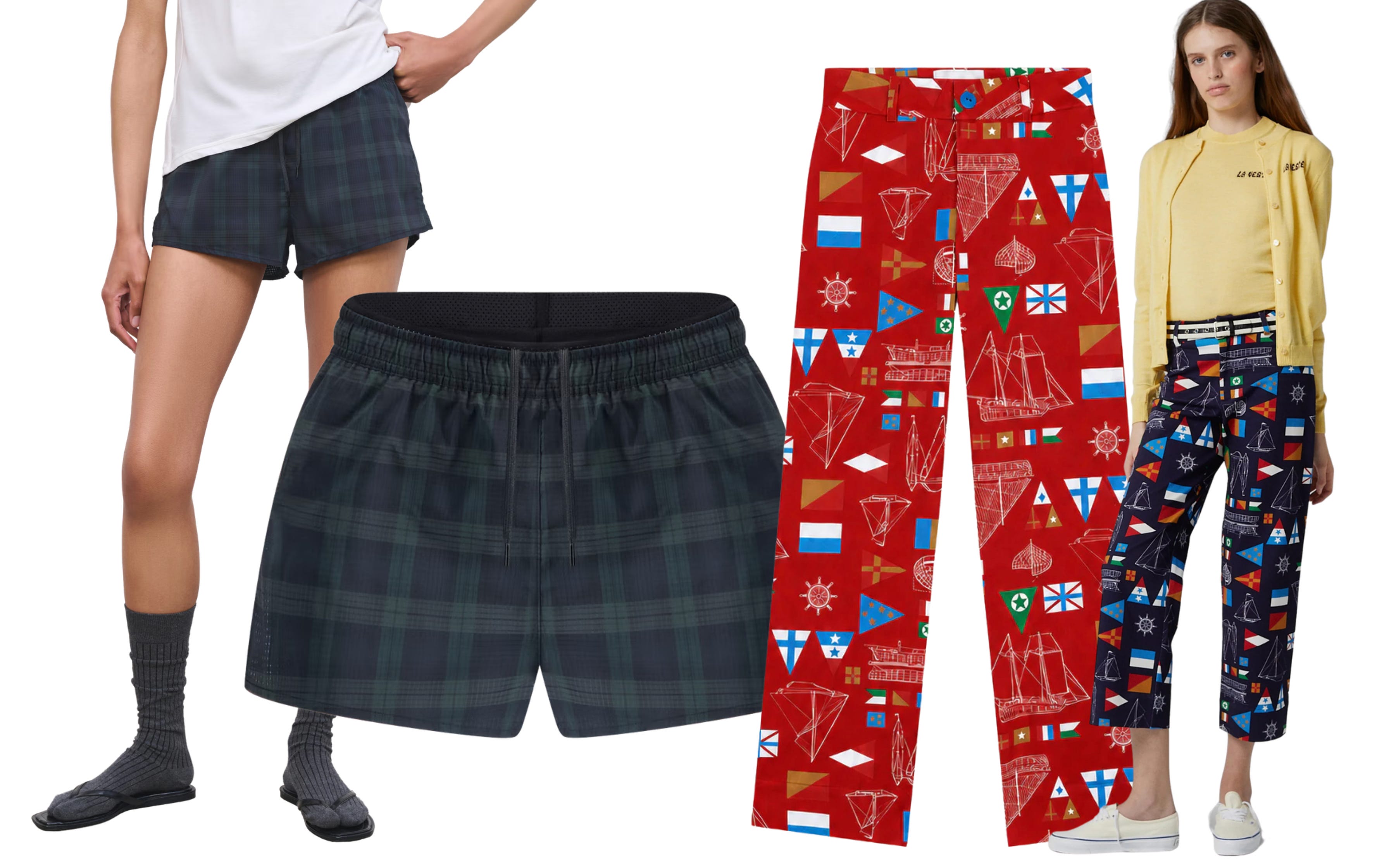
A duo of fun bottoms in my carts in the preppy prints I gravitate toward. Consider these a high summer treat. And perfect fodder for your black or white t-shirt of choice.
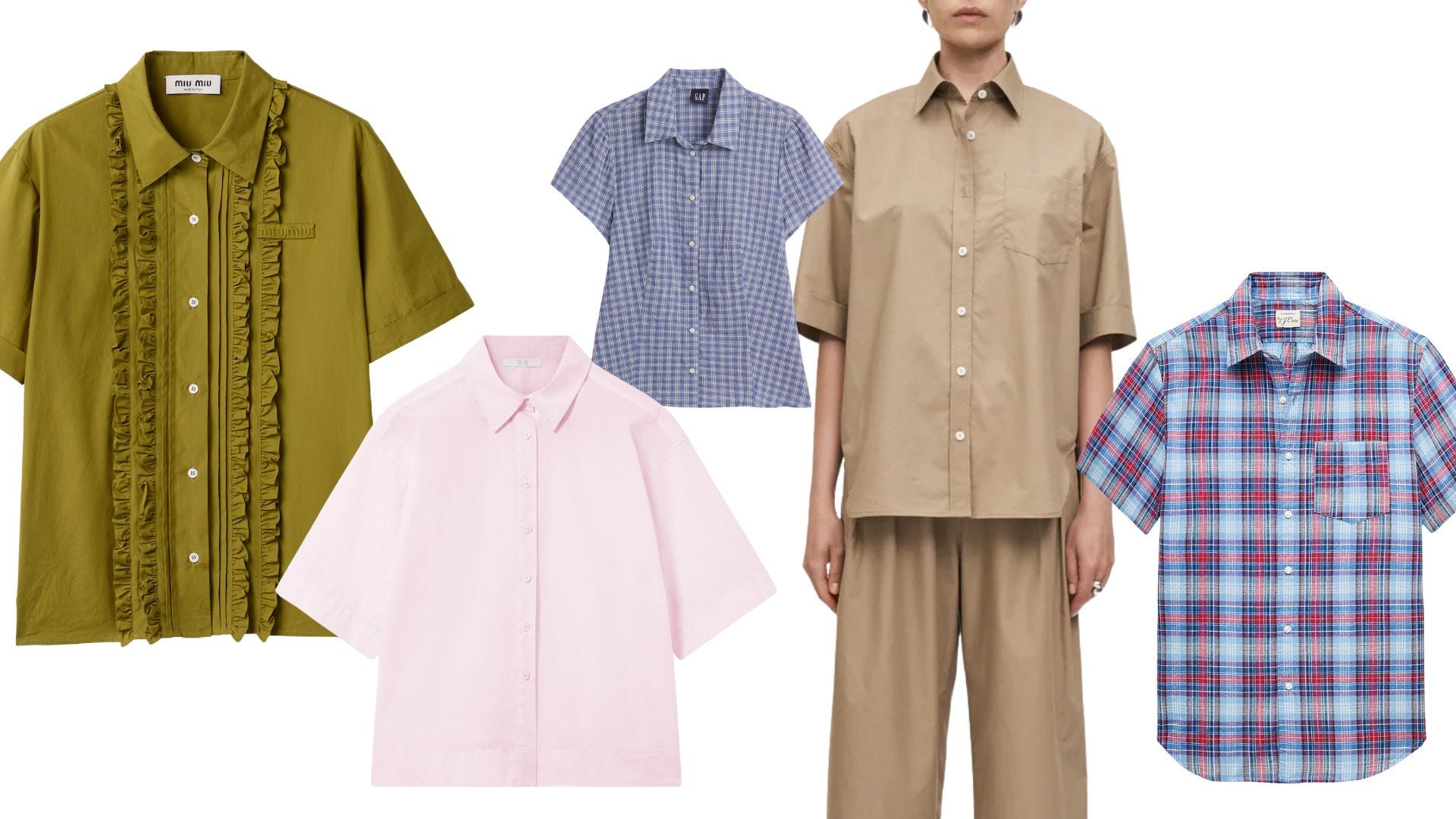
Short Sleeve Button Downs Are Back
Five Things forever muse Alexa Chung was wearing a short sleeve button down on her Instagram a few weeks ago and honestly, sometimes thats all it takes to rekindle a love for something that has been sitting in your closet for a few years. Seeing someone else rock it well!
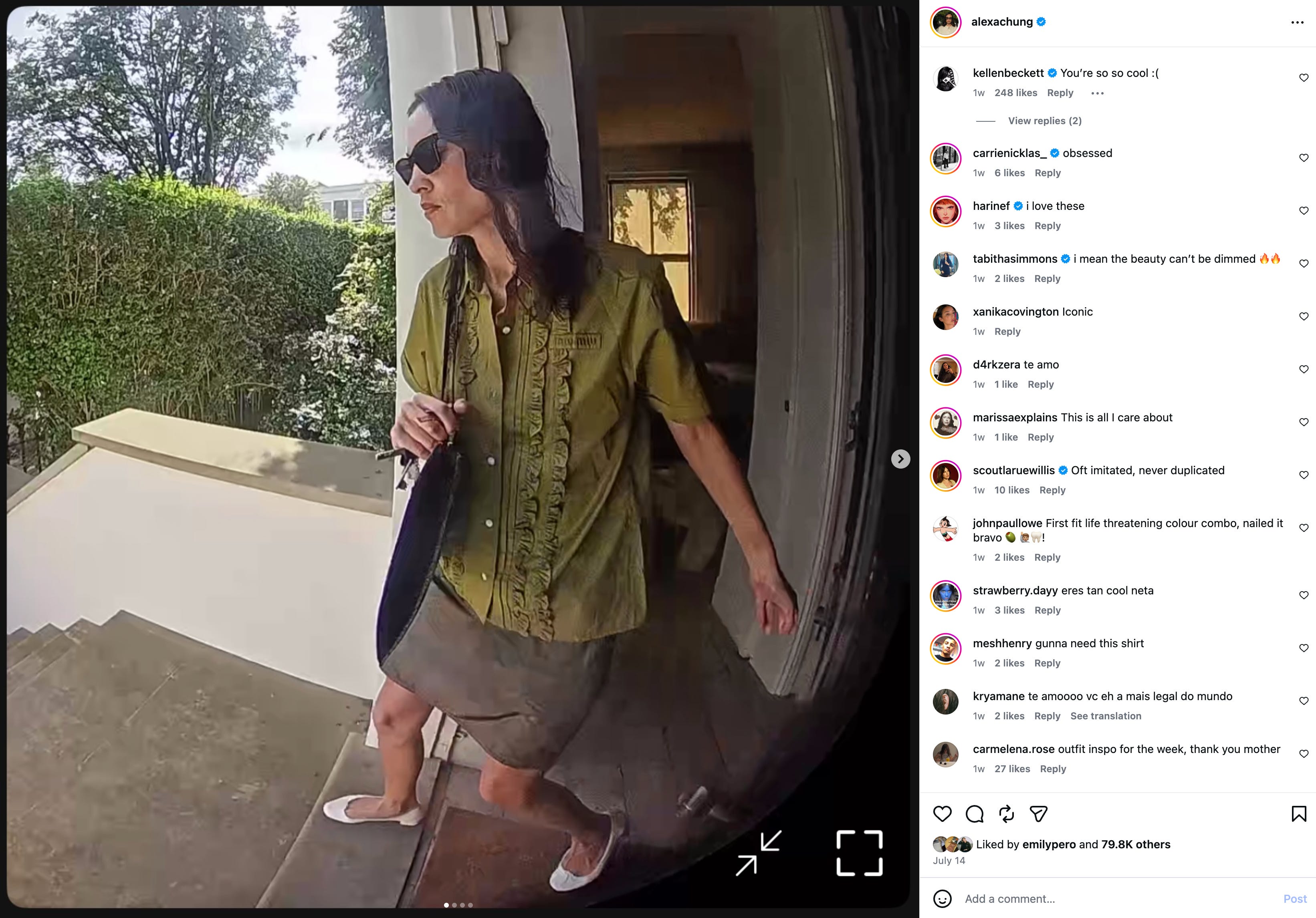
It’s been a minute since I’ve embraced my s/s button downs, instead opting for l/s with sleeves rolled. Something about the short sleeve has felt too masculine, too utilitarian the past few seasons. But I’m feeling that rigidity again in my bones. The bigger, wider sleeve looking more crisp and giving my outfits a finished air.
Sleeve rolling is a great styling tactic in that Barack Obama, let’s get to work kind of way. But I’m enjoying the definitiveness of the finished short sleeve which still allows the bare arm to balance out all that fabric in the way a sleeve roll does.
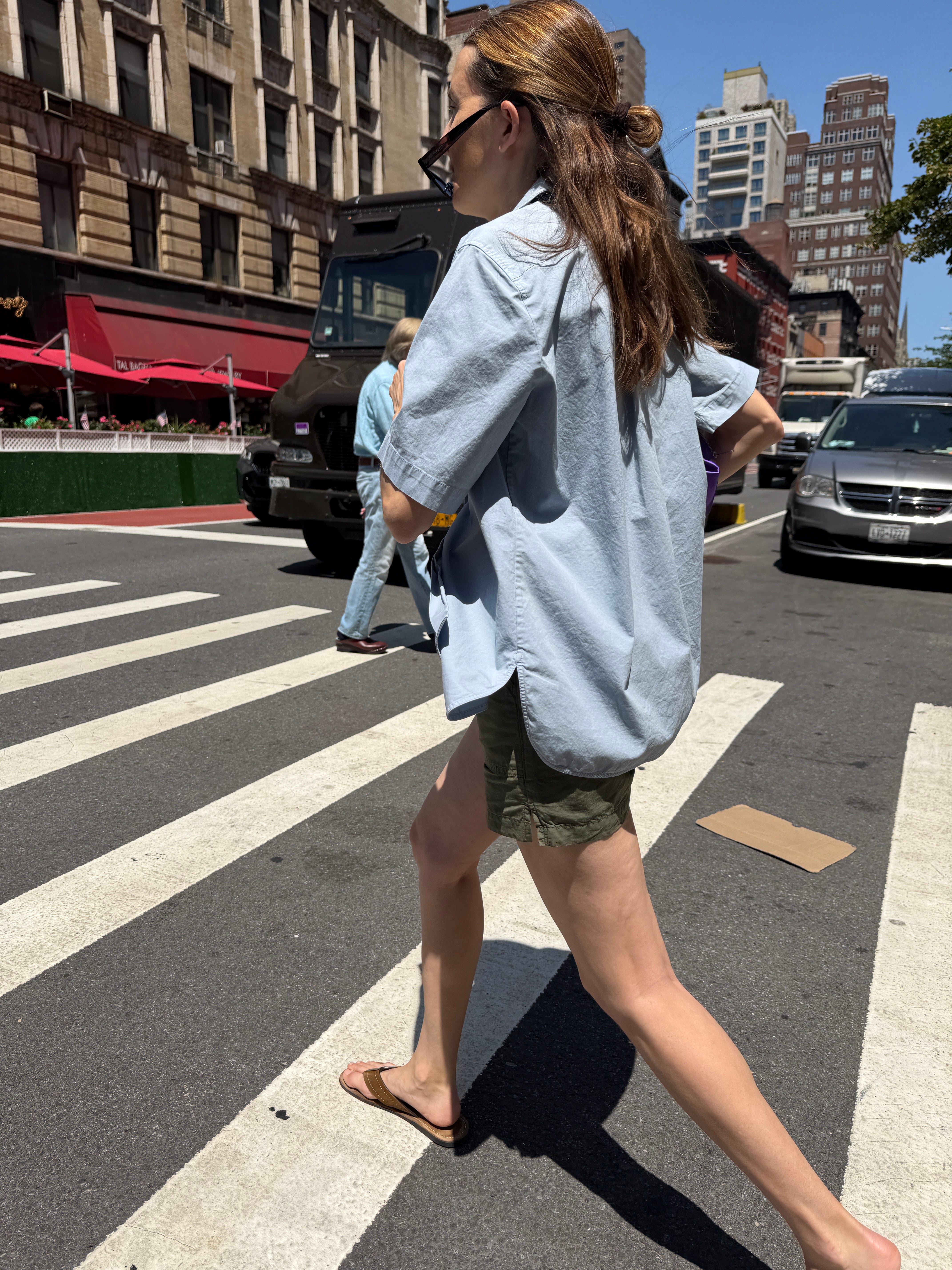
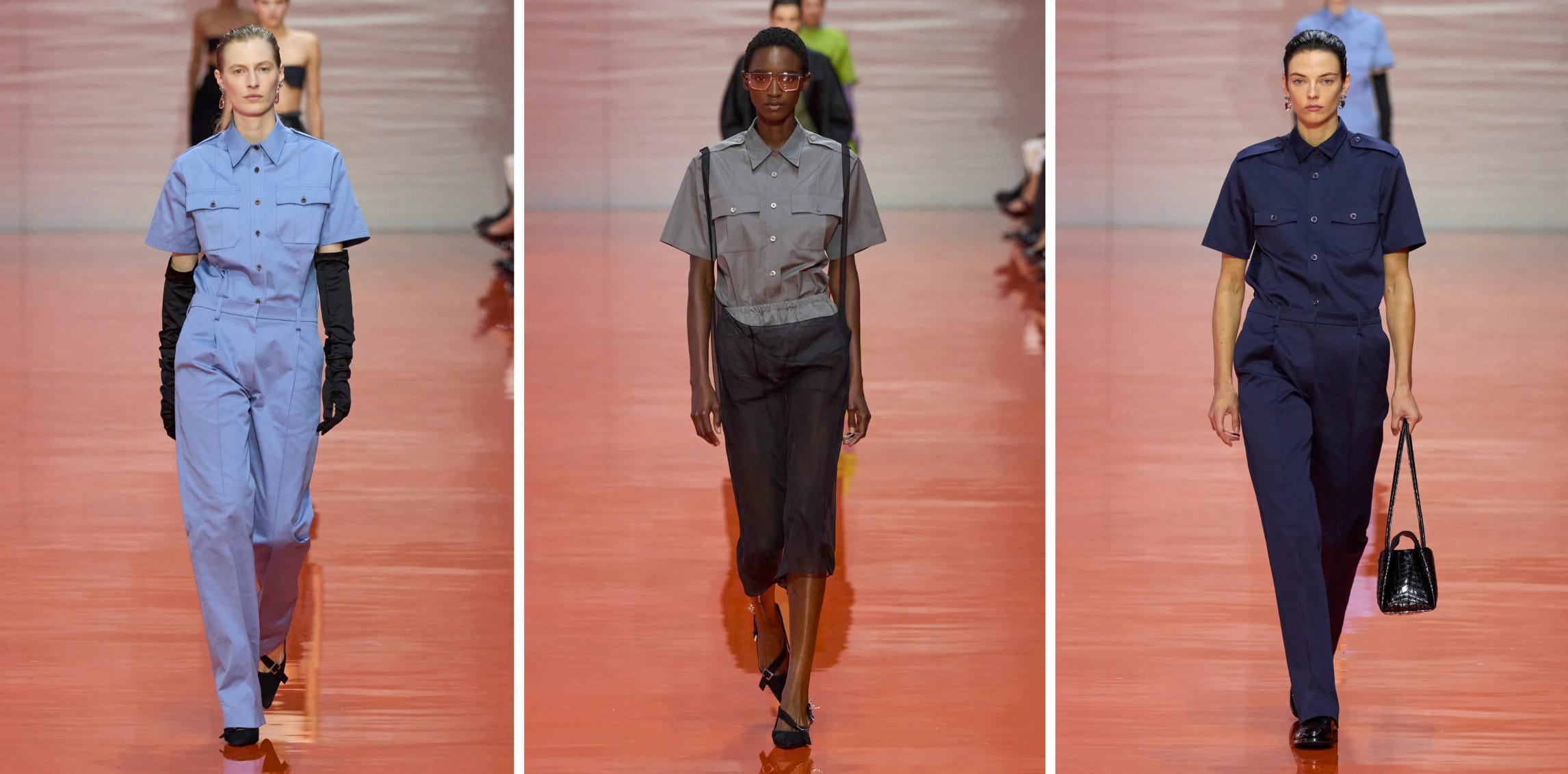
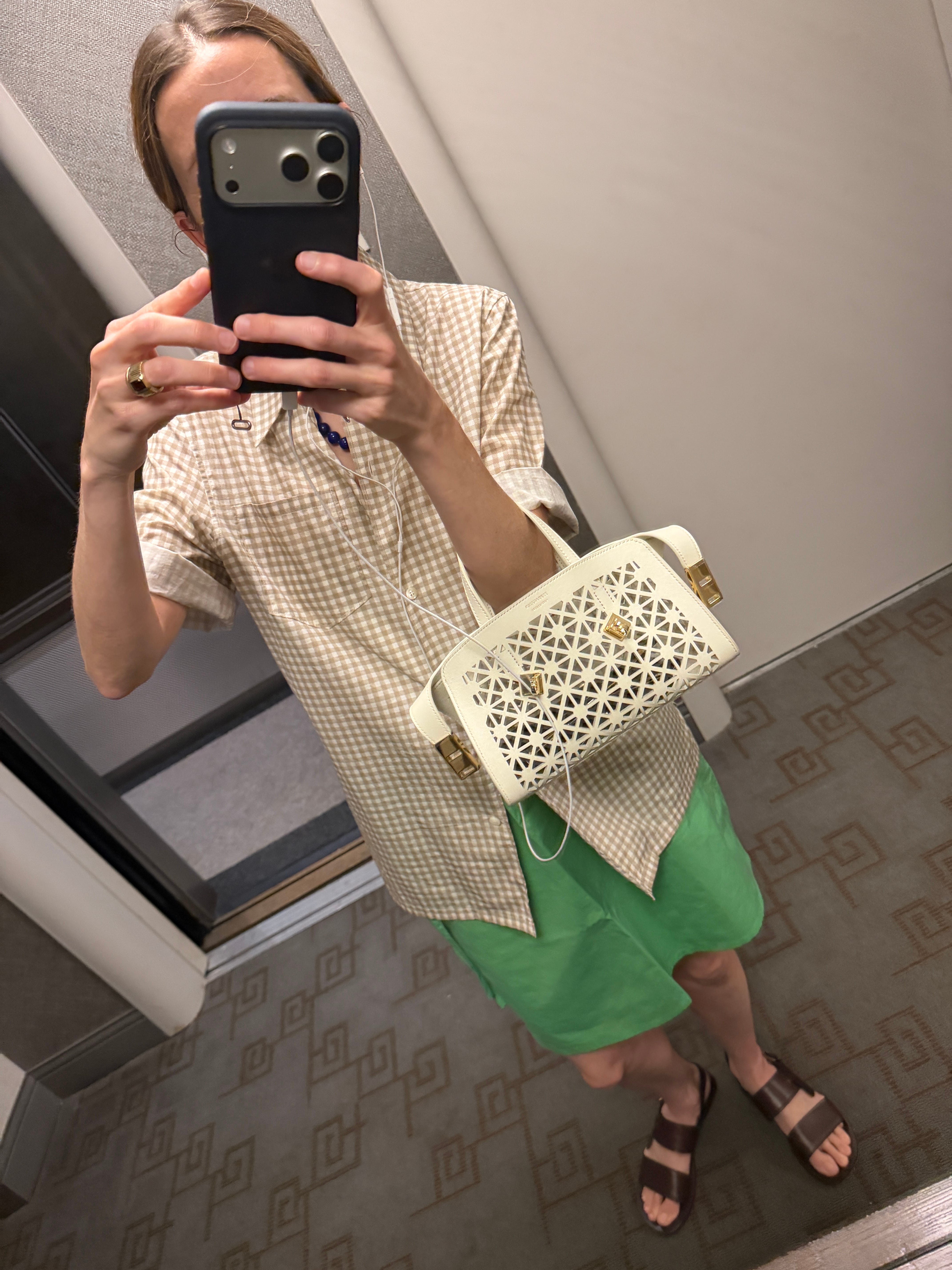
Plus, it gives me sleeve coverage. Did you all read Vanessa Friedman’s piece on sleeves last week? TRIGGERING for so many of you, and my clients. So much so that it inspired next weekend’s letter…stay tuned. It was also a heated topic of conversation at Tuesday’s launch dinner for Rosie Assoulin x Target to which I wore the outfit below, complete with….what else? A short sleeve button down from the capsule.
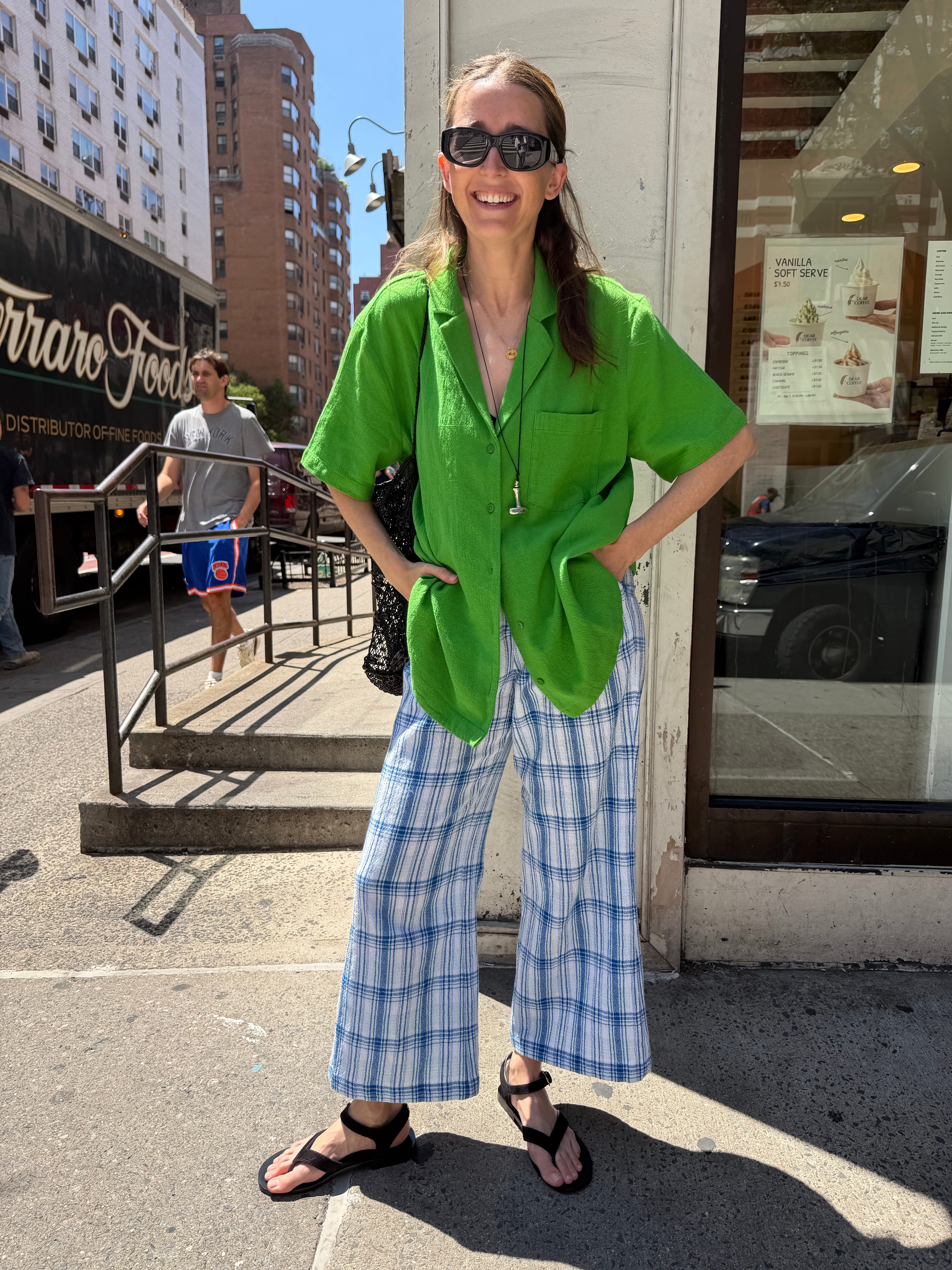
Not only did I wear it to Rosie’s celebratory dinner, but I wore it two to engagements prior on the same evening and felt fab at both: first to clean out a client’s closet – relaxed enough to literally load up garbage bags of clothes for donation. And then directly to friend of Five Things Lauren Collins’s book party (order her book here!!!!) in a room filled with high brow New Yorker editors.
The shape was just right for all of these engagements. The collar and button-down of it all read dressed, but the relaxed shape let me WORK. All in the colors of high summer at its finest. Rosie, you genius you!!
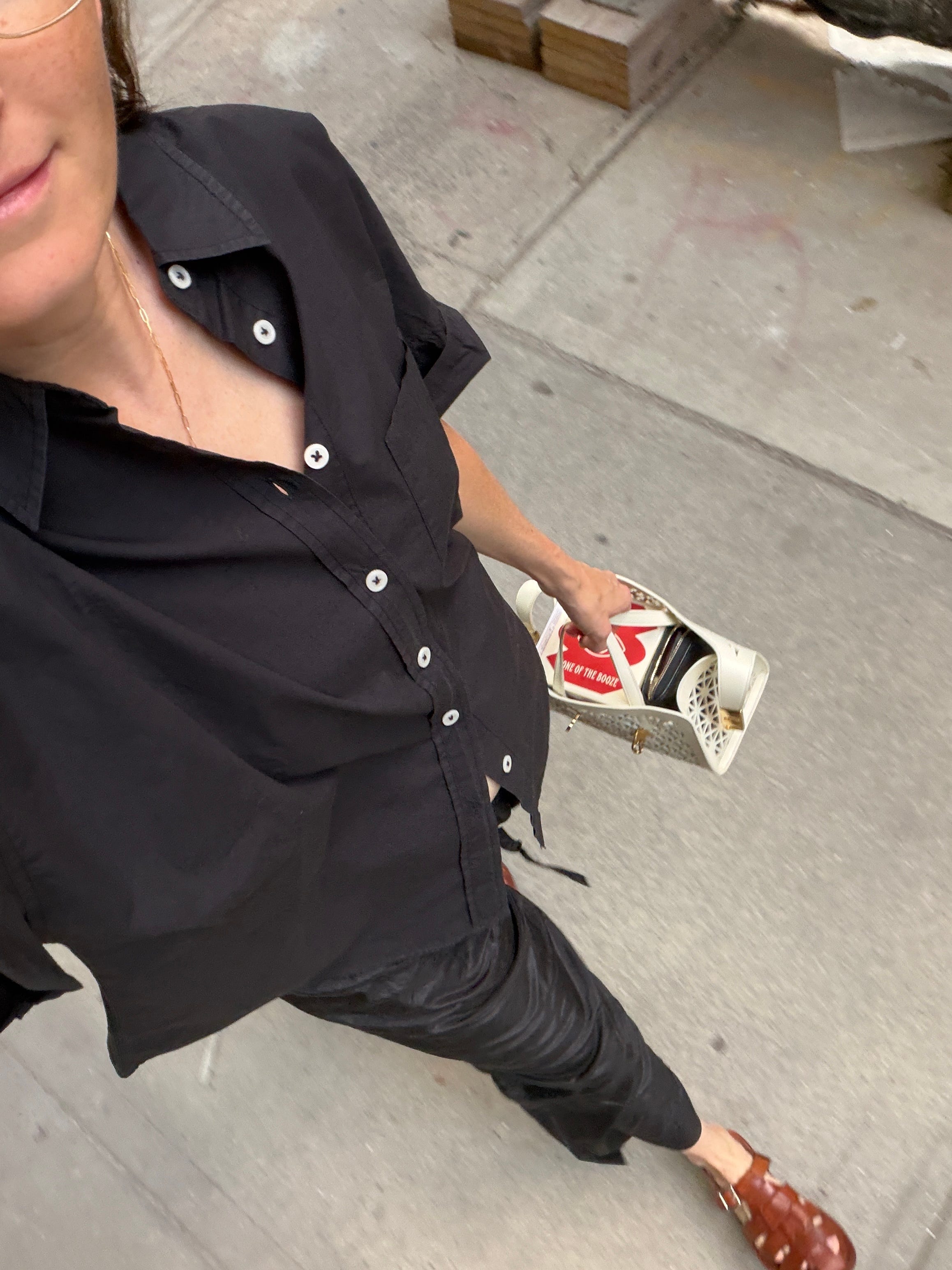
I donned an all black ensemble topped with a short sleeve button down this week for an evening of dinner/bath/bedtime for my son and then snuck out (don’t worry dad was home!) for a few games of Mahjong with the moms. Comfy, chic, not pajamas, not NOT pajamas.
See you back here next week…for a deep dive on SUMMER. SLEEEEEEVES!!
Yours TRULY,
Becky
You could also gift a subscription. to your BFF, mom, daughter, aunt, cousin, colleague or neighbor! Food for thought.