


- Table of Contents
- 1. Churn Starts With the Market You Chose
- 2. Your Blended Churn Number Is Hiding the Truth
- 3. Activation Is the Lever Almost Nobody Pulls Hard Enough
- 4. The Lost Customers Who Never Meant to Leave
- 5. Annual Plans and Exit Flows Buy Time, Not a Cure
- 6. Negative Churn Is the Only Real Finish Line
Killing Churn for Good
Almost every founder finds out about churn too late. It’s usually the moment they realize that an entire quarter of hard-won new revenue did nothing except backfill the customers who slipped out the side door.
Yes, revenue probably climbed. Yes, the board update went well. But that’s exactly where the problem keeps spreading until it becomes too big to eliminate.
Almost all founders face the real cost of churn. When the existing accounts leak faster than they can be expanded, growth turns into a treadmill and they end up spending all the capital they raised just to stay level.
The reassuring part is that churn is really a stack of smaller problems sitting on top of one another and almost all of them are fixable once you stop treating the cancel button as the place to go and solve them.
Some of these fixes pay off within a week and others take most of a year, so the order you work through them matters as much as the effort itself.
A lot of churn comes down to trust, whether people believe the product actually gets them.
Plaid and The Harris Poll just published a report on that exact question in fintech:
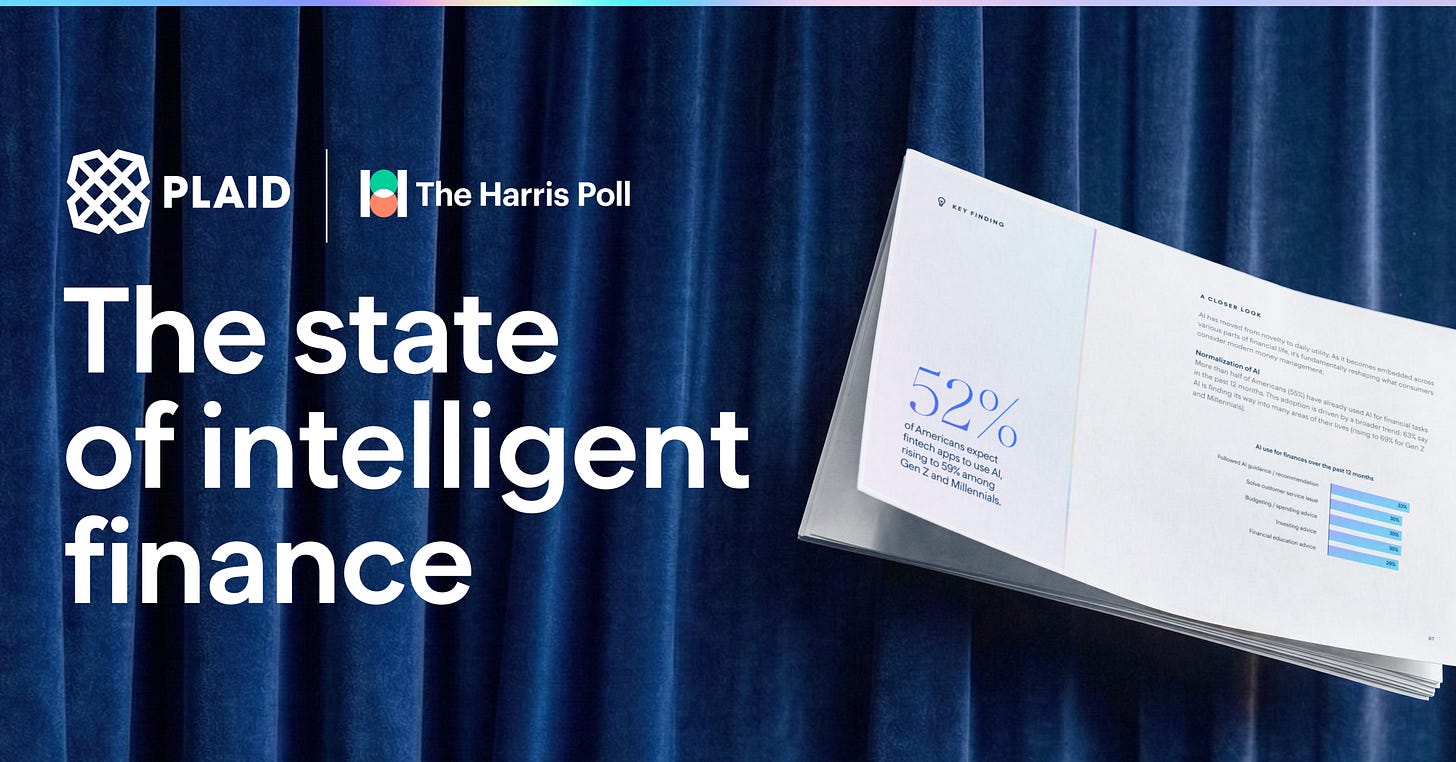
▫️ 55% of people have used AI for money tasks in the last 12 months
▫️ 86% say it helps them understand their money better
▫️ 50% think managing money without AI will feel outdated soon
Worth a read if you’re building anything people need to trust with their money.
Table of Contents
1. Churn Starts With the Market You Chose
2. Your Blended Churn Number Is Hiding the Truth
3. Activation Is the Lever Almost Nobody Pulls Hard Enough
4. The Lost Customers Who Never Meant to Leave
5. Annual Plans and Exit Flows Buy Time, Not a Cure
6. Negative Churn Is the Only Real Finish Line
1. Churn Starts With the Market You Chose
Before a single tactic matters, the category you built inside has already set the ceiling on how good your retention can ever be.

Why Your Product Category Dictates Your Retention Ceiling
Build a tool a marketer opens every single morning and retention mostly takes care of itself, because the product has become part of how someone does their job.
Build a tool a person reaches for once to make a birthday card and no amount of clever design will save you, since there was never a reason to come back.
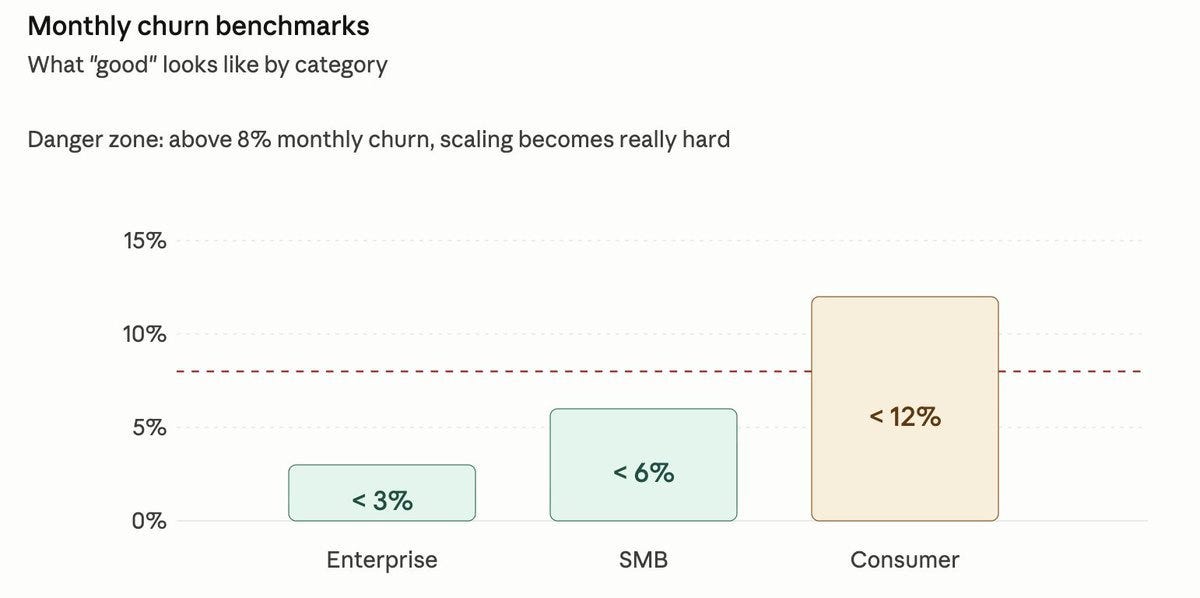
Enterprise software holds on because it lives inside a daily workflow, small business churns harder because small businesses themselves come and go and consumer churns hardest of all because so many of the use cases are genuinely one-and-done.
The Compounding Math That Rewrites Your Economics
The compounding is what turns this from a nuisance into an existential problem.
The strongest B2B companies keep monthly churn under 2% and the distance between 2% and 5% a month is the distance between a customer who stays with you for 4 years and one who is gone inside 2, which ultimately rewrites every unit economic you thought you had.

This is why choosing the market is the highest-leverage churn decision a founder ever makes and it gets made long before anyone writes a line of code.
Pick well and everything that follows is optimization, while picking badly leaves you optimizing an exit flow on a product people were only ever going to touch once.
None of this shows up in the single blended number most founders stare at, which is exactly where the next mistake hides.
2. Your Blended Churn Number Is Hiding the Truth
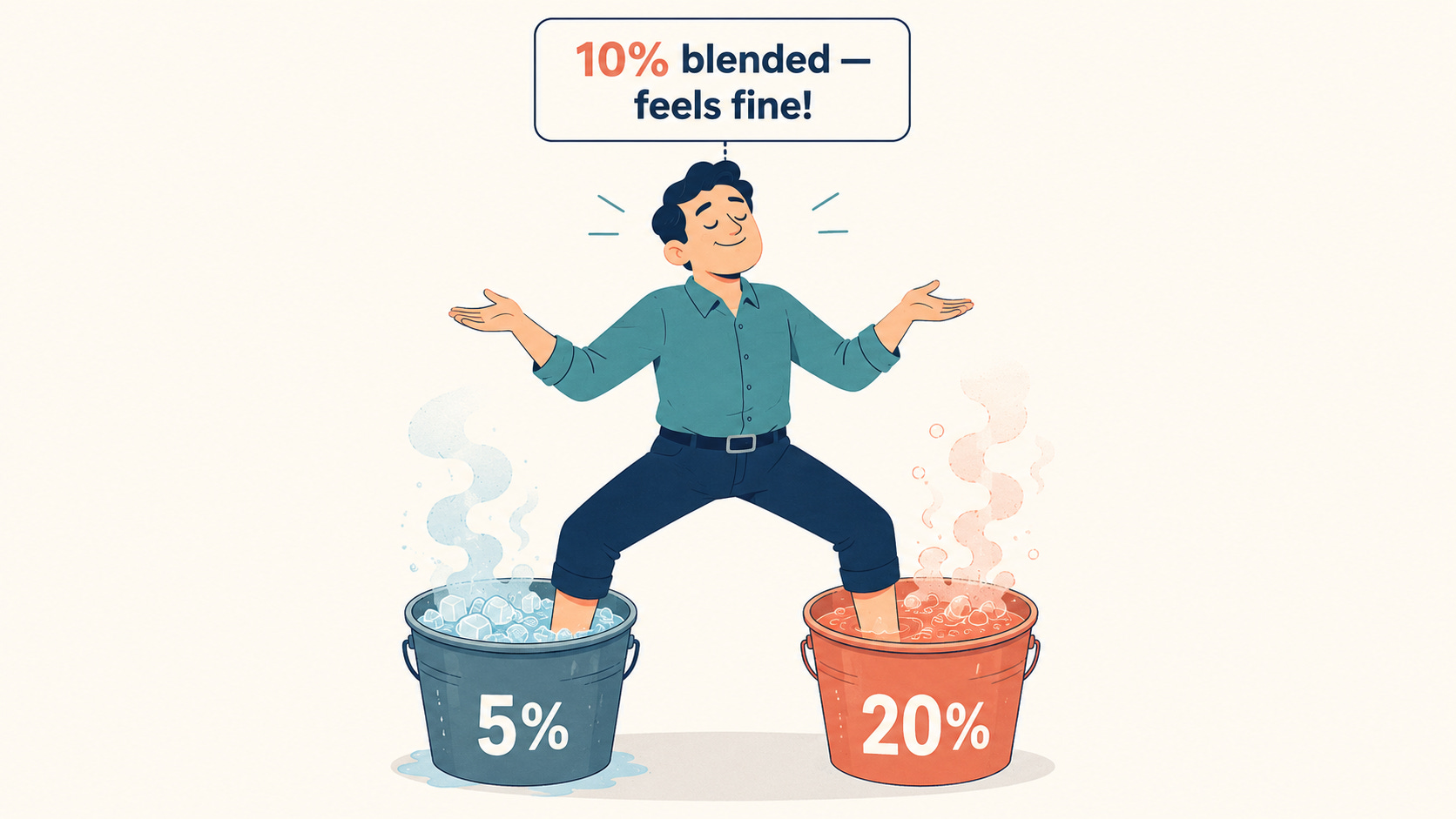
A blended churn rate is an average and averages are very good at hiding the two or three cohorts doing the real damage.
Cohort Segmentation and the Search for Your True Users
You can post a comfortable 10% blended rate while, buried inside it, one cohort churns at 5% and another bleeds out at 20% and it is always that second group dragging the whole business down.
The way out starts with segmentation, which in practice means a short onboarding survey that captures role, company size and use case, then mapping that against who actually stays and who leaves fastest.
Suddenly the averages break apart into people and you can see who your product was truly built for.
Retention Curves and Gross Metrics That Reveal Your Real Floor
The sharper read sits one level deeper, in the shape of your retention curves rather than any headline number.
Plot each monthly cohort over time and watch whether the line flattens into a plateau or keeps sliding toward zero, because a flattening tail is the truest sign of real product-market fit you will ever get.
Even the best consumer apps lose most of their new users in the first week, so a perfectly flat line was never the goal and a loyal base that holds steady is.
One honest check keeps you from fooling yourself here, since net revenue retention can look wonderful while a couple of large accounts do all the expanding.
Reading gross retention alongside it shows the real floor of what you keep before any upsell and if that floor is weak, no amount of expansion will hold the roof up for long.
Once you know which cohort genuinely stays, the fastest way to keep more of them is to get every new user to value before they ever drift away.
3. Activation Is the Lever Almost Nobody Pulls Hard Enough
Activation is the first moment a new user hits the action that makes the product click and it decides more of your churn than anything you do later.
Friction and the Race to First Value
When ten people sign up and only one of them reaches that moment, you have an activation problem wearing a churn costume and the nine who left were lost before they ever gave you a fair shot.
Friction is the thing standing between them and the value, whether it takes the form of a credit card demanded upfront, a cluttered interface, or a long survey where the product should be and every extra step lengthens the time to first value that ends up deciding whether anyone comes back at all.
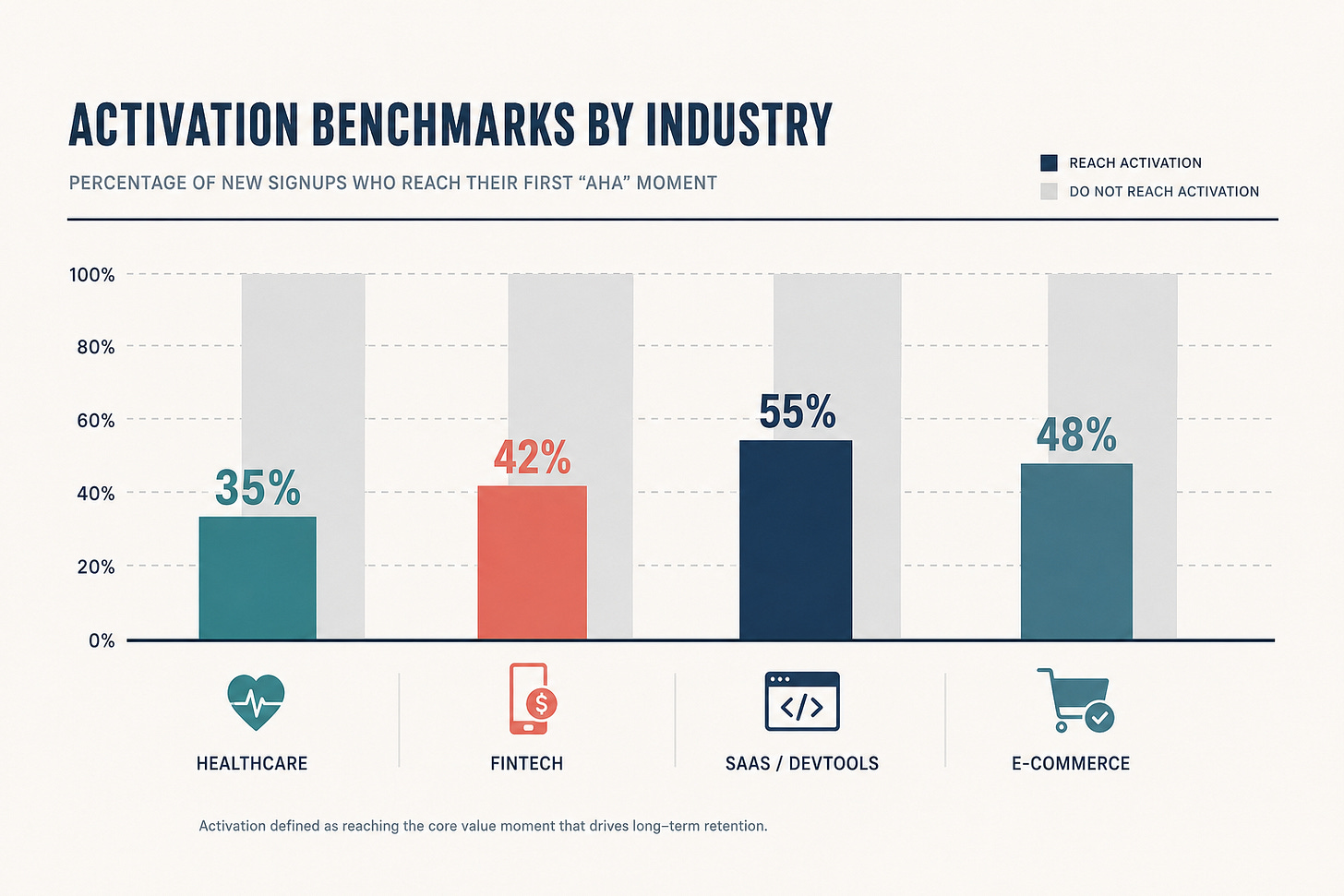
That single sentence is the whole battle, since a user who feels the payoff fast will forgive a clumsy interface, a missing feature and half a dozen other sins you have not fixed yet.
The founders who crack this almost always do it by hand long before they do it with software, sitting through onboarding calls and watching exactly where a new user stumbles instead of guessing from a chart.
A reliable tell is that generic requests for feedback get ignored, while an offer to personally walk someone to a real result fills a calendar overnight, because you are leading with value rather than asking for it.
The Free Plan as an Activation Engine
The free plan is the most underrated activation instrument in all of this and the best operators treat it as exactly that.
Cursor lets you build until you are locked in and suddenly out of credits, while Duolingo runs almost the opposite play and gates hard to force the habit, yet both work because both are engineered around a single moment of value.
Watching that moment move is the sort of thing a metrics dashboard exists for, since you cannot improve an activation rate you cannot see.
Even a perfectly activated base, though, loses real money through a channel most founders never think to look at.
4. The Lost Customers Who Never Meant to Leave
A surprising share of your churn comes from customers who never chose to leave at all and whose cards simply stopped working.
Involuntary Churn and the Silent Leak of Failed Payments
This is involuntary churn and most founders wave it off as a rounding error right up until they look closely. Across analyses from ProfitWell, Recurly and Paddle, failed payments account for 20 to 40% of all SaaS churn at many companies, which means a meaningful slice of the people you count as gone were loyal customers failed by an expired card or a bank decline they never even saw.

Smart Dunning Systems and the High Return of Technical Fixes
What makes this the highest-return fix on the whole list is that the problem is technical rather than emotional, so you are not trying to argue anyone out of a decision.
A single naive retry recovers only a fraction of those payments, while a proper dunning system of smart retries, card-updater prompts and well-timed emails recovers 70 to 80% of them, according to Chargebee’s work on the subject.
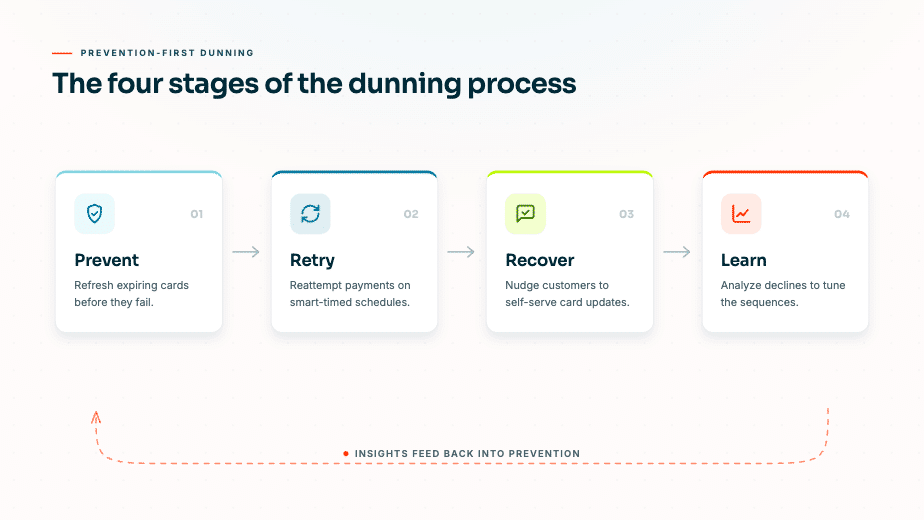
These are customers who wanted to stay, handed straight back to you.
The reason to do this before almost anything else comes down to effort against payoff, since a solid dunning setup is roughly a one-to-two week engineering project that can lift revenue several points with zero new customers acquired.
Most teams skip it because it feels less impressive than a homepage redesign, which is precisely why it stays such reliable free money.
Dunning stops the accidental leak, yet the customers who truly decide to walk need a different kind of friction and a different kind of offer.
5. Annual Plans and Exit Flows Buy Time, Not a Cure
Two tactical levers take a real bite out of churn, as long as you remember they defend the base rather than heal it.
Annual Plans Lock In the Year
An annual plan contractually holds a customer for twelve months, so churn drops mechanically while you collect a full year of revenue upfront and do wonders for cash flow.
The discount you attach doubles as a diagnostic, because an 80% discount to push annual usually signals a company burying a real churn problem, whereas something in the 20 to 40% range tends to be the healthy zone.
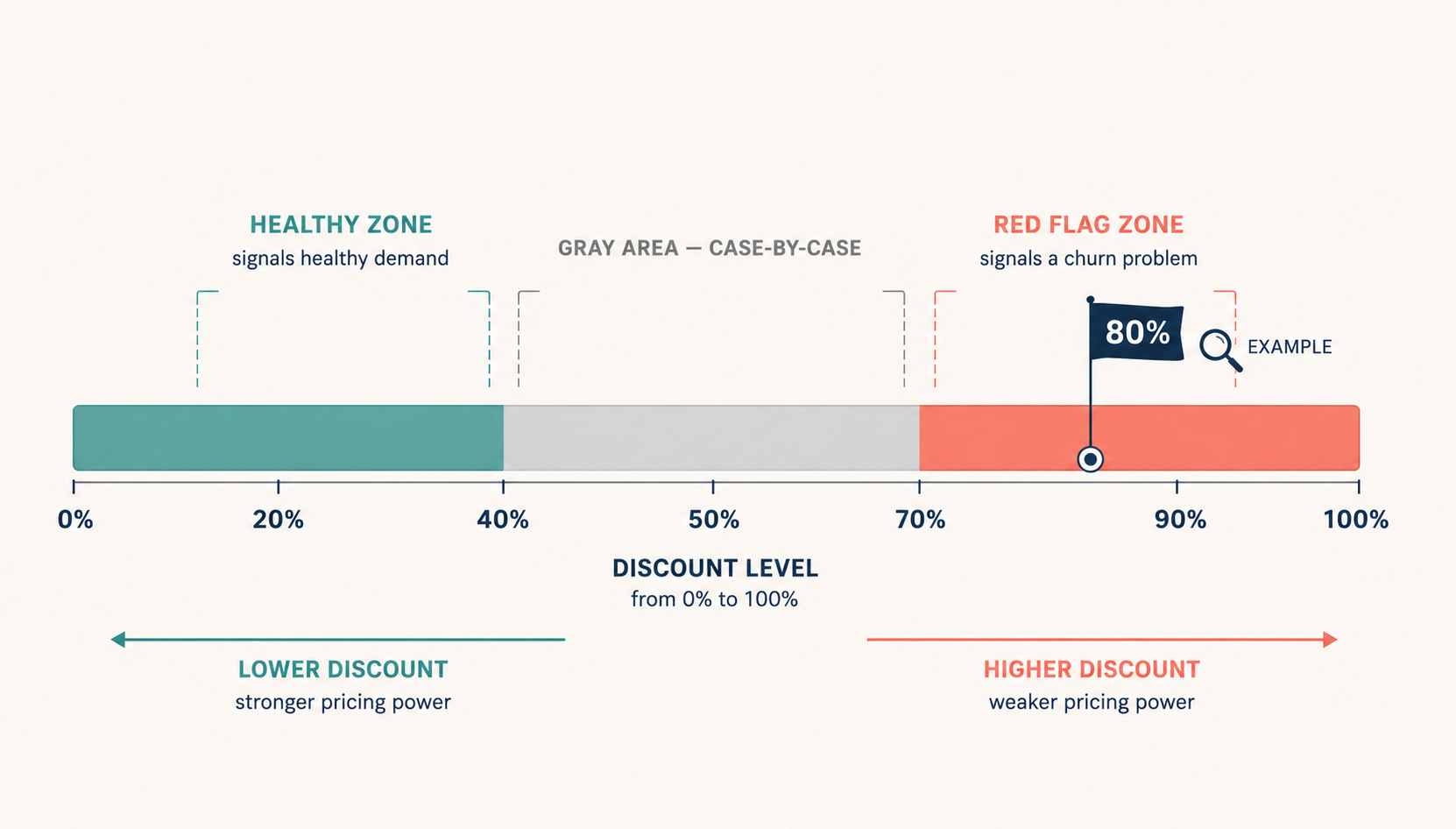
The catch is that an annual plan defers churn to the renewal date rather than curing it, so the risk simply reappears twelve months later in one lump.
That means the number worth watching becomes your annual cohort renewal rate, not the comfortable monthly figure that made everything look fine.
Exit Flows Catch the Ones Halfway Out
A good exit flow meets a cancelling customer with a pause instead of a goodbye, offers something like three months for a dollar and asks which missing feature pushed them toward the door so you can go build it.
Anyone who has tried to cancel a streaming subscription knows this move from the inside, because the click meant to end the relationship instead surfaces a discount tempting enough to keep you paying for months you never planned on.
There are tools out there that make these flows easy to run, though it is worth admitting this is the lowest-leverage item on the list, precisely because it steps in after the decision has already hardened.
A save offer wins back a slice, but defense at the final second is a poor substitute for never losing the customer in the first place.
All of these levers protect the base you already have, yet the founders who stop worrying about churn entirely are the ones whose base grows on its own.
6. Negative Churn Is the Only Real Finish Line
The target was never zero churn, which is both impossible and beside the point, because the real prize is a base that expands faster than it leaks.
Net Revenue Expansion and the Reverse Treadmill
Negative churn means the customers you keep add seats, upgrade tiers and buy adjacent products faster than the leavers take revenue away, so your existing accounts grow the topline even if you never sign another logo. This is the treadmill running in reverse, finally working for you instead of against you.
It is worth sitting with one number here, because median small-business software runs net revenue retention near 97%, which means the average SMB SaaS company shrinks inside its own base every year before it wins a single new customer.
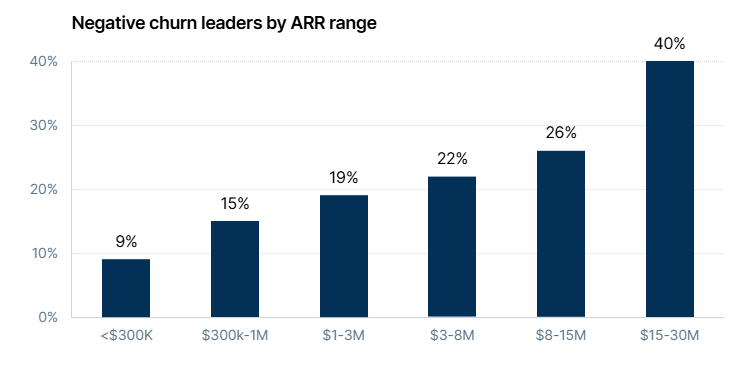
At the other end of the spectrum, the best products turn one dollar of existing revenue into far more the following year, the way Slack at its peak grew each customer relationship into $1.40 the next year before any new logo was counted. The distance between those two worlds is the whole game.
Expansion Mechanics and the Gross Retention Caveat
Getting there follows a fairly consistent path, which is to sell into businesses whose teams grow, bake collaboration so deeply into the workflow that the next colleague has to be added to get the job done and expand into adjacent products the way Figma did with FigJam and Figma Make.
How you price is equally important, since usage-based and seat-based models let revenue climb alongside a customer’s own success rather than sitting flat while their usage soars.
One honest caveat keeps this from becoming a vanity metric, because net revenue retention above 100% can still hide painful logo churn when two or three whales are doing all the expanding. Keeping gross retention in view alongside it tells you whether the growth is broad and durable or propped up by a handful of accounts that could all leave in the same quarter.
So you cannot drive churn to zero and chasing it there is the wrong instinct, because a little churn is simply the market being honest about who you fit and who you never did.
Once you stop treating it as a cancel-button emergency and work the stack in order, fixing the market you serve, the first taste of value, the payment leak that never had to happen and a product whose base compounds.
That’s when you finally find the cure.