

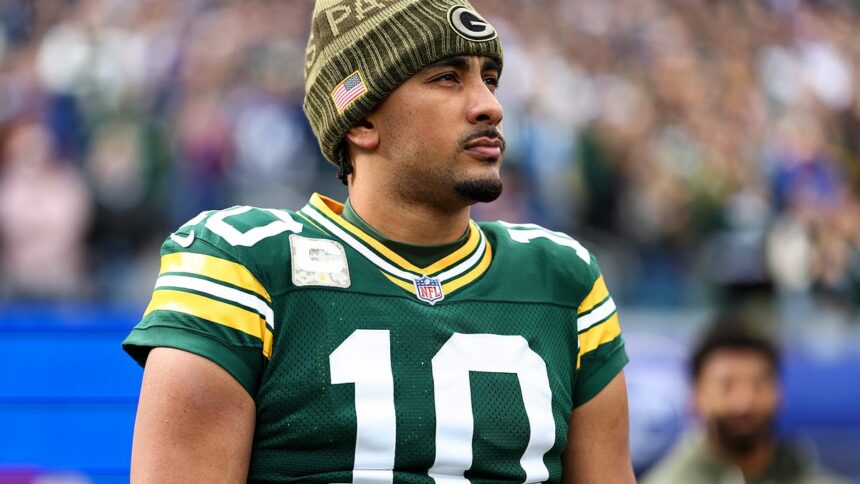

As the NFL’s only publicly-owned franchise, the Green Bay Packers annual financial report offers fans a rare glimpse into the finances of an NFL team.
Here are the highlights from the 2025 season:
-
The Packers reported a record $753 million in revenue, up 4.7% from 2024.
-
Roughly 60% of revenue comes from national deals (think: league-level media rights, sponsorships, and licensing), with the remaining 40% coming through local sources (think: ticket sales, stadium sponsorships, and retail sales).
-
Given that the Packers reported $453 million in national revenue, we know the NFL shared $14.5 billion in total national revenue last season. To get that number, you multiply the single-team share ($453M) by the number of NFL teams (32). That means each team received nearly half a billion dollars from the league office before a single ticket, hot dog, or local sponsorship was sold.
The Packers have now seen top-line revenue increases each of the past five seasons: $579 million in 2021 → $610 million in 2022 → $654 million in 2023 → $719 million in 2024 → $753 million in 2025. But top-line revenue isn’t the story.
The most revealing detail in the Packers’ 2025 financial report is that, for the first time since 1990 (excluding COVID years), the team lost money. The Packers blamed their $1.1 million operating loss last year on 1) higher upfront player costs tied to the Micah Parsons signing and other cuts/trades, and 2) the team’s unique ownership model prohibiting the franchise from raising private equity money.
“It’s like other teams have an ATM that we don’t have,” Packers Chairman and CEO Ed Policy said in reference to the NFL’s new private equity rules, which have allowed teams like the Buffalo Bills, Miami Dolphins, and Los Angeles Chargers to raise billions of dollars in cash by selling minority equity stakes.
But is that the right way to look at it? Does a public-ownership structure really put the Packers at a disadvantage? I don’t necessarily think so, and when you think about what the Packers can do, it might actually be an advantage.
Let me explain…
Read more