

taz: Mr. Balke, Nazis in Palestine – what was going on there?
Ralf Balke: These people – I call them Palestine Germans – are non-Jewish German Templarswho emigrated to Palestine in the late 1860s.
taz: German Templars?
Beams: These were members of the Temple Society from Swabia – not to be confused with the Templar Order of the Crusaders. It is a Christian, pietistic group that sought refuge in what they considered to be the Holy Land in anticipation of the apocalypse. They considered themselves the new chosen people and founded several settlements in Palestine. There they lived for three generations very isolated from the Arab and later increasingly present Jewish population.

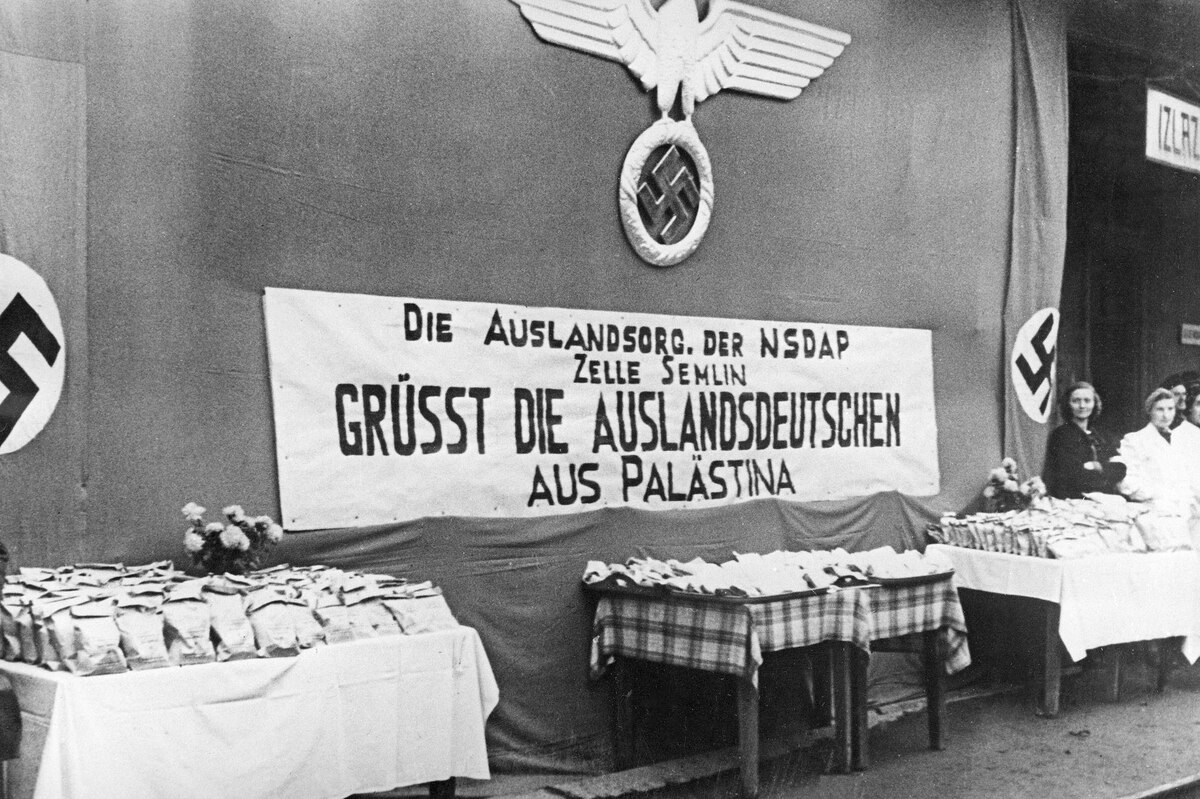
taz: And became NSDAP supporters?
Beams: From around 1931, some of them sought contacts with the NSDAP’s foreign organization. As a result of the Transfer of power to Hitler in 1933 The number of party members then jumped to around 17 percent among adults. For other Germans abroad, however, the average value was only 5 percent.
taz: How was this contact established?
Beams: In 1931, an architect living in Haifa wrote to the NSDAP and asked: “How can one become a member of your organization?” People had found out about the NSDAP through the media striker subscribe. Little by little, individual NSDAP local groups emerged in all German colonies. There was then a competition between the most prominent party members, from which a certain Cornelius Schwarz emerged as the winner. His son had already set up a national NSDAP group in Cairo and had contacts with Alfred and Rudolf Hess.
taz: Why did so many Palestine Germans feel attracted to the NSDAP?
Beams: On the one hand, the NSDAP gave it the opportunity to take a certain position outside of the traditional structures of the temple society. The other thing was them Riots between 1936 and 1939. The Palestine Germans were suggested by the NSDAP’s foreign organization that they were an integral part of the German national body. Accordingly, party membership was perceived as a kind of insurance.
People had found out about the NSDAP through the media and were able to subscribe to the striker
taz: What happened between 1936 and 1939?
Beams: There was an uprising by the Arab population against British rule and at the same time against Jewish immigration. Conditions similar to civil war arose.
taz: And in the middle of it all are the Palestine Germans.
Beams: Exactly, especially economically. They were dependent on Arab labor and were dependent on the growing Jewish market and the British mandate to sell their products.
taz: Did that also lead to violent conflicts?
Beams: Only limited. During the years of unrest, only a few Palestine Germans were harmed. The insurgents around the Mufti of Jerusalem deliberately left them alone because they hoped for military support from Germany and did not want to anger Berlin. Schwarz issued the order that all Palestine Germans should wear a swastika badge so as not to be confused with Jews or British. There is also an absurd story: The milk transporter, which commuted between the German settlement of Wilhelma and Jerusalem, occasionally carried Jewish passengers who had to wave the swastika flag as they passed through Arab areas in order not to be bothered by the Arabs.
“The swastika in the Holy Land. The national group of the NSDAP in Palestine” – Ralf Balke talks about this in the Carl von Ossietzky lecture room of the State and University Library. An event organized by the German-Israeli Society of Hamburg, registration is required at [email protected]: Thursday, February 12th, 6 p.m., Von-Melle-Park 3, 20146 Hamburg
taz: When did the Nazi era end in Palestine?
Beams: The NSDAP was 1939 with the outbreak of war Story. Hours earlier, individual Palestine Germans had already chartered a steamer, others were interned by the British and later shipped to Australia. Initially only a small group of older people were allowed to stay in Palestine, and they had to leave the country when Israel gained independence at the latest.