

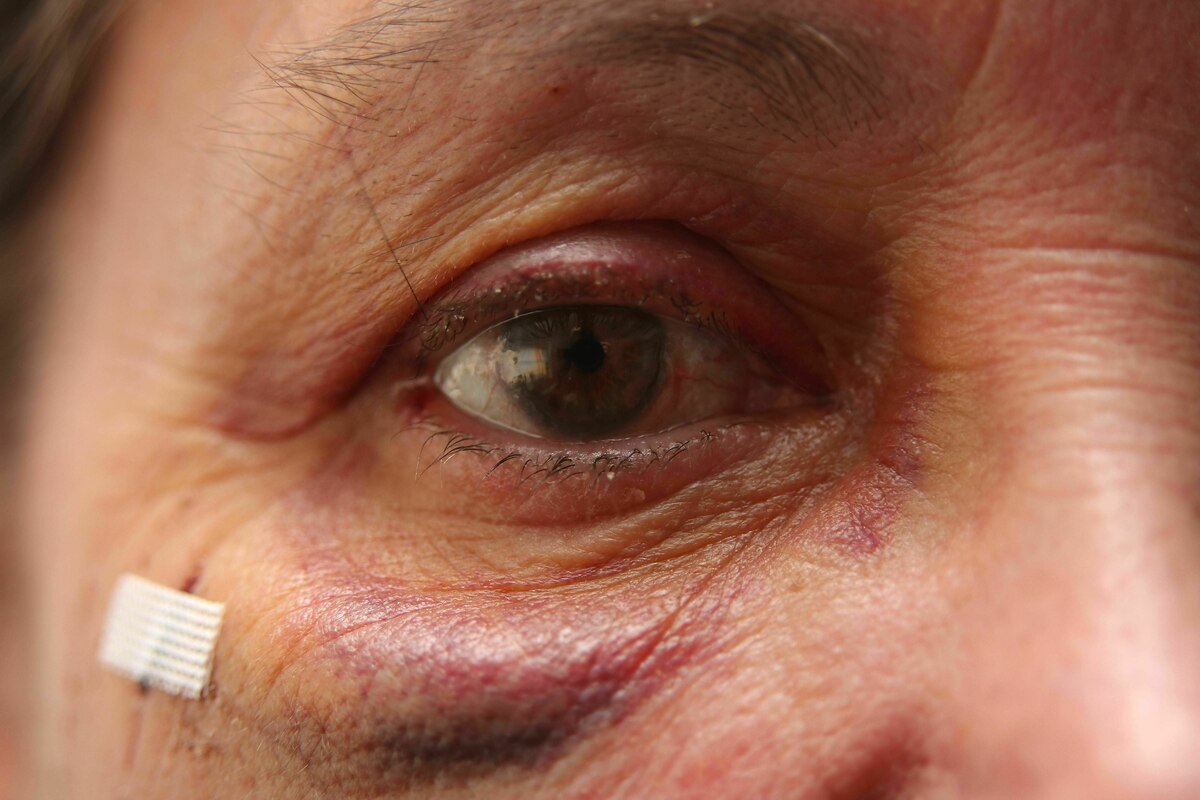
Federal Interior Minister Alexander Dobrindt (CSU) has a strange view of the results of the dark field study that he presented on Tuesday. This shows that a large part of the population – and especially often women – have already experienced violenceoften through (ex-)partners. And it shows that hardly a tenth of the cases are reported, and in or after partnerships even only a twentieth. Dobrindt’s explanation for this: It is because the victims often “do not want to admit” the crime.
No matter how often experts point out, affected women are not taken seriously by police officers and perpetrators often go unchallenged in court. Dobrindt, who likes to appear in a police jacket, believes it’s because of them Sacrifice. And he immediately emphasizes how surprised he is by the extent of the violence: “The problem is much more widespread than we all feared” and “couldn’t have been expected.”
Family Minister Karin Prien (CDU), who sits on the podium together with Dobrindt and BKA boss Holger Münch, finds somewhat more appropriate words. A “flashlight” was pointed “into the dark,” she says. And what the researchers have uncovered is actually quite dark.
This also has to do with the fact that the study is very broad. The last representative victim survey commissioned by the federal government dates back to 2004. At that time, only women were surveyed. This time, not only was the field of respondents opened up to men and non-binary people, the approximately 15,000 participants were also asked about many different forms of violence in many areas. So it’s not just about physical abuse and attacks in the domestic context, but also about psychological forms of violence, such as humiliation, threats, control, manipulation or coercion in other areas.
Migrant women and children first
This created a very detailed picture of violence in German society that goes far beyond the police’s high-profile statistics, in which only reported incidents are counted. The most important results at a glance:
Gender: Women are affected significantly more often than men, and this applies to all forms of violencebut especially for sexual assault, harassment and stalking. Women also experience psychological violence in or after relationships more often, at almost 50 percent, than men at around 40 percent.
In the last five years, however, men and women have suffered physical attacks by (ex-)partners at roughly the same rate; around one in twenty is affected. But: Violence against women is, on average, much more serious and often life-threatening. And: Violence against women almost always comes from men, while women rarely commit violence against men outside of relationships.
Alter: Younger people report being targets of violence much more often than older people. This is particularly clear in digital forms and in sexual harassment. In addition, a large number of people stated that they had been affected during their childhood. One in two people described physical violence by parents or guardians and one in three described psychological violence in childhood. One in four also reported witnessing violence between parents as a child.
Migration background: Those who have parents who immigrated to Germany or who immigrated themselves experience violence more often than others. Migrant women are affected even more often than migrant men. While around 7 percent of migrant women were threatened by a partner or ex-partner in the last five years, the figure was around 5 percent of non-migrant women. And when it comes to physical violence in (ex-)partnerships, migrant women are affected twice as often (8 percent) as non-migrant women (around 4 percent).
If not even five percent of (ex-)partner violence is reported at all, the police must be better prepared and made more aware in order to recognize warning signs in good time and protect those affected.
Erika Krause-Schöne, federal women’s chairwoman of the GdP
Queerness: Those who belong to the LGBTQ community also experience violence significantly more often than others. In the last five years, almost 40 percent of queer people have been affected by sexual harassment, while outside of this group it was around 25 percent. Around 20 percent of the queer community experienced sexual assault compared to around 10 percent of the majority population.
Prevention and awareness raising
Dobrindt emphasized on Tuesday that the federal government is working to combat violence and referred to the planned electronic ankle bracelet for convicted violent criminals. If the wearer approaches the affected woman, she should be automatically warned and the authorities alerted. The law is due to be introduced into the Bundestag at the end of February. Another bill, according to which knockout drops would be considered a weapon in court, is currently being discussed between the ministries. Such narcotics are often used by perpetrators to rape women.
Prien also announced that he wanted to do more for prevention. The last government improved the financing of women’s shelters with the Violence Assistance Act at the beginning of 2025, but more money is needed, said Prien. She also referred to the federally funded camouflage app from the non-violent in the future association. V. The app cannot be recognized by outsiders and is intended to offer affected women a secret opportunity to obtain information and contact advice centers.
That is not enough for the opposition in the Bundestag. The managing director of the Green parliamentary group Irene Mihalic and the women’s policy spokeswoman Ulle Schauws said: “The dark field study must wake us all up.” One must analyze why so few of those affected seek help and also take into account the authorities that Dobrindt so carefully avoided: “The structures in the law enforcement authorities, in the judiciary as well as in the advice centers and facilities must consistently mesh with one another.”
Civil society organizations are also putting pressure on it. Dilken Çelebi from the German Association of Women Lawyers demanded: “Legal practitioners from the police, public prosecutor’s office and judiciary must receive mandatory training on gender-specific and domestic violence – not as an option, but as a standard.” And Erika Krause-Schöne, federal women’s chairwoman of the GdP police union, said: “If not even five percent of (ex-)partnership violence is reported at all, the police must be better prepared and more sensitized in order to recognize warning signs in good time and protect those affected.”