

Monday, August 24, 2026 – Israeli strikes kill six Palestinians on Monday. Palestinian man executed by Israel in Gaza, family says. Israeli forces kill Palestinian child, settler assaults elderly amputee as attacks continue across the West Bank. Israeli Defense Minister Israel Katz says Israeli military will act “forcefully” over kites from Gaza. Drop Site contributor Mohamed Awad to be detained without charge for months. Hamas tells U.S. envoy Jared Kushner that it will not abide by an unenforced deal. Hamas discusses electoral strategy. “Anti-Netanyahu” says there will be no Palestinian state if he controls government. U.S. to announce “economic D-Day” sanctions against Iran. Iran permits Iraqi tankers to pass through Hormuz. Qatari spending is dramatically reduced by war. U.S. officials claim that 40 tankers crossed Hormuz on Friday; data shows none. Iranian refinery approaching full repair, official says. Pakistan army chief set to visit Iran on Monday. Iran announces it will choke “shuttle” trade through Hormuz. Ansarallah targets Saudi oil tanker in the Red Sea. Israeli forces kill two 17-year-old boys, demolish and burn homes across Southern Lebanon despite ceasefire. U.S. envoy walks back comments on Hezbollah role in negotiations. Thousands are still without power in northwest Indiana after deadly storms, sparking lawsuit. Father of USS Abraham Lincoln sailor detained by ICE while son deployed at sea. Canada “at war” over trade after U.S.-Canada talks collapse, oil supply squeeze looming for U.S. refiners. U.S. Postal Service moves forward with mail-in ballot restrictions. Trump made more than 1,000 stock trades in June, disclosure shows. Migrants who resisted deportation flight to Liberia forced onward to Equatorial Guinea. Federal judge strikes down Trump administration’s visa ban on 75 countries. House Minority Leader Hakeem Jeffries met privately with Jared Kushner. Israel strikes Syria near the Golan Heights. U.S. envoy suggests Israel bombed Syria’s Abu al-Duhur airbase to “bait” Turkey. Ukraine strikes Russian refinery, Russians strike Ukrainian mall. Sudanese Army strikes inside Chad. Venezuela unable to ship oil, Reuters reports. Embattled Mexican governor Rubén Rocha out again. Germany records over 14,000 heat-related deaths. DR Congo and M23 rebels agree on peace roadmap in Switzerland. Video shows hundreds held captive after mass abduction from Nigerian mosque.
Palestine
-
Killed and wounded in Gaza: Over the past 24 hours, two Palestinians were killed and 32 were injured in Israeli attacks across Gaza, according to the Palestinian Ministry of Health.
-
The total recorded death toll since October 7, 2023 has risen to 73,422 killed, with 174,401 injured. Since October 11, the first full day of the so-called ceasefire, Israel has killed at least 1,288 Palestinians in Gaza and wounded 4,290, while 813 bodies have been recovered from under the rubble.
-
-
Israeli strikes kill six Palestinians on Monday: At least six Palestinians, including a child, were killed in Israeli attacks across the Gaza Strip on Monday, Al Jazeera reported. A Palestinian was killed and others wounded when Israeli forces struck a tent sheltering displaced people near Al-Aqsa Martyrs hospital in Deir al-Balah, central Gaza, WAFA reported. Separately, another Palestinian died from wounds sustained in an Israeli airstrike on the Gaza City port area last Tuesday which killed seven. Israeli forces targeted a mosque and a water desalination plant in Gaza City’s Sheikh Radwan district.
-
Israel continues to kill in Gaza over the weekend despite “ceasefire”:
-
An Israeli drone struck a home in the Al-Bassa area north of Deir al-Balah on Saturday, killing one Palestinian man and wounding another. Separately, a woman was shot by Israeli forces near Nuseirat.
-
Israeli artillery shelled areas around Al-Bureij, Khan Younis, and eastern Gaza City on Saturday, including homes in Khan Younis’ Al-Amal neighborhood.
-
On Sunday, Israeli forces killed a Palestinian in Al-Maghazi refugee camp in central Gaza. In a separate airstrike near Al-Zawayda, Israel killed a 4-year-old Palestinian, sources told Drop Site, wounding two others Palestinian in the same strike.
-
Israeli tanks also fired toward displacement tents near Asdaa City and Hamad Towers, warships opened fire off Rafah, and artillery shelling was reported in northern Al-Bureij on Sunday.
-
-
Palestinian man executed by Israel in Gaza, family says: The family of Ibrahim Mohammed Kawarea says Israeli forces executed the father of three after detaining him near the “Yellow Line” east of Khan Younis on Friday, according to Felesteen.
-
Kawarea was suffering a severe mental health crisis. Relatives said his state of mind had worsened after his cousin had been killed days earlier.
-
His uncle, Jaber Kawarea, said Ibrahim’s body arrived at Nasser Medical Complex with multiple gunshot wounds to his head, chest, and abdomen—some apparently fired at close range—and his legs were still bound. “We were shocked that his legs were also tied,” he said.
-
The family described his killing as a “field execution” and is demanding an international investigation.
-
-
Israeli forces kill Palestinian child, settler assaults elderly amputee as attacks continue across the West Bank:
-
Nablus: Israeli forces shot and killed a 14-year-old Palestinian during a raid on New Askar refugee camp, east of Nablus, on Sunday. Israeli forces also continued their siege of three Palestinian homes in Qusra for the third consecutive week on Sunday, restricting movement and blocking aid and solidarity groups, while allowing settlers to move freely around the besieged homes. Israeli attackers withdrew on Sunday from one of these homes after occupying it for 10 days, but remained stationed outside the property.
-
Hebron: An Israeli settler assaulted an elderly Palestinian amputee in Masafer Yatta on Saturday, while another videotaped it. After Saturday’s assault, Israeli forces raided his home, confiscating his family’s phones, per WAFA. Israel police announced on Sunday that two Israeli teenagers were arrested—the 16-year-old who clubbed the disabled Palestinian man and the 17-year-old who filmed the attack, according to the Times of Israel. The 17-year-old was later released to house arrest, the police said.
-
Jordan Valley: An Israeli settler was stabbed Sunday morning near the Palestinian village of Al-Auja in the occupied Jordan Valley, according to The New Arab. The 24-year-old man was being treated for his injuries as Israeli forces searched the area for the attacker. Al-Auja has been subjected to so much sustained settler violence that residents were forced to abandon the village earlier this year.
-
-
Katz says Israeli military will act “forcefully” over kites from Gaza: Israeli Defense Minister Israel Katz ordered the Israeli military on Sunday to “act immediately and forcefully” over kites launched from Gaza, declaring that Israel will treat every kite or balloon as an “act of war,” even those carrying no explosives.
-
Four kites flown from Gaza landed in Kibbutz Nahal Oz over the weekend, according to the Times of Israel. The Israeli military said nothing suspicious was found on them and they posed no danger to the public.
-
“A balloon is treated like a kite, and a kite is treated like a drone, with or without explosives,” Katz said, threatening those behind the launches with the “utmost severity.”
-
Senior Hamas official Basem Naim responded on Sunday, writing that it was a “surreal paradox” that a “nuclear state that practices terrorism daily” would “issue orders to deal forcefully with paper kites coming out of Gaza.”
-
-
Mohamed Awad to be detained without charge for months: Palestinian journalist and Drop Site contributor Mohamed Awad was ordered to be held in administrative detention for four months by Israeli military authorities, according to his lawyer. Awad was arrested from his home in the village of Beitunia, near Ramallah in the occupied West Bank, on August 12 by the Israeli military. Administrative detention is a mechanism by which Israeli authorities imprison Palestinians indefinitely without charge or trial.
-
Hamas tells Kushner that it will not abide by an unenforced deal: Senior Hamas official Osama Hamdan said the group told Jared Kushner in their meeting last weekend that if Israel does not publicly accept the proposed framework and begin implementing its obligations, including halting attacks and withdrawing from Gaza, Hamas will not consider itself obligated to implement any part of the deal. Hamdan made the remarks on an Iraqi podcast released this week.
-
Hamdan stressed that Hamas has not agreed to surrender its weapons. He said the framework calls for heavy weapons to be restricted and stored under the authority of a Palestinian administrative committee governing Gaza, while remaining in Palestinian hands.
-
He also said that none of Hamas’s weapons would be transferred to any non-Palestinian party and not a single bullet would leave Gaza under the agreement.
-
-
Hamas discusses electoral strategy: Hamas said in a statement that it would contest the upcoming Palestinian legislative elections as part of the “broadest possible national alliance” to build a more unified Palestinian political system.
-
Palestinian Authority President Mahmoud Abbas issued a decree on July 9 setting legislative elections for November 28 in Jerusalem, the West Bank, and Gaza. They would be the first Palestinian legislative elections since 2006. Hamas urged Abbas not to reverse course “as happened in previous stages.”
-
-
“Anti-Netanyahu” says there will be no Palestinian state if he controls government: Gadi Eisenkot, the former Israeli military chief of staff now leading in polls to unseat Benjamin Netanyahu in the October 27 election, declared on Saturday there will be no Palestinian state under a government he forms. “There is no Palestinian state, and in the government we will form, no Palestinian state will arise,” he wrote on X.
-
A recent New Yorker profile by editor David Remnick cast him as the “anti-Bibi” in “manner and character,” a humble soldier fighting for a “Jewish, democratic, progressive, and liberal state.”
-
Iran
-
U.S. to announce “economic D-Day” sanctions against Iran: Treasury Secretary Scott Bessent is set to announce new U.S. sanctions against Iran at a press conference on Monday afternoon. In an op-ed in the Financial Times, Bessent wrote: “At dawn begins an economic D-Day—the single greatest financial offensive ever marshalled against an adversary. Our objective is to sever every economic lifeline that sustains the tyrannical regime until Tehran stands alone.” He added that any country that “serves as a financial artery” for Iran “should expect to share in its isolation” and would become a “global pariah.”
-
Iran’s Foreign Ministry spokesperson Esmail Baghaei criticized the move as “a clear example of economic terrorism to punish a nation that insists on defending its sovereignty and independence.” He warned that Iran would respond harshly to expanded U.S. sanctions. “Any escalation of this situation will undoubtedly bring about consequences,” Baghaei said. “Our hands are not tied.”
-
Mohsen Rezaei, secretary of Iran’s Supreme National Security Council, warned other countries not to join the campaign against Iran, saying that “any country participating in the imposition of economic restrictions against us is considered an enemy.”
-
Rezaei said Iran is prepared to target “all American oil and economic companies in the region” if Washington escalates to economic war, and that in a full economic war, Iran would let no oil leave the Persian Gulf “even through other means,” signaling potential strikes on bypasses.
-
-
Iran permits Iraqi tankers to pass through Hormuz: Iran granted special permission for a number of Iraqi oil tankers to pass through the Strait of Hormuz after repeated requests from Baghdad, IRNA reported.
-
The issue was a key request during Iranian Parliament Speaker Mohammad Baqer Qalibaf’s visit to Iraq. The Iraqi President said Iran had already allowed the passage of vessels carrying Iraqi crude in recent days, according to Reuters.
-
Iraq produced about 4 million barrels per day before the Iran war, and virtually all seaborne exports left from the southern Basra terminals in the Persian Gulf, meaning they had to pass through the Strait of Hormuz.
-
-
Qatari spending dramatically reduced by war: Qatar is slashing spending at home and abroad as the six-month U.S.-Israel war with Iran takes a severe toll on one of the world’s richest states, the Financial Times reported.
-
Qatari government departments have had budgets reduced by as much as 30%, according to the FT, while funding for overseas aid has been cut by about 85%.
-
Qatar has also halted Liquified Natural Gas production, its main source of export revenue, after Iranian strikes damaged the Ras Laffan complex and the war disrupted shipping through the Strait of Hormuz.
-
The International Monetary Fund expects Qatar’s economy to contract 8.6% this year, the steepest decline among the six Gulf states. Qatar is leaning on its roughly $500 billion sovereign wealth fund to absorb the shock from the war, but officials are reportedly considering deeper cuts if the crisis continues.
-
-
U.S. officials claim that 40 tankers crossed Hormuz on Friday; data shows none: Three U.S. officials told Axios’s Barak Ravid on Saturday that 40 tankers crossed the Strait of Hormuz on Friday, carrying 16 million barrels of oil out of the Gulf.
-
Kpler’s vessel-tracking data, however, showed zero west-to-east tanker crossings on Friday and zero barrels of oil exiting through the Strait.
-
-
Iranian refinery approaching full repair, official says: The repair of Iran’s South Pars Phase 14 gas refinery, hit in an Israeli strike during the 12-day war in June 2025, is 70% complete, Pars Oil and Gas Company CEO Touraj Dehqani said on Saturday, according to Iran’s oil ministry news agency SHANA. Dehqani claimed the refinery would be fully restored and its damaged section reintegrated into the production cycle by year’s end.
-
South Pars, the offshore field Iran shares with Qatar in the Persian Gulf, is the world’s largest gas field and supplies roughly 80% of Iran’s natural gas.
-
Iran’s oil minister also announced the discovery of more than 7.5 trillion cubic feet of natural gas in southern Fars province on Sunday.
-
-
Pakistan army chief set to visit Iran on Monday: Pakistan’s army chief Asim Munir arrived in Tehran on Monday, according to Iran’s Tasnim news agency.
-
Iran’s Foreign Ministry spokesperson Esmail Baghaei said the trip is part of Pakistan’s continuing efforts to strengthen “peace and security” in the region, per New Arab.
-
Al Jazeera’s Ali Hashem says the meeting is meant to reactivate mediation between the U.S. and Iran.
-
-
Iran announces it will choke “shuttle” trade through Hormuz: Iran’s Persian Gulf Strait Authority announced on Sunday that any vessel cooperating with a blacklisted ship, including through ship-to-ship (STS) transfers, will be blacklisted and face fines, detention, or confiscation on future Strait of Hormuz passages.
-
The move seeks to thwart the workaround that has kept oil moving despite Iran’s grip on the strait: a “shuttle” trade in which tankers make short, dark-transit runs through Hormuz with transponders off, then transfer their cargo to other ships via STS just outside the Gulf.
-
Energy analysts have said this covert corridor is a major reason global supply hasn’t collapsed. U.S. authorities say it is helping move about 8 million barrels daily.
-
Yemen
-
Ansarallah targets Saudi oil tanker in the Red Sea: The group’s military spokesperson issued a statement saying an oil tanker belonging to Saudi Arabia “was targeted off the coast of Yanbu in Saudi Arabia with a ballistic missile.” Earlier in the day, the UK Maritime Trade Operations said a tanker was struck by an unknown projectile about 63 nautical miles west of Yanbu, Saudi Arabia, causing a fire on the vessel’s main deck.
Lebanon
-
Israeli forces kill two 17-year-old boys, demolish and burn homes across Southern Lebanon despite ceasefire:
-
In Mays Al-Jabal in the Marjayoun district, Israeli bulldozers demolished a temporary school complex in the Dbayeh area, while troops brought in explosives and rigged several homes for demolition, Lebanon’s National News Agency reported. In Khiam, forces blew up homes near Al-Mabarrat schools before setting fire to additional homes, properties and agricultural fields.
-
The bodies of two 17-year-old boys who had been missing since Sunday were recovered from the Dawhat Kfar Remman area in Nabatieh. Lebanon’s Health Ministry said they had been killed in an Israeli attack with reports saying an Israeli drone struck the motorcycle they were riding.
-
On Saturday, Israeli warplanes struck Ali Al-Taher hill twice, and Israeli artillery hit Dawhat Kfar Remman, Dabsha hill and the wooded area around Ali Al-Taher with phosphorus shells, according to NNA.
-
Two additional Israeli airstrikes hit between Sirbin and Rshaf. No injuries were reported in that strike.
-
Israeli troops demolished civilian homes in the Zawtar pilot zone; reporting here from journalist Courtney Bonneau.
-
-
U.S. envoy walks back comments on Hezbollah role in negotiations: U.S. envoy Tom Barrack walked back remarks suggesting Hezbollah and Iran should be represented in negotiations surrounding Lebanon. In an interview with Mario Nawfal on Saturday, Barrack said that any serious settlement in Lebanon requires Hezbollah and Iran at the negotiating table and the U.S. negotiating team is trying to bring them into the process.
-
“The problem is you don’t have the people who can make decisions at the table,” Barrack told Mario Nawfal. “The people who can make the decision are Hezbollah and Iran.”
-
On Sunday, however, Barrack told the Associated Press that he had been describing the difficulty of resolving Hezbollah’s weapons rather than proposing their participation in negotiations. “Hezbollah is a designated foreign terrorist organization. We do not negotiate with it, and nothing I said suggests otherwise,” he said.
-
U.S. News
-
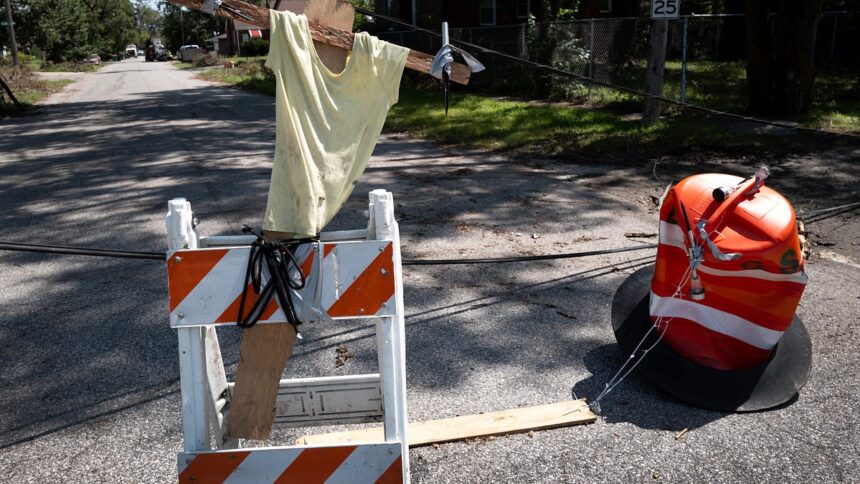
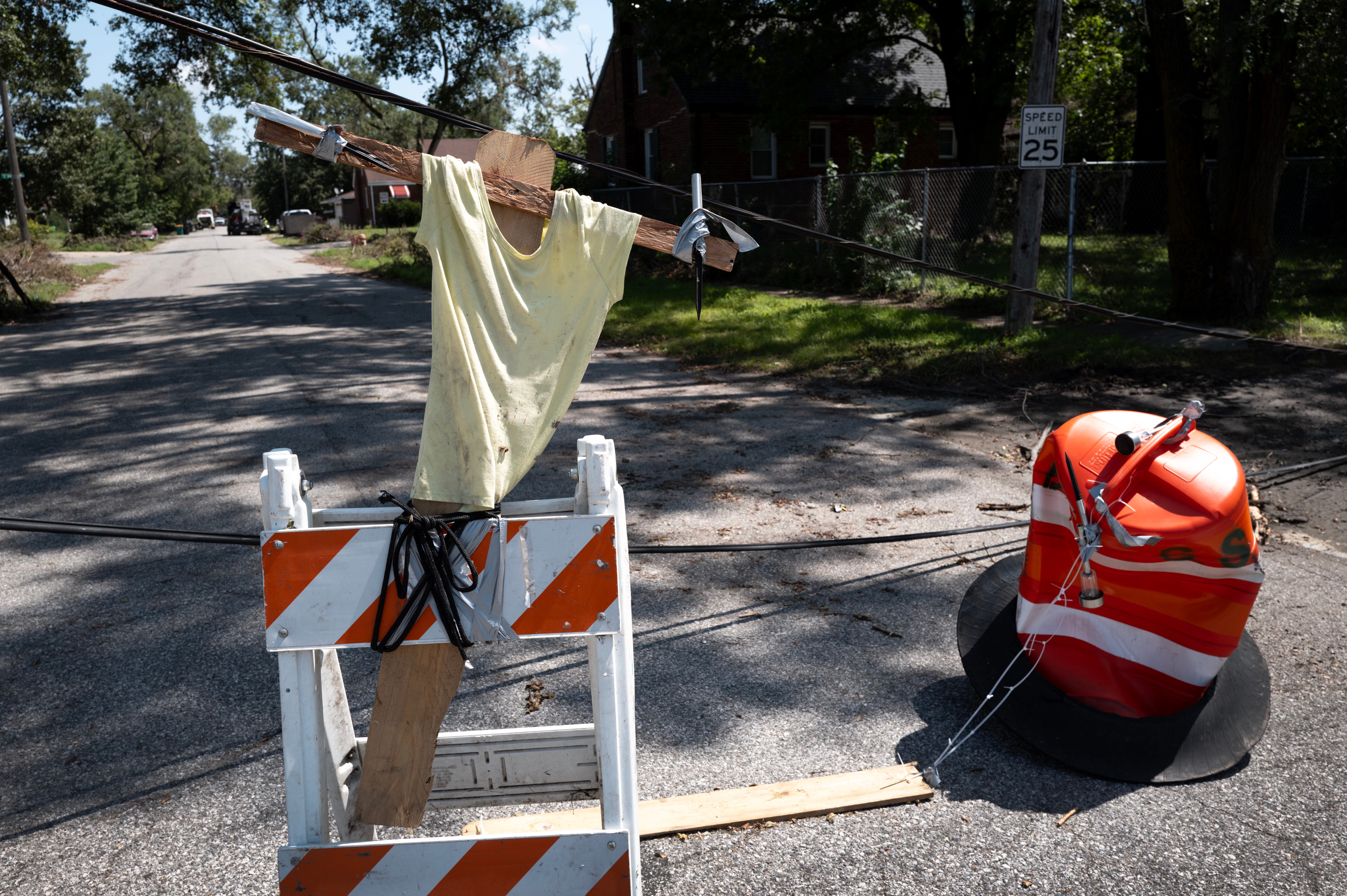
Thousands are still without power in northwest Indiana after deadly storms, sparking lawsuit: More than 28,000 customers remained without power as of Sunday in northwest Indiana following storms that began August 11, which killed at least seven people and displaced about 1,000.
-
In Gary, a majority-Black city where more than half of residents lost power and about one in three lives in poverty, resident Shatiya Hardin described conditions as “absolutely horrible,” saying that families are struggling with the heat and that many rely on a community center for meals, air conditioning, and phone charging.
-
Indiana Gov. Mike Braun requested an expedited major disaster declaration from FEMA for 54 counties, estimating losses could exceed $5 billion.
-
-
Father of USS Abraham Lincoln sailor detained by ICE while son deployed at sea: Luis Manuel Aviles, a Nicaraguan immigrant who has lived in the U.S. for roughly 20 years, was detained by Border Patrol during a traffic stop in Key West, Florida, on Saturday, his family said. His son Joshua Aviles serves aboard the USS Abraham Lincoln, which has been deployed at sea for more than nine months.
-
Family members said Aviles had a work permit, Social Security card, and driver’s license. There have been more than 50 documented detentions of parents and spouses of active-duty service members during Trump’s second term, according to a recent Associated Press investigation.
-
-
Canada “at war” over trade after U.S.-Canada talks collapse, oil supply squeeze looming for U.S. refiners: Canadian Prime Minister Mark Carney declared Canada “at war” over trade after suspending talks with the U.S., saying President Donald Trump “miscalculated” by demanding a “bad deal” that included new restrictions on Canada’s ability to strike trade agreements with other nations and “exclusive access” to Canadian critical minerals.
-
The breakdown triggers new tariffs on $20 billion of Canadian exports on top of existing levies on steel, aluminum, lumber, and vehicles, with Carney saying Canada would match the fresh U.S. tariffs “dollar for dollar.”
-
Separately, U.S. refiners, which are processing the most crude oil in eight years and taking advantage of record diesel margins, face a supply drop from Canada, their largest foreign crude supplier, as planned maintenance in Alberta’s oil sands is set to take about 300,000 barrels a day offline next month, according to reporting from Bloomberg.
-
-
USPS moves forward with mail-in ballot restrictions: The U.S. Postal Service announced Friday new eligibility guidelines for mail-in ballots that closely mirror President Donald Trump’s March executive order restricting the practice, according to The Hill, even though a federal judge later struck down that order.
-
The 95-page report, set for official release August 26, would give states 60 days before the November 3 midterms to notify USPS if they intend to submit citizenship-based voter eligibility lists, echoing Trump’s earlier order to the agency.
-
U.S. District Judge Indira Talwani blocked the order’s enforcement earlier this month, warning it would create “confusion” and “chaos” close to the election.
-
Nearly a third of 2024 general election ballots were cast by mail, according to a U.S. Election Assistance Commission report.
-
-
Trump made more than 1,000 stock trades in June, disclosure shows: President Donald Trump made more than 1,000 securities trades in June, including significant purchases of Berkshire Hathaway, Visa, Mastercard, and Cintas, totaling between $78.1 million and $263.1 million, according to a financial disclosure published Saturday by the U.S. Office of Government Ethics.
-
Trump made more than 21,000 securities trades worth between $600 million and $1.86 billion in 2025, often in bursts tied to market-moving events and occasionally involving same-day buying and selling of the same security.
-
-
Migrants who resisted deportation flight to Liberia forced onward to Equatorial Guinea: At least five migrants who refused to get off a U.S. deportation flight in Liberia were instead flown to Equatorial Guinea on Thursday, the New York Times reported.
-
Three of the deportees, all Cuban men, told the Times that officers placed knees on their necks while restraining them in Liberia, that they were told they would be returned to the U.S., and that instead they landed in Equatorial Guinea, where they were met by dozens of masked, armed officers and taken to a guarded hotel in the country’s capital, Malabo.
-
The case is part of a broader deal in which the U.S. approved a $5 million payment to Liberia to accept up to 1,200 deportees.
-
-
Federal judge strikes down Trump administration’s visa ban on 75 countries: Judge Jeannette A. Vargas of the Southern District of New York ruled Friday that the Trump administration’s ban on issuing visas to immigrants from 75 countries was “contrary to law” and exceeded Secretary of State Marco Rubio’s legal authority, disputing the administration’s stated rationale that targeted immigrants were likely to become “a financial burden to Americans.”
-
Vargas distinguished the case from the Supreme Court’s 2018 upholding of Trump’s first-term travel ban, noting that ruling concerned entry restrictions rather than visa issuance.
-
The Trump administration is expected to appeal the decision.
-
-
Jeffries met privately with Kushner amid preparations for possible Democratic House majority: House Minority Leader Hakeem Jeffries met privately in recent weeks in New York City with Jared Kushner, President Trump’s top outside adviser and son-in-law, to discuss potential areas of common ground including housing, immigration, and cost of living, The New York Times reported on Saturday.
-
Kushner suggested Jeffries meet with White House Chief of Staff Susie Wiles, and has reportedly told others that Jeffries is “the most serious person among Democratic leaders” for any bipartisan dealmaking.
-
The meeting comes as Trump’s inner circle prepares for a possible Democratic House majority, with Jeffries telling the Times last month he has “not ruled anything in and not ruled anything out in terms of accountability,” naming War Secretary Pete Hegseth as a cabinet official he wants “next on the list” for removal.
-
📥 Have a tip on Capitol Hill? Email DC Correspondent Julian Andreone at Julian@dropsitenews.com
Other International News
-
Israel strikes Syria near the Golan Heights: Israel carried out a drone strike Saturday on a vehicle in Beit Jinn, southwest of Damascus near the Israeli-occupied Golan Heights. The Israeli military said it targeted a man it accused of being in the “final stages” of preparing an imminent attack on Israeli soldiers. Syrian state media said at least one person was wounded and condemned the strike as a violation of Syrian sovereignty.
-
The attack came four days after Israel carried out a larger unprovoked aerial bombardment of the Abu al-Duhur airbase in Syria’s northwestern Idlib province on August 18.
-
-
Barrack suggests Israel bombed Syria’s Abu al-Duhur airbase to “bait” Turkey: U.S. envoy Tom Barrack said U.S. intelligence found no Turkish military assets at the base and no plan by Ankara to move in, contradicting Netanyahu’s justification for Tuesday’s attack—and said Turkey was exercising “restraint.” He warned Turkey could have scrambled fighter jets against the Israeli aircraft, potentially triggering “World War III.” Barrack said another possibility was a “miscommunication” between Netanyahu’s office, the Israeli military and Mossad.
-
Israeli Defense Minister Israel Katz issued a rare Sabbath statement rejecting Barrack’s account as “full of inaccuracies.” Katz claimed Syria was warned directly, and said Washington was informed beforehand, something Barrack denied.
-
-
Ukraine strikes Russian refinery, Russians strike Ukrainian mall: Ukrainian President Volodymyr Zelenskyy said on Saturday that Ukrainian forces had struck Russia’s Novokuybyshevsk oil refinery, roughly 1,000 kilometers from the front line, as Kyiv expands its long-range campaign against Russian energy and military infrastructure.
-
Ukrainian forces also hit a logistics hub in the Samara region and targets in the Black Sea, according to Zelenskyy.
-
Separately, Russian drones struck a busy shopping mall in Kryvyi Rih on Friday evening, killing at least 16 people and injuring more than 130, including 23 children, the Financial Times reports. As of Saturday morning, nine people remained missing, including two children. Twenty-nine victims were in serious condition, among them five children.
-
President Volodymyr Zelenskyy said the drones hit in two waves, with the second strike coming about 30 minutes later as emergency crews responded, a “double-tap” attack.
-
-
Sudanese Army strikes inside of Chad: The Chadian military confirmed on Saturday that the Sudanese Army conducted a strike on vehicles roughly 100 kilometers into its territory, with reports suggesting the army targeted an RSF convoy traveling through the country.
-
Previous reporting has documented similar convoys carrying arms shipments from the UAE through Chad.
-
-
Venezuela unable to ship oil, Reuters reports: Venezuela’s aging ports have prevented it from moving crude oil as quickly as the country is producing and selling it, according to a Reuters report, with tankers waiting up to 30 days to load because of equipment failures, power outages, storage shortages, and crude-quality problems.
-
Venezuela has been unable to push exports above roughly 1.25 million barrels per day, despite rising production and strong demand.
-
-
Embattled Mexican governor Rocha out again: Sinaloa Gov. Rubén Rocha Moya is stepping aside again, just a day after returning from leave, following intense pressure from his own party and President Claudia Sheinbaum. Rocha stepped away from office after being accused of drug trafficking and alleged collusion with the Sinaloa Cartel’s Chapitos faction by U.S. authorities; he suddenly announced Friday he would return only to then reverse course Saturday, saying he would take an indefinite leave. Morena leaders, including President Sheinbaum, criticized the governor’s return as prioritizing personal ambition over party unity and state stability.
-
Germany records over 14,000 heat-related deaths: Germany registered around 14,000 heat-related deaths this summer amid a series of heatwaves, official data showed, according to AFP. Around 9,600 of those deaths took place in one week in late June when temperatures in Germany rose over 40 degrees Celsius (104 Fahrenheit), according to the Robert Koch Institute, which operates under the Federal Ministry of Health.
-
DR Congo and M23 rebels agree on peace roadmap in Switzerland: Authorities in the Democratic Republic of Congo said in a statement Saturday that the government and the Rwanda-backed M23 rebel group have established a roadmap for peace after five days of negotiations in Switzerland.
-
Both sides committed to continuing talks and agreed to create a ceasefire monitoring mechanism, building on the 2025 U.S.-brokered peace framework. A monitoring team is scheduled for its first verification mission in South Kivu’s Minembwe region.
-
Despite the milestones, Drop Site correspondent Godfrey Olukya reports, key disputes persist over detainee releases, political reforms, and sanctions on M23.
-
Separately, DR Congo President Joseph Kabila is challenging U.S. sanctions imposed over allegations that he supported the Rwanda-backed M23 rebellion. Kabila filed suit in federal court in Washington, D.C., seeking to overturn Treasury Department sanctions imposed April 30. He was sentenced to death in absentia by a Congolese military court in 2025 over ties to M23.
-
-
Video shows hundreds held captive after mass abduction from Nigerian mosque: An armed group released a video showing what residents said were roughly 600 women, children, and elderly people abducted from a village in north-central Nigeria’s Niger State over the weekend.
-
Unidentified gunmen attacked worshippers during Friday prayers and simultaneously raided several surrounding communities, witnesses said, carrying the captives into a forest.
-
No group has yet claimed responsibility for the attack though ransom kidnappings by criminal groups and extremists is common in the region and the fate of the abductees is presently unknown.
-

🛒 SHOP for your Drop News/Not Bombs Hoodie
💬 JOIN our Whatsapp Broadcast Channel for the latest reporting, podcasts, and breaking news, delivered directly
⚠️ TOO MANY EMAILS? You can go to your account settings to unsubscribe from the Drop Site Daily newsletter—while still getting the rest of our reporting