

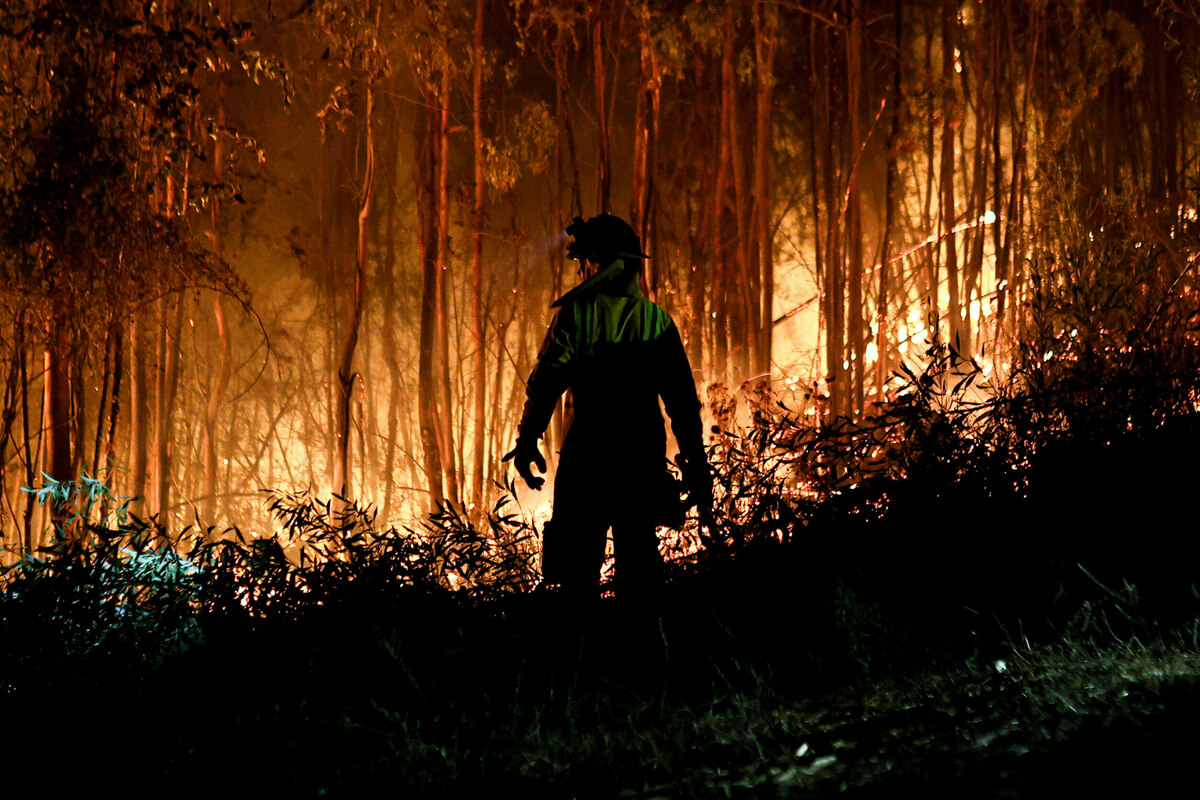
Climate change is increasing the risk of forest fires in southern Latin America. This is how the Climate change The probability of the weather conditions that favored the current forest fires in Argentina and Chile increased by 2.5 to 3 times. One comes to this conclusion Study from the World Weather Attribution (WWA) research group on Wednesday, which examined the recent forest fires in Chile and Argentina.
Serious fires have been raging in the Chilean regions of Biobío and Ñuble since mid-January, killing at least 23 people. Over 1,000 homes were destroyed and 52,000 people had to be evacuated and brought to safety. The fires were promoted by high temperatures and strong winds. There is still a red alert due to some fires.
Forests are also burning over 1,500 kilometers south of Buenos Aires. The fires broke out in Chubut province in mid-December. The provinces of Río Negro, Neuquén and La Pampa are now also affected. These are the worst fires of the last decade and, according to reports from the local fire department, more than 55,000 hectares have already been destroyed.
The flames have also spread to Argentina’s Los Alerces National Park. “In Patagonia, the flames are threatening the Alerce trees – ancient giants that have stood undisturbed for thousands of years,” says Juan Rivera from the Argentine Institute of Snow Research, Glaciology and Environmental Sciences in Mendoza. Extreme drought, persistent winds and high temperatures have allowed the fires to spread repeatedly for more than a month.
Up to 25 percent less precipitation due to climate change
The weather is no coincidence. “Our analysis shows a clear and dangerous impact of climate change on these fires,” explains Clair Barnes from the Center for Environmental Policy at Imperial College London. According to the researchers, 20 to 25 percent less precipitation fell in the affected regions than would have been the case without the increasing burning of fossil fuels. The decline in rainfall in early summer not only results in drier vegetation in Chile and Argentina, which serves as a breeding ground for fires, but also creates water shortages for the people living there, Barnes adds.
In addition to the weather conditions, which are also affected by the climate crisis, other factors also play a role in the spread of fires: These include the ever-increasing spread of non-native tree species such as pine, which form highly flammable forests and which are now dangerously close to residential areas.
Those too Austerity policies of libertarian President Javier Milei the researchers say is part of the problem. In 2025, a quarter of the budget allocated to fire prevention and suppression simply was not spent. The Argentine environmental organization Fundación Ambiente y Recursos Naturales warns of further drastic cuts in funding for prevention and the weakening of early warning systems.
As is usual for the group, World Weather Attribution published the study itself instead of in a specialist magazine. The scientists do this to quickly provide the public with information about current extreme weather. This eliminates the need for assessment by independent specialist colleagues. However, the methods used were published in the classic way and have undergone such testing procedures.
Although some rain has now eased the situation in Chubut somewhat, several fires are still active or are repeatedly fanned by dry and strong winds. “For Chile and Argentina, drying landscapes are a crisis that requires urgent action to protect our unique biodiversity and the people of our region,” said Rivera.