

Anyone who can get through the 950 pages Final report of the interdisciplinary network “Research on coming to terms with sexualized violence and others Forms of abuse in the Evangelical Church and Diakonie in Germany” (ForuM), is shocked: There are 2,225 affected, 1,259 accused and a high number of unreported cases.
For more than three years, scientists, coordinated by Hannover University, explored the blackest abysses. What they found and published in 2024 leaves no doubt: It is not just the Catholic Church that has taken on deep guilt, both across the board and structurally.
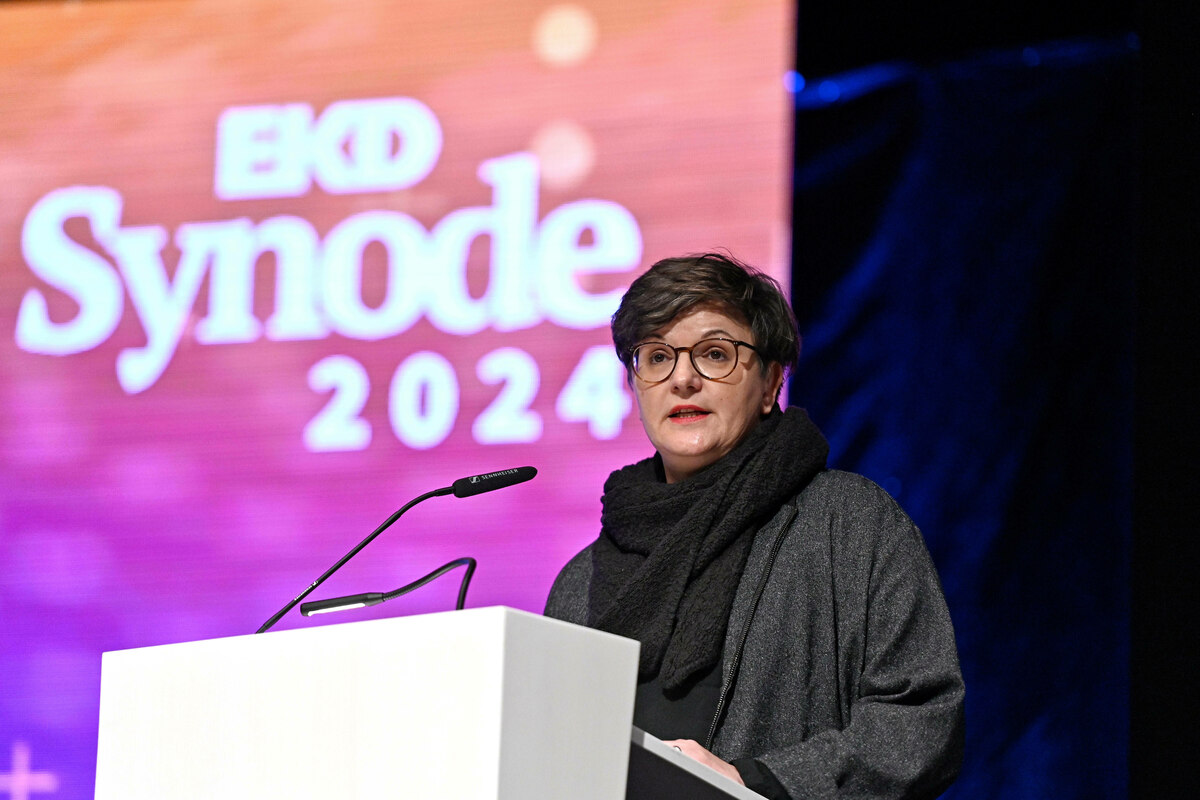
Change is required. But this is exactly what the Protestant Church struggles with just as much as the Catholic Church. The latest indication of this inertia: the resignation of Nancy Janz as spokesperson for those affected Participation forum “Sexualized violence” in the Evangelical Church in Germany (EKD) and her social association Diakonie. She has held this position since mid-2022.
The trigger is “a conglomeration of aspects,” she tells the taz. “The forum does good work, can help shape things, have a say. But some regional churches rely on us, see us as an alibi, as a justification for not having to become more active themselves.”
Deficits in communication
In addition, the implementation of progress and reform approaches developed in the forum in the independent regional churches and also in the diakonia is often too slow. “It has a lot to do with attitude, with how important the topic is to me, the criticism as a whole, how well I pass it on to lower levels. Some people take a very clear position on it, others don’t.” That’s frustrating.
There is also a mediation deficit. “When it comes to communication, the EKD is just really bad,” says Janz. “We have to take people with us and not only tell them the results, but also questions, decisions, interim assessments. But that’s tough, not practiced enough, there’s a lack of transparency.”
And: “Because many things are not communicated well to the outside world, we are often exposed to accusations that we are too close to the church.” This is emotionally stressful.
The EKD cannot be surprised that Janz does not accept an alibi role. “My design should have an impact, should initiate process changes, should encourage rethinking and thinking, and above all should have meaning for other people affected,” she writes about herself on the EKD website. “All the horrors that I personally had to experience, all my struggles for my own life with the horrors, must lead to meaning for me.”
Some regional churches rely on us, seeing us as an alibi, as a justification for not having to become more active themselves.
Nancy Janz, former spokeswoman for the group of those affected
Detlev Zander can also still be seen on the website. He was also the forum’s spokesman until autumn 2025. His office is “currently dormant,” according to the EKD. Zander also saw problems with the processing and he no longer speaks for the forum. Two serious bloodlettings within just a few months.
Incidentally, Nancy Janz’s work for the EKD is not over. Janz is the head of the Sexual Violence Department of the Bremen Regional Church, and she remains that. She also continues to be a member of the participation forum for a “transitional period”. But her resignation, unlike Zander, is a departure – and at the same time, she hopes, “an opportunity to see where we stand, where the gaps are.”
Church takes criticism seriously
Janz “shaped the participation forum, right from the start and decisively,” writes church president Dorothee Wüst in an EKD message. Wüst is the spokesperson for the church representatives in the participation forum. She would like to thank Janz “for the open, honest and constructive cooperation”.
Wüst sees the forum as a place to “further develop standards and promote cultural change in dealing with sexual violence in the church and diakonia”.
She takes the criticism expressed by Janz “very seriously”: “Nancy Janz and I have spoken intensively about your critical questions about the speed and uniformity of the implementation of measures by the regional churches. And I understand your criticism, but I also see, just like Nancy Janz, what great change we have initiated in recent years.”
Janz would sign it. The lack of meaning extends deep into the church system. If you want to fix it, you have to turn a lot of adjustment screws.