

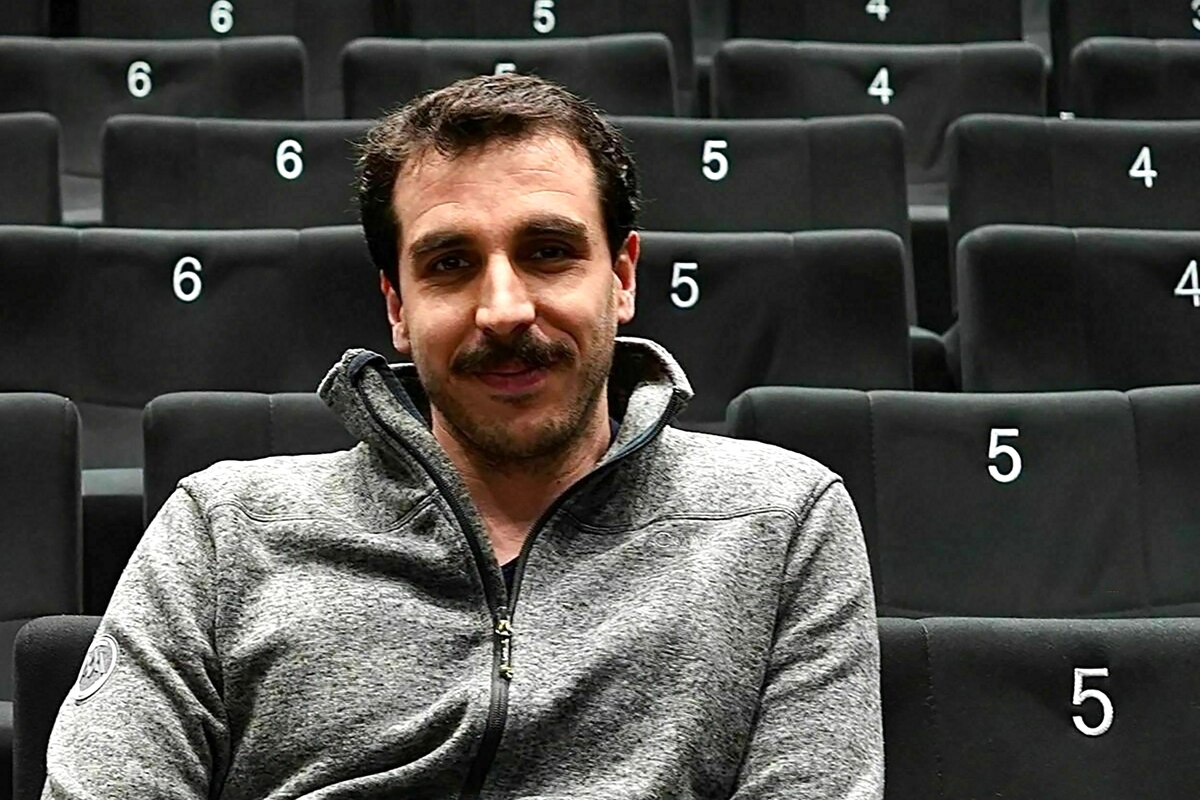
French journalist Raphael Boukandoura was spotted on the sidelines of a demonstration on Monday afternoon arrested and held for three days. After he had previously been threatened with deportation to France, he was surprisingly released on Wednesday evening.
It is unclear whether he will still face charges. Raphael Boukandoura was on assignment for the French newspaper on Monday Liberation He was on his way to observe a demonstration called for by the Kurdish DEM party when he was suddenly arrested on the sidelines of the demonstration. It was about a protest against the attacks on the Kurdish settlement areas in northeast Iraq, where the Kurdish SDF has been fighting for days against Syrian government troops who are advancing into areas previously controlled by Kurds.
The topic is explosive. While many Kurds in Turkey have their Relatives, friends and acquaintances in Syria support, the Turkish government is completely on the side of the Syrian government militias. Although it was unclear what Boukandoura was accused of, he was initially held in police custody and then transferred to a deportation center.
Raphael Boukandoura has lived in Turkey for more than ten years. He is officially accredited, has a press card and a valid residence permit. He has a Turkish partner with whom he has a small child. The French embassy and several journalists’ associations protested against his arrest and possible expulsion. The Turkish representative of Reporters Without Borders, Erol Önderoğlu, called his arrest completely incomprehensible.
Protest against arrest
Rumor has it that he was accused of shouting “slogans” or of taking photos of police officers. Boukandoura works for various French media. Arte also publicly protested against the arrest of its correspondent. In the end, those responsible in Turkey probably didn’t want to risk a scandal with the French government and released the journalist. It is unclear whether the public prosecutor’s office will still file charges against him, but at least Boukandoura is at risk of losing his accreditation.
The case worries the entire community of foreign correspondents. After it in the past ten years, especially in the years after the 2016 coup attemptthere were several expulsions and rejection of accreditation, no such cases have been reported among the permanently accredited European correspondents in the last four to five years.
The process for approving press cards for 2026 is currently ongoing. While some colleagues have already received their documents, others are still waiting. In view of the fighting in northern Syria, tensions between the Kurds and the Turkish government are rising again, although the “peace process” with the PKK officially continues. In the past, reporting on the “Kurdish question” was often a reason why foreign correspondents got into difficulties.