

Dasha Gretschanova has not been able to live in her apartment for almost two weeks. The 30-year-old lawyer is eight months pregnant and can no longer make it to the 12th floor on foot. After the Russian attacks, her home in Kyiv has no electricity or heating.
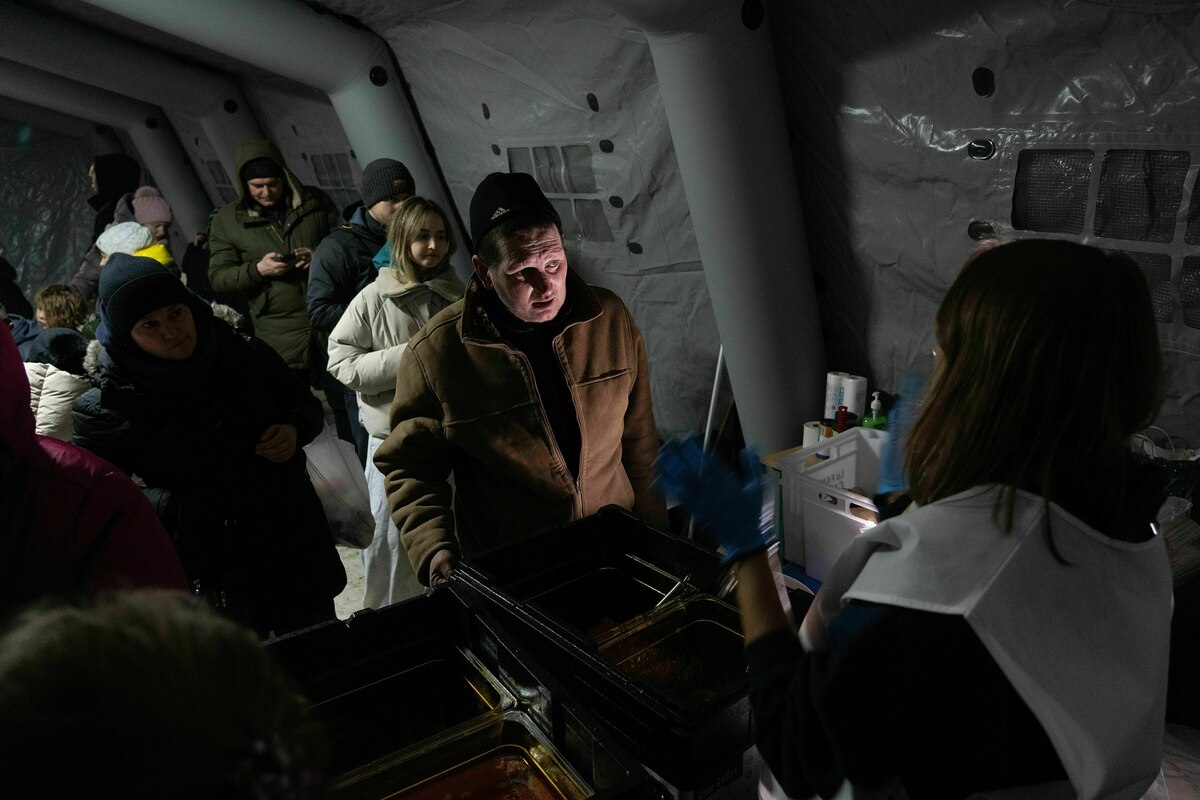
“I had to move in with relatives. There is no electricity or heating there either, but at least they live on the ground floor. Because of my pregnancy, I am particularly sensitive right now and can hardly bear this situation,” says Gretschanowa. She stands with her grandmother and her four-year-old outside in a warming tent that Ukrainian rescue workers have set up in a residential area. They hand out soup. The borscht is the first warm meal in two days for her and her family.
Meanwhile, Russia continues to bomb the Ukrainian capital. Water supplies also collapsed in many parts of Kyiv following the latest attack on Tuesday. Currently, around 4,000 Kyiv houses are still without heating and almost 60 percent of the city is without electricity, said Ukrainian President Volodymyr Zelensky.
Kyiv’s mayor Vitali Klitschko said to the Times, that 600,000 people left the capital in January. Due to damage to the district heating networks, capacity bottlenecks and extreme cold, the restoration of heat supply is being delayed.
No refuge
There are no more seats in the warming tent. But a chair is made available for the heavily pregnant Dasha.
“My son is only four. And I also need normal living conditions. But in our apartment it’s only three degrees plus. A man lived in our house who couldn’t walk because of a war injury. He just froze to death. We live with my grandma too, but we can’t leave Kyiv,” says Gretchanova.
She and her husband come from Luhansk, which is currently under Russian occupation. Neither of them has any relatives in areas where the electricity supply works normally. The warming tents are the only refuge for them as long as the temperatures in Kyiv are below zero.
“In Kyiv we operate 115 emergency shelters around the clock – 24 stationary and 91 mobile. Our employees and psychologists are on duty there. It is warm, there are charging stations for phones and toys for children,” says Pavlo Petrow, spokesman for the state disaster control authority, to the taz. It’s not just because of the air raids and power outages that he and his colleagues have more to do than usual. Many people heat bricks on gas stoves or use kerosene heaters in their homes. This often leads to fires and accidents.
Food means hope
“Sorry, we can only give out one portion of borscht per person. We miscalculated a bit in the calculation. But tomorrow we’ll bring more,” calls Daria, a volunteer at World Central Kitchen, to those waiting in the warming tent. The organization has been delivering food to 50 locations every day for a few days now. In total there are already several hundred thousand portions. In addition to borscht, the offering also includes corn porridge and chicken with vegetables.
“We believe that food means hope. Ukrainians can really endure a lot – both shelling and cold. But for that you need strength. And food gives you the opportunity to warm up and at least recharge your batteries a little. Everyone asks about our borscht. Because borscht is simply anchored in the Ukrainians’ DNA,” says Daria, collecting plastic bowls from lunch.
But while the hot food gives Kyiv residents hope, the heating situation seems hopeless. 34-year-old Iryna Rudenko points to the burst heating pipes in her apartment.
“Yesterday they tried to turn on the radiators, run water, but the pipes burst throughout the house. I don’t think it will be repaired this winter. So I’m just counting the days until spring,” says Rudenko.
Translated from Ukrainian: Gaby Coldewey