

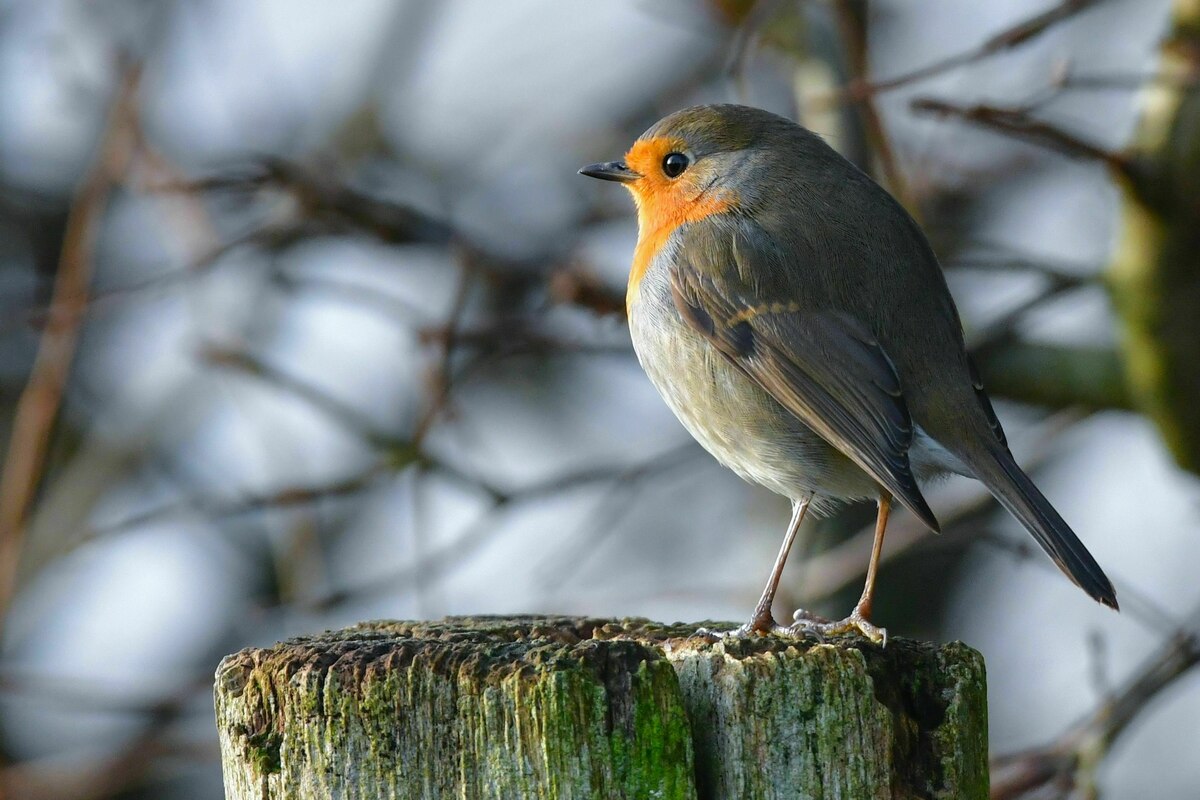
How much do companies depend on biodiversity – and how much does their business influence this diversity? The report from the World Biodiversity Council IPBES, which will be published on Monday, sheds light on these questions. Similar to the IPCC for climate policy, IPBES provides governments with the basis for their nature conservation strategies.
And companies have also discovered the relevance of IPBES research for themselves: “We read from fish monitoring data two years ago that Atlantic cod stocks were in danger,” says Julius Palm, deputy managing director of the food producer followfood. The supply chain has been switched to Pacific cod – “a very complex process,” says Palm. When the official figures showed overfishing of Atlantic cod in the summer of 2025, “we were already somewhere else,” says Palm.
While the black-red federal government and the EU Commission view laws to protect biodiversity as an obstacle to economic growth and want to weaken them in the Infrastructure Future Act or the reform of the Water Framework Directivefollowfood sees biodiversity as the basis of its business. “The more biodiversity an ecosystem has, the more stable our food production is,” explains Palm. “The biodiversity factor is crucial for how we can plan and manage in the long term.”
Since biodiversity is difficult to measure, followfood works on an “input-based” basis: it checks which forms of management promote biodiversity. “The soils of organically certified farms have demonstrably more bottom life than those of conventional farms,” says Palm, “and non-selective fishing methods with a lot of bycatch cause the most damage to fish stocks, which is why our tuna is caught by hand.”
The Regensburg project developer Ratisbona also takes nature conservation concerns into account when planning the buildings for large retail chains such as Edeka, Rewe and Penny. “The biggest lever is the outdoor facilities,” says Julia Vesenjak, sustainability manager of the family business. Parking spaces and open spaces around shopping centers make up two thirds of the total area. “We are basically planning to have flowering meadows, habitat zones, cairns and bushes that correspond to the natural flora and fauna on site,” says Vesenjak.
Same problem as with the climate crisis
Flowering meadows outside, products from the conventional food industry inside. When it comes to biodiversity, “the problem that we observe with the climate crisis is repeated: long-term risks are played off against short-term relief,” says the Federal Association for Sustainable Economy, “the topic has no agenda.” Not enough legislation has happened in recent years. “The EU Nature Restoration Law and the National Biodiversity Strategy are clear in their problem analysis,” says the business association, “in terms of practical implementation, the topic is in its infancy.”
Measuring and monitoring biodiversity is making progress. Unlike greenhouse gas emissions, which can be represented per ton of CO₂, “biodiversity is more complex and harder to break down into one key figure,” says Julia Roblick, who is responsible for business development at the start-up Hula Earth. The Munich-based company uses sensors and satellites to use AI to record the presence of birds or bats.
Companies and operators of solar and wind farms in particular commission Hula Earth to check the biodiversity of their locations. The start-up now monitors around 10,000 hectares. “We try to make it as easy as possible for companies,” says Roblick. “We track a lot of indicators, but try to marry them together.” In the end, something like a key figure for biodiversity emerges.
However, in order to make reliable statements, it is crucial to measure using the same methods over long periods of time, emphasizes Jörg Kleinschmit, head of the forest nature conservation department at the Baden-Württemberg Forestry Research and Research Institute. He was part of the federal-state working group “NabioWald”, which developed national biodiversity monitoring for forests.
It builds on existing monitoring approaches, such as the federal forest inventory or breeding bird monitoring. To date, the data has been recorded individually but not combined, says Kleinschmit. This should change in the future: “We need to jointly survey biodiversity elements and the drivers that influence them in order to make cause-effect relationships clear,” says the forest scientist. The monitoring of common breeding birds has not yet recorded which forests are being counted. “We see that the number of individual species is decreasing or increasing, but we don’t know why,” says Kleinschmit. Will the forest become darker and denser or will there be no forest edges as a transition to open land?
Forest owners are very interested in species monitoring, but at the same time they fear that rare species could limit their options for use. This is where the “valorization” of ecosystem services comes into play. “We have to define what the protection of biodiversity, the services of the forest as CO2– and water sink and its recreational function are worth it,” says Kleinschmit. “Financial incentives for those who own the forest would be desirable.”
Forester Kleinschmit and managers Palm and Vesenjak will take a close look at the report from the World Biodiversity Council IPBES. “We have to keep an eye on developments, both technical and their impact on regulation,” says Vesenjak, “that’s part of our risk management.”