

E A considerable part of our lifestyle imitates that of the Americans. Such as clothing styles, music, eating habits. Our language is just as globalized. Some of us use terms like gaslighting, lovebombing, stonewalling or breadcrumbing quite naturally. Even holidays that are big in the United States—Thanksgiving, Halloween, or Valentine’s Day—are creeping more and more into our lives, especially when they are commercially profitable.
There was also an attempt to spread it in this country during Black History Month. This year marks the 100th anniversary of February’s commemoration month in the USA. For several years now, German anti-racist groups and initiatives have been celebrating Black History Month in February. Then informative and educational events are organized and important black people are remembered and honored.
However, Black History Month in Germany does not have nearly the same importance or prominence as in the USA. Sure – because instead of a US import, we need our own anti-racism month or day. The fact that it is even possible to talk about racism in Germany is the result of extremely important and laborious work that black people and people of color (PoC) have done. It is obvious that they deserve a day of reverence and dignity.

You can’t just copy anti-racism from the USA
However, we cannot simply imitate the USA. A core problem with modern anti-racism is that many of the most important concepts and theories were developed in the States. And analyze the racism there accordingly. But the USA is a completely different society than Germany. There is a much higher black and non-white population there in quantitative terms alone.
In the USA it is clear that everyone, whether black or white, is American, but of a different kind race belong. These then face each other socially, economically and politically in a hierarchical relationship.
Anti-racist struggles and initiatives were also taken much more seriously there much earlier and were able to achieve significantly more. For example, protests during the civil rights movement in 1964 made it possible for no one to be subjected to racial discrimination in public places such as restaurants, public transport or the job market. In Germany, the general equal treatment law only came into force 42 years later, namely in 2006.
They took the term race seriously and used it to make racism tangible as a concept and to expose it as socially constructed. In order to seriously talk about racism, you need an understanding of the concept of “race”. In German, the term “race” is primarily influenced by biology due to the Nazi dictatorship.
There is a courageous history of anti-racism in Germany
The term itself was therefore racially charged and for a long time invulnerable to an anti-racist analysis. Only in the last few years have activists started using the term “race” in German-speaking countries.
Brave fighters like these Poet Semra Ertan took action against racism as early as the 1980s. In her posthumously published collection of poems, “My Name is a Foreigner,” she describes her oppression in Germany. However, Ertan did not speak of racism, but rather used the word “xenophobia” to describe her and the oppression of her fellow human beings. She may also have used this word because criticism of racism was still a fringe phenomenon at the time and was undesirable in public discourse.
Although there are parallels between the racism that is based in the USA and that here, it is by no means identical. The history of black people in the USA is strongly influenced by their enslavement, whereas many black Germans have a different history, shaped by migration or are the product of a so-called interracial relationship, some of which arose before German colonialism.
In addition, the narrative spread in Germany after the Second World War that there had been no PoCs in Germany before the so-called guest worker movement. This is how the narrative of a (white) German population became established, into which (non-white) foreigners then immigrated.
From guest worker to foreigner to person with a migration background – the words are getting nicer, but the conditions for us to exist here and lead a good life are not. It is an attempt to gloss over German racism.
Racism has also cost many lives in Germany
This is also why it is high time to set a day of remembrance and vigilance in Germany. There is March 8th as a feminist day of struggle, the International Day against Homophobia and Transphobia, the Trans Day of Visibility and the Trans Day of Remembrance, on which demonstrations and actions are celebrated. There is no such thing as an anti-racist day of struggle.
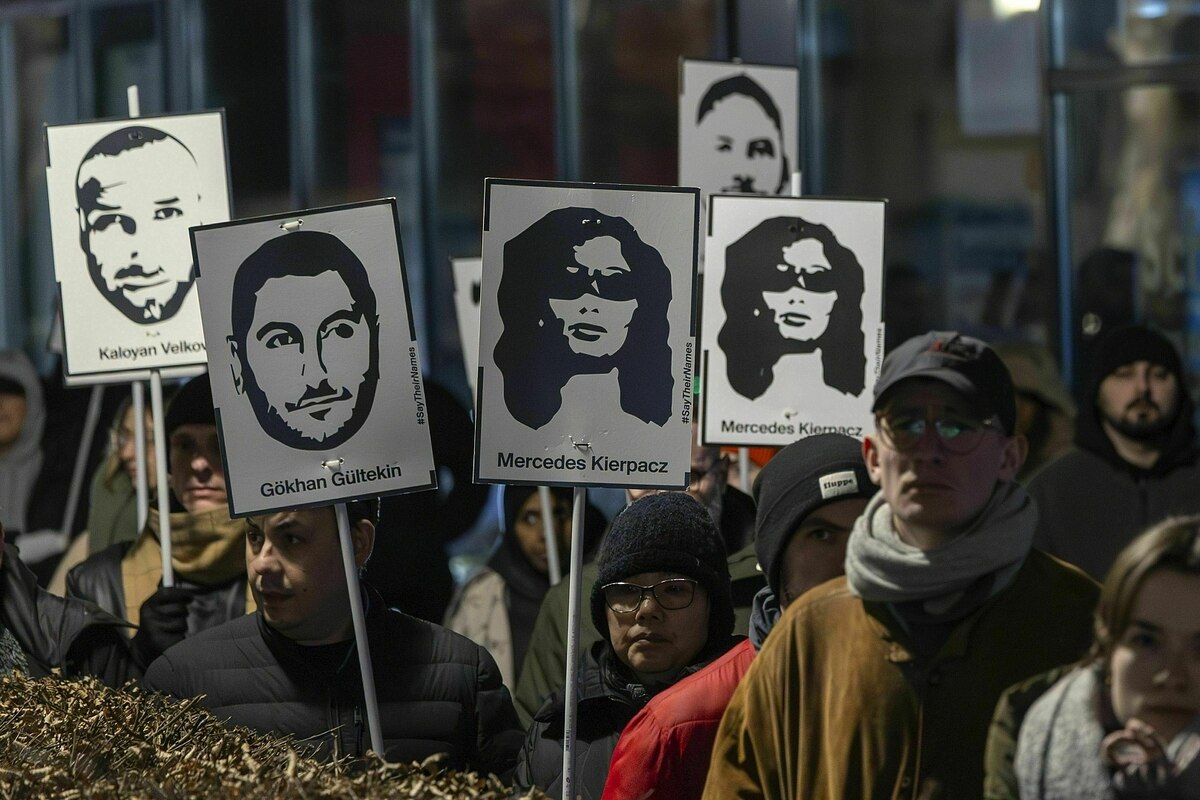
Unfortunately, there are enough reasons for this. The suicide of Semra Ertan, who set herself on fire due to racism, the murder of Oury Jalloh in police custodywhich has not been solved to this day, the pogroms after the fall of communism in Mölln, Solingen and Rostock-Lichtenhagen, where the white population clapped and the police watched, debates about migration, integration and refugees that continue to this day, the murders and the abandonment of the NSU or that racist attack in Hanau. Migrantifa in Berlin, for example, is trying to establish the latter as an anti-racist day of struggle. This would also be in February, like Black History Month.
Germany has its own racism that has oppressed people and cost many their lives. Simply copying another country’s memory doesn’t work. A day of remembrance must make one’s own racism and its victims visible.