

Stopping migration is a central promise of right-wing European parties – and it is an empty one. This is what the sociologists from the Free University of Amsterdam Maurice Crul and Frans Lelie write in their book “Society of Minorities. Life in Superdiversity”. Simply because of its lack of reality, one should give up the desire for a non-existent past of separate cultures. Crul and Lelie want to transform the politically charged question of whether into the pragmatic question of how.
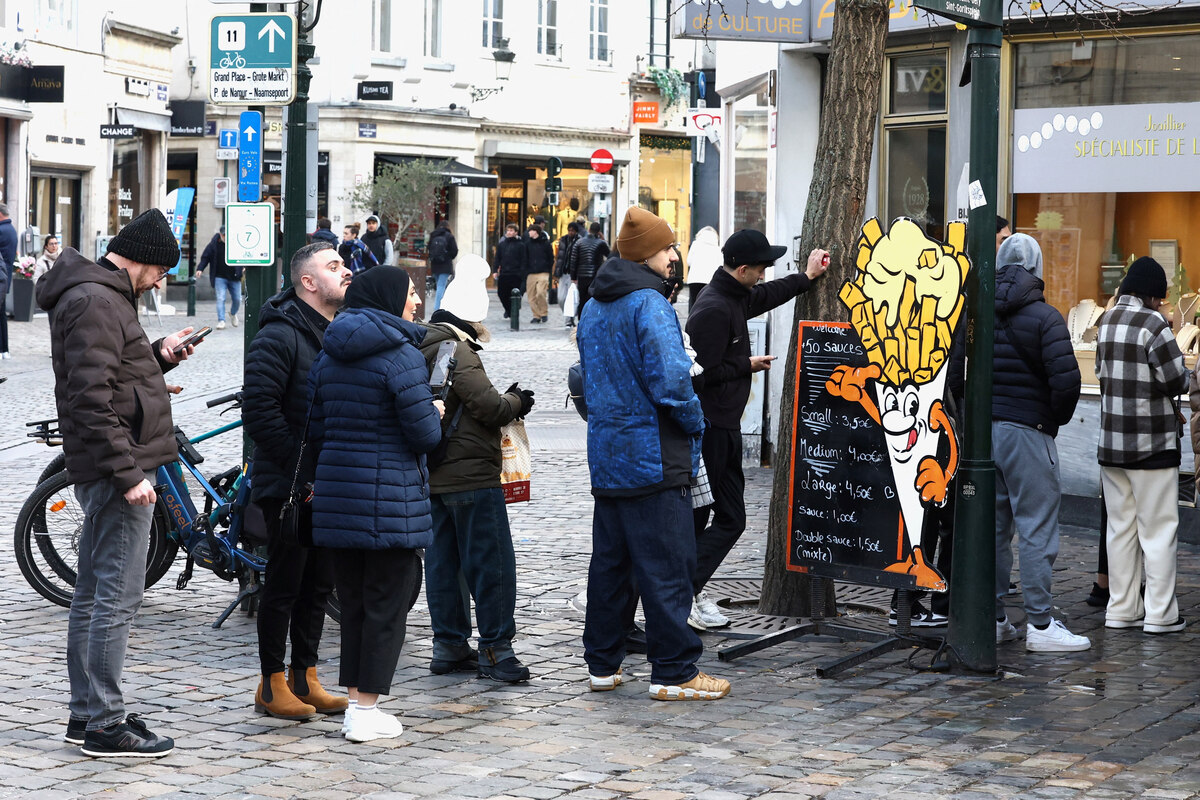
Their initial thesis: Even a stricter immigration policy cannot stop the general human urge for mobility and the global trend towards superdiversity in the long term. In Brussels, Amsterdam and Frankfurt, people without a migration background have long been a minority among many others. And more and more cities are on the way to becoming such “majority-minority cities”. The term “superdiversity” should not only include ethnic diversitybut also religious, social, sexual and other pluralities.
If diversity becomes the new norm, the paradigm of integration must also change, they argue. Away from the demand for assimilation and towards “integration in diversity”. Functional coexistence between diverse groups no longer depends only on migrants, but on everyone. Diversity is becoming a skill worth practicing in increasingly super-diverse neighborhoods and professional environments.
There can be wide discrepancies between opinion and practice
After this message at the latest, anti-immigrants would tend to close the book in anger. But then they would miss a rarely conscious truth about themselves. The “Becoming a Minority” study, in which Crul, Lelie and other researchers surveyed thousands of residents without a migration background in super-diverse neighborhoods in major European cities from 2017 to 2023, shows that there can be wide discrepancies between opinion and practice. Among anti-migrants, approximately as many report positive contacts with neighbors with a migration background as neutral or conflictual ones.

This text comes from the weekday. Our weekly newspaper from the left! Every week, wochentaz is about the world as it is – and as it could be. A left-wing weekly newspaper with a voice, attitude and the special taz view of the world. New every Saturday at the kiosk and of course by subscription.
But even those who position themselves politically on the left are held up to the mirror of practice. In fact, this group in particular rarely actively participates in a multicultural society due to a shyness of contact and fear of saying something wrong. On the other hand, it is primarily people with a low level of education who rarely see diversity as an enrichment who contribute to functioning coexistence. Because they often grow up in migrant neighborhoods, they are used to various relationships.
Shared vegetable gardens and choir singing together
The authors sometimes dispel migration myths repetitively and unsurprisingly. The reminder that people don’t always think and act logically is still enlightening – and sobering. Both the quarter of respondents who see diversity as a threat and the majority who see it as an asset have their default settings firmly established. Even positive experiences with people with a migration background often do not change negative attitudes towards the group they represent.
But what if that isn’t the ultimate goal? Here too, Crul and Lelie advocate pragmatism. If, instead of political conviction, the aim is to avoid violent escalation and to strengthen well-being in one’s own neighborhood, shared vegetable gardens and collective choir singing can certainly help. Contact-shy leftists could also make interethnic friendships here: one of the most effective ways to overcome insecurities when dealing with super-diverse contexts.
Not naming problems only helps the ultra-right
Meanwhile, Crul and Lelie don’t go unmentioned about the challenges that superdiversity can bring. Sweeping this under the table out of fear of accusations of racism is an indirect election recommendation for right-wing parties, they warn. It is best for residents to tackle local problems such as crime, noise and litter together in order to realize that people with a migrant background also want – surprise! – a safe neighborhood. However, the examples of a “movement from below”, as advocated by Crul and Lelie, are limited to letters of complaint to the city administration. Reference to political measures such as the creation of public meeting spaces remains indispensable.
Maurice Crul, Frans Lelie: “Society of Minorities. Life in Superdiversity”. Translated from Dutch by Annette Wunschel. C. H. Beck, Munich 2025, 191 pages, 16 euros
In addition to human incorrigibility, the book also reminds us of a beautiful truth. What unites all people, regardless of background or attitude, is the desire for peaceful coexistence. For Lelie and Crul, even the biggest migration pessimists cannot refuse this offer of pragmatism. However, at this point the book threatens to underestimate the power of emotions. A transcontinental look at the USA, actually a model country for superdiversity, and the aggressive migration policy under Trump shows that feelings of loss cannot easily be transformed into feelings of gain.