

Astrid Lindgren’s war diaries? So far she has only been known as the emancipatory fairytale aunt. Her books about Pippi Longstocking, Ronja, the robber’s daughter and the children from Bullerbü were international bestsellers and were very successfully made into films. In 2018, the biopic “Astrid” was released in cinemas and tells the story of her own youth. But now the German documentary filmmaker Wilfried Hauke has made a film with “Astrid Lindgren – Mankind has lost its mind” that presents a completely different side of the Swedish author.
Born in 1907, Lindgren experienced the Second World War in neutral Sweden and wrote diaries about it, which her descendants published in 2015 under the title “Krigsdageböcker 1939–1945”. These texts are relevant again today in a depressing way, because: “For Astrid it was exactly the same as it was for us now with the Ukraine!” That’s what Lindgren’s daughter Karin Nyman says in the film.
Astrid Lindgren was not yet a writer at the time and kept her diaries, in which she also pasted newspaper articles, as a personal memory aid. She talks about her fears and her horror that the Europe she had lived in until then was collapsing before her eyes. And her notes are also written so clearly and with empathy because she was not only an intelligent, sensitive woman with obvious literary talent, but she was also as well informed as few other people in Sweden.
“Astrid Lindgren – Humanity has lost its mind”. Directors: Wilfried Hauke and Hermann Pölking. Germany/Sweden 2015, 98 min.
She worked for the Swedish censorship authority since the beginning of the war and was part of a group of women who monitored Sweden’s international correspondence. So they read all letters that were sent to or from abroad and then blacked out information that was important to the war effort. For example, she knew very early on about the deportations of Jews to the extermination camps in the East and could/had to read the complaints of a mother whose children were killed in a bomb attack.
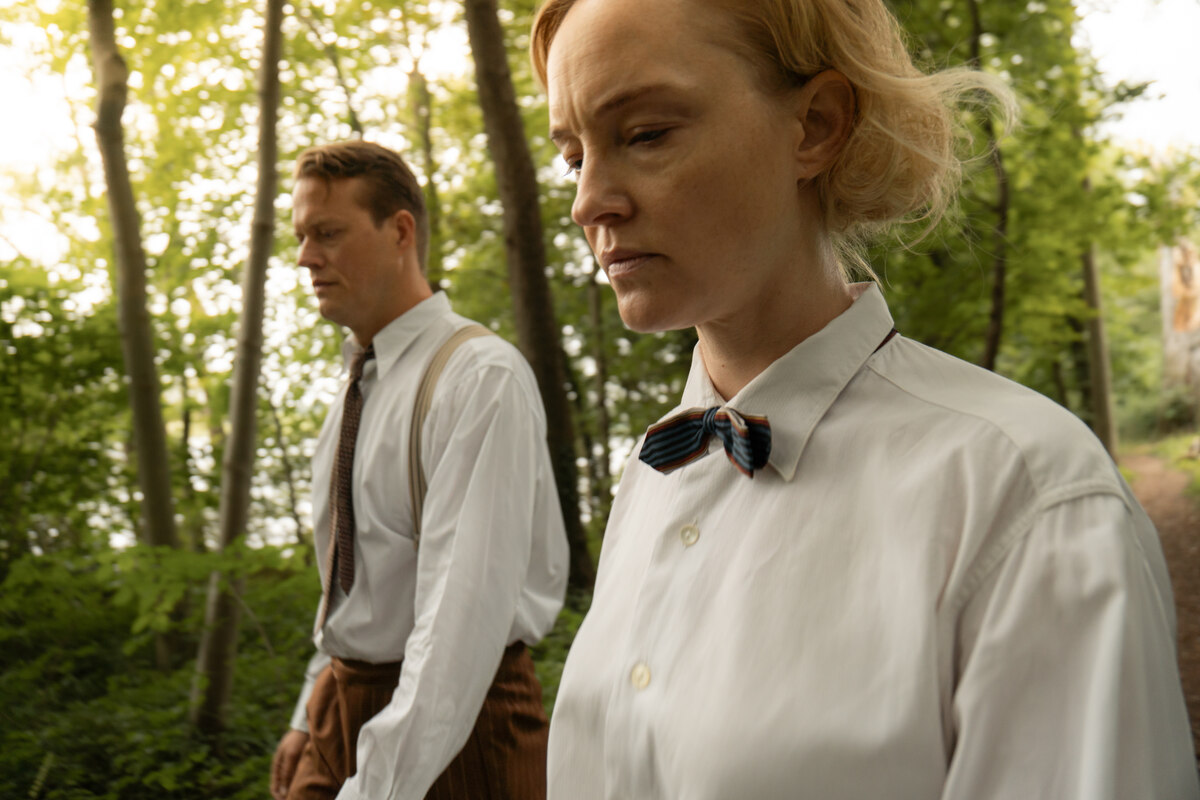
As a text, Lindgren’s notes have literary and contemporary value, but how do you make a film out of almost a dozen full-length notebooks? Wilfried Hauke tells the story on three levels. The actress Sofia Pekkari speaks Astrid Lindgren’s texts – often looking directly into the camera. There are also atmospheric images and play scenes from the Lindgrens’ family life, but these re-enactments are always clearly recognizable as such.
From the devastating night of bombings in Hamburg, we cut straight to the idyllic summer holidays
In this way, Hauke avoids the pitfalls of mixing documentary and fictional storytelling. Lindgren’s texts are also illustrated by archive material from the Documentary filmmaker Hermann Pölking collected and assembled. Pölking has made a name for himself over many years with historical documentaries and has built up good contacts with film archives all over the world. The film contains many footage that has rarely or never been shown publicly – for example, of German children’s enthusiasm for Hitler at the time.
The film often surprises with the clever selection of historical images, which are often in color. And in the montage, the film impressively gets to the heart of the conflict that Astrid Lindgren lived with during these times. Because there is a direct cut from film footage of the devastating Hamburg bombing night to the family’s idyllic summer vacation, which later inspired Lindgren to write the Bullerbü books.
Authorized by family
On the third level, however, the film is problematic, because here Astrid Lindgren’s heirs from three generations play themselves in awkward conversation scenes. It also becomes clear that this is a film authorized by the family (great-grandson Johan Palmberg is credited as executive producer called).
So these sequences too often seem like home stories in which all the beautifully restored apartments and houses of the Lindgren family are presented. At the latest with the commercial-like shots from the amusement park “Astrid Lindgren’s World” you can already speak of product placement.
But these parts of the film are not just annoying, because with Astrid Lindgren’s daughter Karin Nyman as a contemporary witness, Pippi Longstocking’s birth can also be told in passing. Astrid Lindgren invented them to tell bedtime stories to her often sickly daughter. In addition, the anarchist power girl seems to have been an alternative to the Aryan mastermind. Because Astrid Lindgren called Pippi a “superhuman in childlike form” in a kind of leaflet to a Swedish publisher.
We would like to show you external content here. You decide whether you also want to see this element:
