

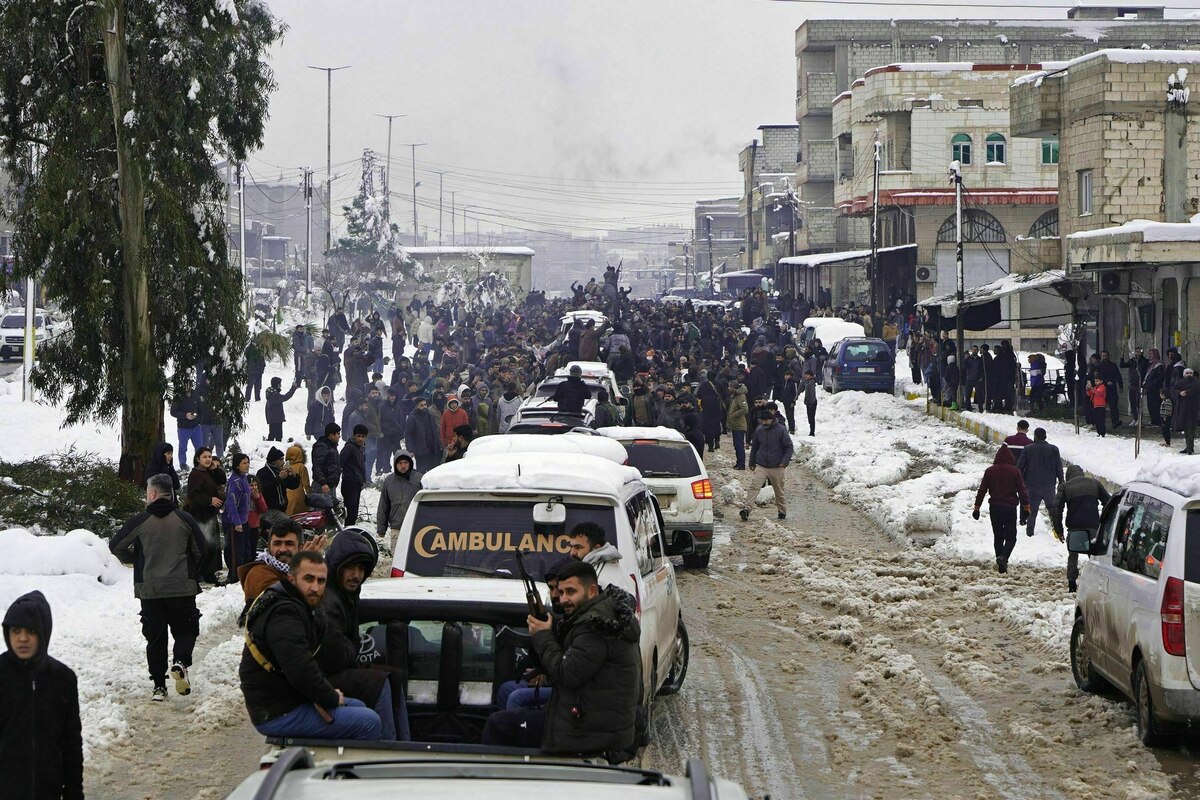
They’ve been traveling for a week. In cars that form into convoys, on planes. At least 100 people from different countries in Europe. From Denmark to Serbia, from Ireland to Italy. Peace activists who have joined forces for the “Caravan in Defense of Humanity” initiative. Your goal is clear: Nordostsyrien, Kobanê. The path there, however, is uncertain.
It was only on Thursday that two groups had to cancel their trip. One was prevented from entering Turkey at the Greek-Turkish border; it is unclear whether by Greek or Turkish officials. The authorities confiscated the passports and kept the activists waiting for two hours. Then the group turned back.
When the activists made their way to the Turkish border, part of the caravan was already in Turkey, in the southeastern Kurdish areas. However, the Turkish police arrested 16 participants a few days agothey had to go to Istanbul and then back to their home countries. Among them were Germans who have since landed in the Federal Republic.
Others are still staying in Turkey, hoping to make it to Kobanê. At this point in time, no caravan delegation has managed to do this, However, the activists are not giving up hope. “Because the pictures that have come from northeast Syria in the last few weeks have clearly shown that we have to get going,” says caravan spokeswoman Gesa Jonasson about their motivation. She herself is on her way to Kobanê.
Activists draw attention to threats to Rojava
With the campaign, the activists want to draw attention to the disastrous humanitarian situation in northeast Syria. But also on the threat to the Kurdish Rojava project in conflict with the troops of the Syrian army. And the obstacles that activists experience in border countries – for example in Turkey.
In January, tensions between the Syrian army and the Kurdish Syrian Democratic Forces (SDF) escalated in Aleppo and northeast Syria. Armed confrontations have broken out and the Syrian army has been able to take control of large areas of Kurdish self-government.
Years ago, Kurds had established a government model here that was supposed to be based on principles such as equality and grassroots democracy. The northern city of Kobanê has been under siege for over a week, and the humanitarian situation here remains serious despite a few aid convoys. Thousands of people have fled their homes or been displaced.
“We won’t allow European states to finance what happens next al-Jholani (former fighting name of Syrian President Ahmed al-Sharaa, editor’s note) implemented there, namely massacres of Kurds,” said Jonasson. In the past few days, both sides have accused each other of arbitrarily attacking, arresting and killing civilians.
As of this Friday there is a new agreement
Al-Sharaa has wanted to integrate the SDF and the Kurdish areas into the new state structures for months. A corresponding agreement was signed by both sides in spring 2025. The Kurds were still hesitant, saying they feared the loss of their rights and their model of government.
This Friday, both parties agreed on an agreement. This includes a ceasefire and the “gradual integration of military and administrative structures,” as the German self-government representative writes.
“We stick to our demand that humanitarian corridors are needed, attention to the region is needed and diplomatic relations with the self-government,” says Jonasson. The rights of the Kurds, especially women, who have fought the terrorist organization “Islamic State” in Rojava for years alongside Western states, should also be guaranteed.
The spokeswoman believes her group’s trip has gone well so far. Demonstrations have kept activists on the move to gain public attention. Now they want them “Breaking boundaries” just like their motto says. It remains to be seen whether they will succeed.