

taz: A year ago the M23 conquered the eastern Congolese city of Goma. What has happened since then?
Recommended: After the liberation of the provincial capitals Goma and Bukavu, security was initially the priority. Before our arrival there were daily murders, assassinations, reckonings and mass hunts. The Tutsi ethnic group in particular was constantly arrested and either asked to pay ransom or even eaten in public in front of cameras. Many had to spend the night in refugee camps because they felt safer there than at home. But these were overcrowded. Over a million displaced people lived in the Goma area. After we secured all the villages, they returned. Today they are plowing their fields again and we have a food surplus again, which has an impact on prices because they have fallen significantly. Administratively, we have managed to restore state authority in and around Goma through a very well-functioning administration. There is now reliable running water and electricity. We have established a very active police force that regulates traffic in the city. And all of our residents now take part in city cleaning every Saturday. Bukavu and Goma are now very clean, everyone is impressed by it.
taz: You have had a lot of time over the past year at different negotiating tables spent. Where are you currently?

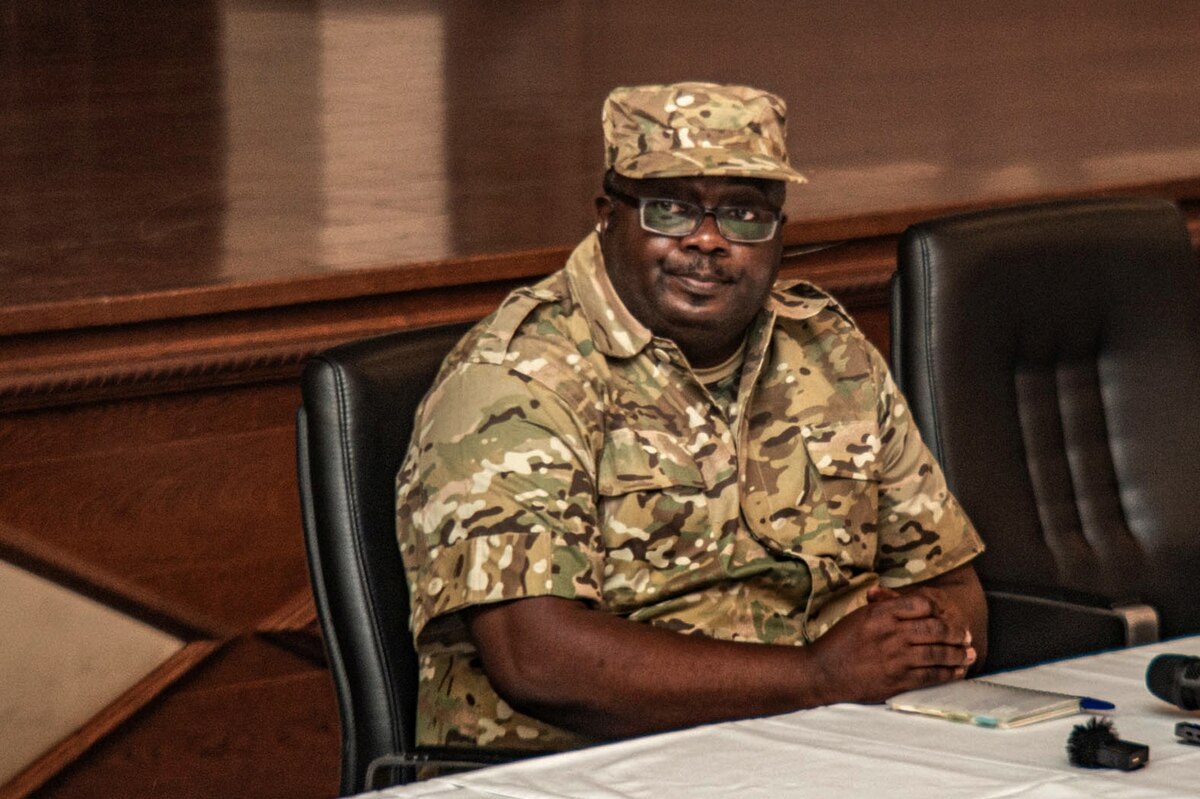
Interview: Bertrand Bisima
Bertrand Bisimaborn in 1972, has led the Congolese rebel movement M23 (March 23 Movement) as president since 2013. Born in Bukavu, Congo, he studied law in Goma and fought in the Congo wars in the AFDL and RCD rebel armies. He has been living there again since Goma was captured by the M23. The M23 is the most important part of the umbrella organization AFC (Alliance of the Congo River), which unites several armed rebel groups in the DR Congo and fights the government.
Recommended: There is still a lot to do diplomatically. As part of the Doha peace process, we were able to explain to the US and Qatari envoys our intention to lead the country out of the abyss. But we are still in trouble because of the propaganda from Kinshasa. The government in Kinshasa wants to hold us responsible for all of the DR Congo’s problems. We find it difficult to be heard in certain political circles in the international community. If Kinshasa portrays the conflict as an external aggression by Rwanda to cover up its responsibility for the current situation, then all these interlocutors follow this logic and believe it is an aggression. No, this is not aggression. We are a people who rise up and defend ourselves. A people fighting for their survival. But we have to recognize that in Europe, in my opinion, Belgium in particular always uses the rhetoric of Congo’s President Felix Tshisekedi. This is unfortunate because Belgium, as a former colonial power, is largely responsible for the problems in the region.
taz: Your troops are in December captured the town of Uvira near the border with Burundi – just as the peace treaty between the DR Congo and Rwanda was signed in Washington. A month later you have each other withdrawn again – Why?
Recommended: First of all: We were attacked in our positions in Kamanyola. There were civilian casualties, houses, hospitals and schools were destroyed by bombs, including by artillery fire from the Burundian army. We called for an end to these attacks and ultimately decided to take matters into our own hands. Uvira has been the hotbed of hate speech and persecution of the Tutsi and Banyamulenge because they are considered non-Congolese. We dared to advance. Unfortunately, Kinshasa used this as an excuse to break off negotiations with us in Doha. The mediator had called two or three meetings which the government did not attend. So we were forced to withdraw again and at the same time asked the international community to station neutral troops in Uvira. Unfortunately, what we feared has happened: the Wazalendo militias have once again taken up positions in Uvira together with the government army. We also learned that the Burundian army is committing atrocities. People are killed, kidnapped and women and children are raped every day. The situation is catastrophic. In addition, the government of Kinshasa has cut telecommunications throughout the city to prevent the “cleaning of the city” from becoming public.
taz: Congo’s government now wants to continue negotiations in Angola. Is that an option for you?
Recommended: No, absolutely not. We withdrew from Uvira so that the… Negotiations in Qatar’s capital Doha be continued. We don’t want to have to start over again. We started with discussions in Uganda in 2022, then everything was moved to Nairobi, then we were taken to Luanda, then everything was moved to Doha. And now Tshisekedi wants to go back to Luanda. We are no longer playing this game. This time we want the Doha process to be finally concluded with an agreement that addresses the fundamental problems, the causes of the conflicts. We want a credible peace process and not just be dragged from one process to the next.
taz: One cause of conflict is the existence of the Rwandan Hutu militia FDLRwhich emerged from the army responsible for the genocide of Rwanda’s Tutsi, and the genocide ideology that it quietly spreads and which also rubs off on Congolese actors. The peace treaty between Congo and Rwanda stipulated that the FDLR must be “neutralized” as a first step. Is there any progress?
Recommended: The ideology of genocide is spread even more blatantly today than before. The most recent example is this Rede von General Sylvain Ekengewho, as an army spokesman, incited hatred against the Tutsi in a media appearance on state television that was pre-recorded and approved by the General Staff and the Ministry of Communications. FDLR units remain integrated into the government army and contribute their military expertise and experience. In fact, they are even spearheading their attacks on us.
taz: That one Peace treaty between Congo and Rwanda US President Trump also negotiated. At the same time, he wants access to Congo’s raw materials for the US economy. How credible is he for you as a patron of the peace talks?
Recommended: We have nothing against the agreement that Kinshasa concluded with the USA. We are aware that relations between states are based on interests. But these interests must not contradict the interests of the population, because the natural resources belong to the population. The people of eastern Congo have long suffered from the unlawful exploitation of their own resources by their own rulers. The mining areas are impoverished areas with no roads, no electricity, no water supply, no schools, no hospitals. These people are deprived of their property. We have to change that. If Americans want to exploit our natural resources, the local population must benefit. Development projects must be created around the mines
taz: The situation of the population under your rule will be in the latest UN expert report on the DR Congo clearly criticized. Its troops are accused of forced recruitment, forced labor, arbitrary detention and torture, and systematic persecution of the Hutu population. What do you say to that?
Recommended: We are dealing with a system of fake UN informants who are in the service of Kinshasa and who inform the United Nations unilaterally. These UN experts have not visited our territories, have not spoken to us, I have never seen them with us. There is massive manipulation going on here. We would have liked those who are concerned about what is actually happening on the ground to come and see for themselves.
taz: What do you hope for the coming year?
Recommended: We should complete the peace process in Doha this year by addressing the root causes of the conflict so that peace can finally return to the east of the country. Otherwise we risk finding ourselves in the same situation again in three or ten years, and that would not be good for our people. We all have to make sure that our children don’t have to experience what we experienced.