

taz: Ms. Neuwald, the The Bundestag is currently discussing the government’s proposal to make it easier to shoot wolves. This is intended to protect against cracks when livestock are kept on pasture in a comparatively species-appropriate manner. How do you find that?
Marie Neuwald: The draft law is about including the wolf as a huntable species in federal hunting law. Increasing the safety of grazing animals is absolutely desirable – but hunting rights are the wrong approach. Because then a very extensive use of this protected animal species would be possible with the help of shooting.
taz: What exactly do you criticize about the draft?

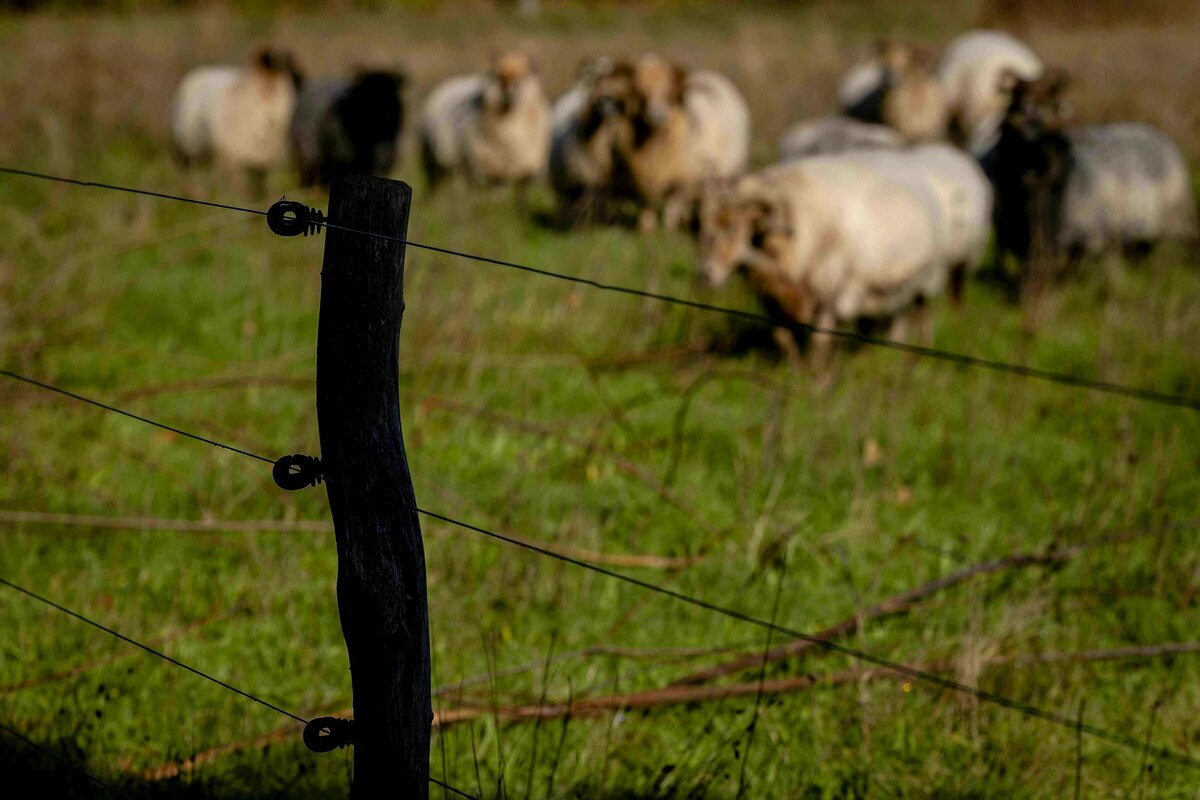
Neuwald: We reject the general right to hunt without cause, which goes beyond the targeted shooting of individual problematic animals. The hunting association, for example, demands that 40 percent of young animals be shot annually. We don’t see any point in this at all. There is no quota in the bill, only that the hunting season should run from July 1st to October 31st. These are the months in which you can still distinguish the puppies from the adults. Hunting the young animals now has nothing to do with protecting grazing animals. Because puppies don’t go hunting. This change in the law should result in wolves spreading more slowly. The growth of the wolf population has already leveled off quite a bit. The government is giving in to pressure from the agricultural and hunting lobby.
taz: In 2024, wolves killed or injured around 4,300 farm animals such as sheep and cattle. Would the bill better protect grazing animals from such attacks?
On Friday, the Federal Council wants to take a position on the government’s plans to include wolves in the Federal Hunting Act. The Agricultural Committee of the State Chamber wants to completely remove the species from the special and strict protection of the Nature Conservation Act. The Environment Committee criticizes, among other things, the fact that, despite numerous requests, the draft law has not been coordinated with the environmental and agricultural departments of the federal states and their practical experience. It is questionable whether the good state of conservation can be maintained in this way – the federal government must provide clear guidelines for this. The federal government’s draft can only come into force with the consent of the Federal Council.
Neuwald: No, because the decisive factor is herd protection, not the number of wolves. Fences are more effective against wolf attacks than shooting them. This is also shown by the fact that there were 25 percent fewer cracks in 2024 than in the previous year – despite more wolves.
taz: But isn’t it logical: If there are fewer wolves, then there are also fewer animals that can eat livestock?
Neuwald: Imagine there is a pack of eight animals in the area where I have my pasture. If I shoot three of them every year, there will still be five wolves left that could be dangerous to my animals if I don’t protect the herd with adequate fences. And the idea that wolves keep more distance from pastures due to human hunting is also unrealistic – because they pose no danger to wolves. The wolves that overcome herd protection are truly exceptional. Action should and can be taken against these wolves.
taz: What are the experiences from other countries that restrict the wolf population more?
Neuwald: For example, in Sweden it has been shown that territories of packs that are shot are quickly occupied by other wolves. There are still cracks there and the herds still need to be protected by fences, for example. France has been allowing up to 19 percent of the population to be shot for years, not through a general hunting permit, but through individual shooting permits if there was damage. However, between 10,000 and 11,000 animals are still killed there every year, with a wolf population that is similar to that here. In general, the literature says: In order for unprovoked hunting to really reduce the number of hunts, it must be very comprehensive. The inventory really needs to be drastically reduced. But this is not compatible with the EU’s Flora-Fauna-Habitat Directive.
taz: The draft law is intended to enable completely wolf-free pasture areas in which herd protection would be unreasonably difficult. How do you see that?
Neuwald: This surprised me very much because the Ministry of the Environment had collected experiences with herd protection on steep slopes and on dikes in two research projects. They show that it can be done, even if it definitely means more effort. In Lower Saxony and in Saxony-Anhalt there are dozens of livestock farmers who have been successfully protecting their herds on dikes for many years.
taz: You criticized the fact that the federal government recently classified the conservation status of wolves almost everywhere in Germany as “favorable”. This means that the species is a sufficient population and can survive in the long term. There are an estimated 2,000 wolves in this country. Similar-sized Finland only wants to keep 273 wolves. Why shouldn’t even 2,000 animals be enough for us?
Neuwald: We at Nabu rely on the scientific process initiated by the Federal Agency for Nature Conservation. To do this, the Leibniz Institute for Zoo and Wildlife Research used very complex modeling to determine values for the necessary number of wolf territories. However, politicians have corrected these values significantly downwards. Sweden has a new target of 150 wolves, although the small population is already genetically impoverished. However, the European Commission has now stepped in and asked the country to correct the number.
taz: You are even demanding more wolves than necessary for the favorable conservation status. Why?
Neuwald: The favorable state of conservation is the absolute minimum. There may be a disease that is rampant among wolves, or traffic accidents with wolves or illegal ones Kills increase. Then the existence of the stock is quickly endangered again. Therefore, the favorable conservation status should not be equated with the maximum that we tolerate here. And in general: The wolf is a native animal and finds a good habitat here. It also helps to keep wild populations of deer, for example, in check in many regions of Germany major forest damage cause. Furthermore, hunting must have a reasonable reason. I don’t see that in the wolf. Roe deer, wild boar and deer can be eaten. This is no longer the case with the wolf. We don’t have to use his fur anymore either.
taz: With the current law it is very difficult to identify so-called problem wolves. Such orders have regularly been overturned by courts. So is the bill necessary on this point?
Neuwald: No, nature conservation law is sufficient for this. In Brandenburg, two wolves were taken using an exceptional permit. So it was possible. But the reason why so few wolves were shot above this is primarily because there are very few wolves that would even fall into this category. And secondly, the approvals were sometimes poorly done from a legal perspective, and sometimes there was simply no justification. That could have been avoided. The wolf is now no longer considered “strictly protected” in the EU, but only “protected”. This means that the requirements for such permits would also be interpreted somewhat more generously than a year ago.
taz: For many farmers it is too expensive to constantly keep the lower electric wires of pasture fences free of blades of grass so that the electricity flows and wolves are actually deterred. How do you see that?
Neuwald: I would like to see more discussion on such practical challenges and, for example, if the Department of Agriculture organized a congress on the topic: How to keep fences clear of vegetation? There are now attachments for mowing machines that can be used to mow under fences. But it’s an extra effort and you can’t explain that away. Some federal states, for example Baden-Württemberg, promote the additional effort required for herd protection and I think that is absolutely right.
taz: Some people are also afraid that wolves could attack children, for example. This happens very rarely worldwide. But there are such cases. Aren’t you worried about that?
Neuwald: Of course I can understand that. The probability of a healthy wolf attacking humans is extremely low; rabies no longer exists here. But it is a wild animal; Of course, no one can give an absolute guarantee, just as they cannot for other wild animals or for domestic and farm animals. But this risk can be kept low enough if authorities continue to intervene immediately when wolves beg for food or show an increased interest in being close to people. The case in the Netherlands in the summer could very likely have been prevented. The wolf that bit a boy had already been noticed in previous years.