

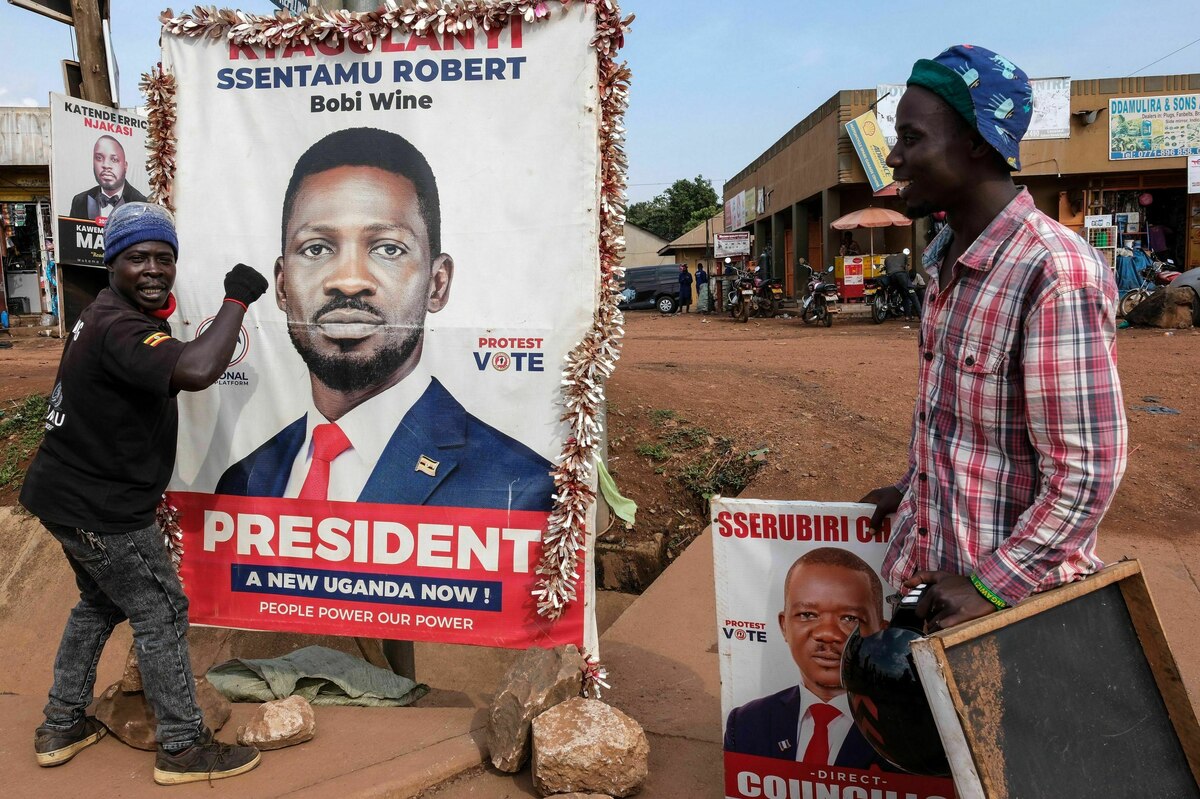
V or six weeks, the Ugandan journalist Charles Onyango-Obbo, one of Africa’s best-known journalists, distributed one “Beginner’s Guide: How Not to Die Running Against an African President”. The tone of the eleven-point breviary was initially humorous. “Sleep lightly, so without sleeping pills: you need to stay alert for the knock on the door at 3 a.m. or the sound of your garden gate being smashed,” reads one point, followed by: “Be kind to your old schoolmates, friends and relatives. You will need them when – not if – you need bail.”
Basically, it’s deadly serious. You need a valid passport, but you don’t keep it at home. You need cash that isn’t in the bank or at home. You need friends in border towns and neighboring countries. You need a priest you can call at any time. You need emergency luggage. And finally: “Learn to laugh at absurdity.”
Uganda’s opposition leader Bobi Wine, who won the elections last Thursday lost to long-term president Yoweri Museveni and thinks it is a forgery, must have read Onyango-Obbo’s breviary. After the election, the 43-year-old music star managed to escape from his besieged house under the eyes of the police, and has since been alerting the population via email Video from underground: “I know these criminals are looking for me everywhere, and I’m doing my best to stay safe.”
Driven into exile
The Ugandan is not the first to fear for his life because he dared to challenge his country’s undisputed ruler at the ballot box. In Mozambique, opposition leader had to Venancio Mondlane Seeking refuge in South Africa after he attacked the government that had ruled since independence in 1975 in October 2024 anti-colonial liberation movement Frelimo competed and won against the Frelimo candidate Daniel Chapo complained. This was followed by months of serious unrest with hundreds of deaths – until Met Chapo Mondlane personallyto defuse the situation.
Cameroon has been experiencing a similar scenario since the presidential elections of October 2025. President Paul Biyawho has been in power since 1984, was declared the winner against the opposition by the electoral commission Issa Tchiroma explained – but that is considered questionable, there were serious protests, and Tchiroma had to flee via Nigeria to Gambia, where he is now in exile. His prominent supporter Anicet Ekaneleader of an opposition party, remained in the country and did not survive his arrest. After his re-election, 92-year-old Biya has still not formed a new government and the country is politically in limbo.
It is no coincidence that Mondlane was recorded in South Africa and Tchiroma in Gambia. Despite all its shortcomings, South Africa remains a beacon of functioning institutions in Africa; the old leaders of the ruling former liberation movement ANC know that asylum saves lives. In Gambia, President Adama Barrow experienced the fate of the persecuted opposition leader himself: he won elections in 1996 against the long-term dictator Yahya Jammehthe dictator did not recognize this. Barrow had to flee to Senegal. – and Senegal, West Africa’s only stable democracy, imposed military intervention In early 2017, he took office as elected President of Gambia a.
Barrow is one of the few persecuted opposition leaders who prevailed against election fraud. Alassane Ouattara in Ivory Coast, was able to do so in 2011 Election fraud by his predecessor Laurent Gbagbo can only be overcome with the help of military intervention from France. Many others failed to do so. Robert Mugabe and Ali Bongo’s challengers received no foreign support. Significantly, Mugabe and Bongo were later deposed by their own military. Where elections do not work, the only instrument to change power is a coup.
Neither Tchiroma in Cameroon nor Mondlane in Mozambique can count on foreign support. Bobi Wine in Uganda cannot even hope for asylum in a neighboring country. East Africa’s governments are now working together against their respective oppositions; they all fear a chain reaction if one of them gives in to the urge of the young majority of the population to disempower old elites.
Dealing with opposition as a yardstick
The fate of prominent opposing candidates in presidential elections in Africa shows what the real state of democracy and the rule of law is. While Kenya helps its authoritarian East African neighbors prosecute the opposition, it has seen enough government changes that its own opposition is basically left in peace – the eternal opposition leader Raila Odingawho has repeatedly considered himself a victim of electoral fraud, was even honored with a state funeral after his death last October, at the same time that Cameroon was plunged into chaos.
Honoring a historic opposition leader by the state – that is a more reliable mark of a stable democracy than the caricature of free elections that many façade democracies in Africa reliably deliver every few years. Many autocrats now have a routine of holding fairly decent elections, letting the opposition do their thing and giving themselves a democratic appearance. This scores points in the many international rankings of good governance, which also an important criterion for Germany’s development cooperation are.
But whether opposition leaders can lead a normal life again after their election defeat, whether they survive at all and what happens to their families is not recorded in any international democracy regulations. Nor whether a country provides refuge to those who are forced to run for their lives after brazenly attempting to exercise their constitutional rights. Like currently again in Uganda.