
H helpless, and not just today. For more than a year, the European cassette has been playing the same track: “Europe must be strong and independent from the USA.” JD Vance, who bluntly ushered in a new era of European-American relations at the Munich Security Conference, did not change this. Hardly anything has happened in Europe since then. The euphoria surrounding the first meetings of the “Coalition of the Willing” quickly fizzled out: big gestures – empty promises.
Now US President Donald Trump is joining in Economic forum in Davos receive, but how the Europeans are supposed to protect Greenland from him remains unclear. And Europe’s political minds continue to appear more scattered than united. But can a new trio convince Trump?
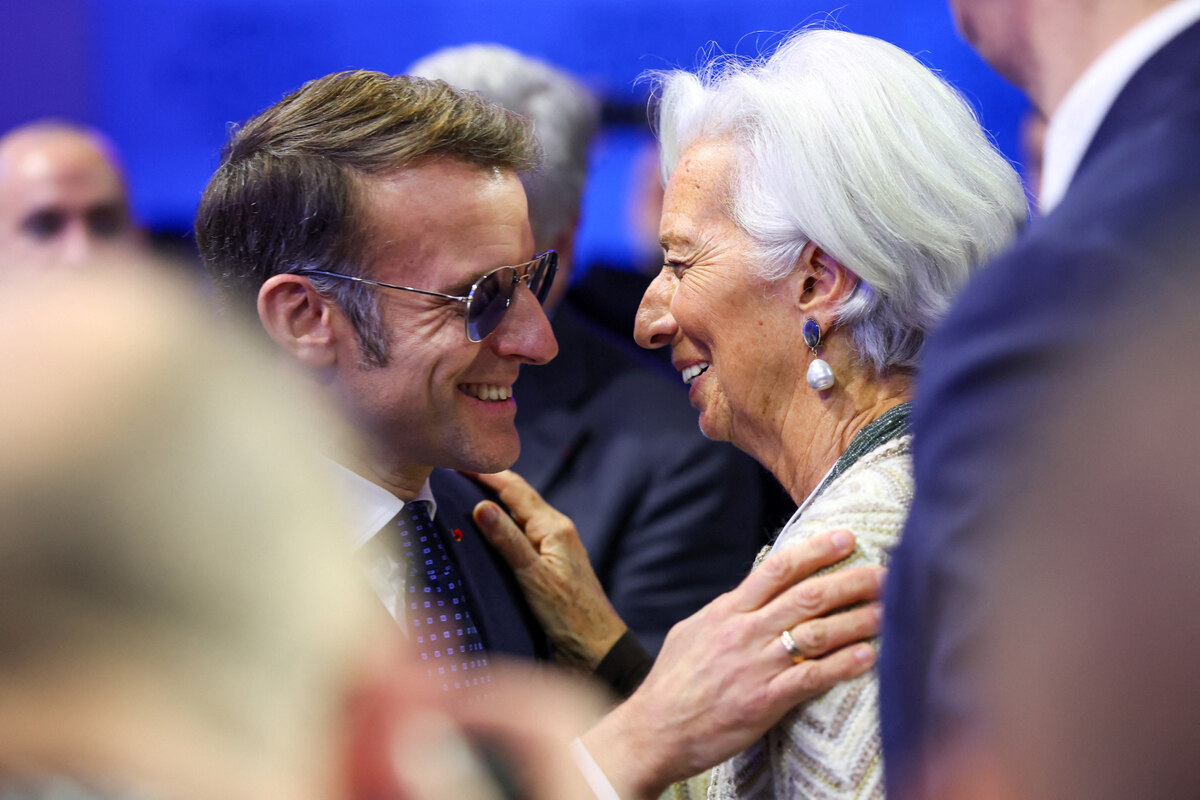
A year after the first alliance meeting, attention is still focused on the initiator at the time Emmanuel Macron. His text message to Trump, his appearance in Davos, behind mirrored aviator sunglasses, he is visibly looking for European leadership. He wants to shine in front of his European partners, but he can hardly do that at home in crisis-ridden France. Macron is rushing forward, trying to form a common response, but the chances are slim.

Chancellor Friedrich Merz is slowly making his way forward, hoping for trade policy clout without using it. It remains unclear when he wants to talk to Trump about punitive tariffs as announced. Suffers in the process the US economy right now, and that is exactly a lever that Europe could use together. Italy’s Giorgia Meloni has long been considered a joker in the European ranks. As a declared friend of Trump, she portrays herself as a bridge builder, but little of this bridge is visible. She finds no line between loyalty and growing criticism.
Not a low-risk undertaking
While their government is the so-called Handels-Bazooka rejects it, the opposition puts pressure on them and criticizes their “submissiveness”. But for the first time, Meloni also expressed criticism of the Trump administration and called the special tariffs a mistake. An instrument that has so far received little attention could help to unite and strengthen European heads of state against Trump: US bonds. Not a low-risk undertaking, emphasizes US Treasury Secretary Scott Bessent. And thus shows the concern about an actual sell-off of US bonds.
Analysts warn that Europe would also harm itself with a concerted sell-off. And yet the current world situation shows that Europe’s economy will suffer damage, regardless of whether you ultimately decide on punitive tariffs or a divestment of US bonds. But it is also clear that Europe must fulfill the long promise of emancipation.