

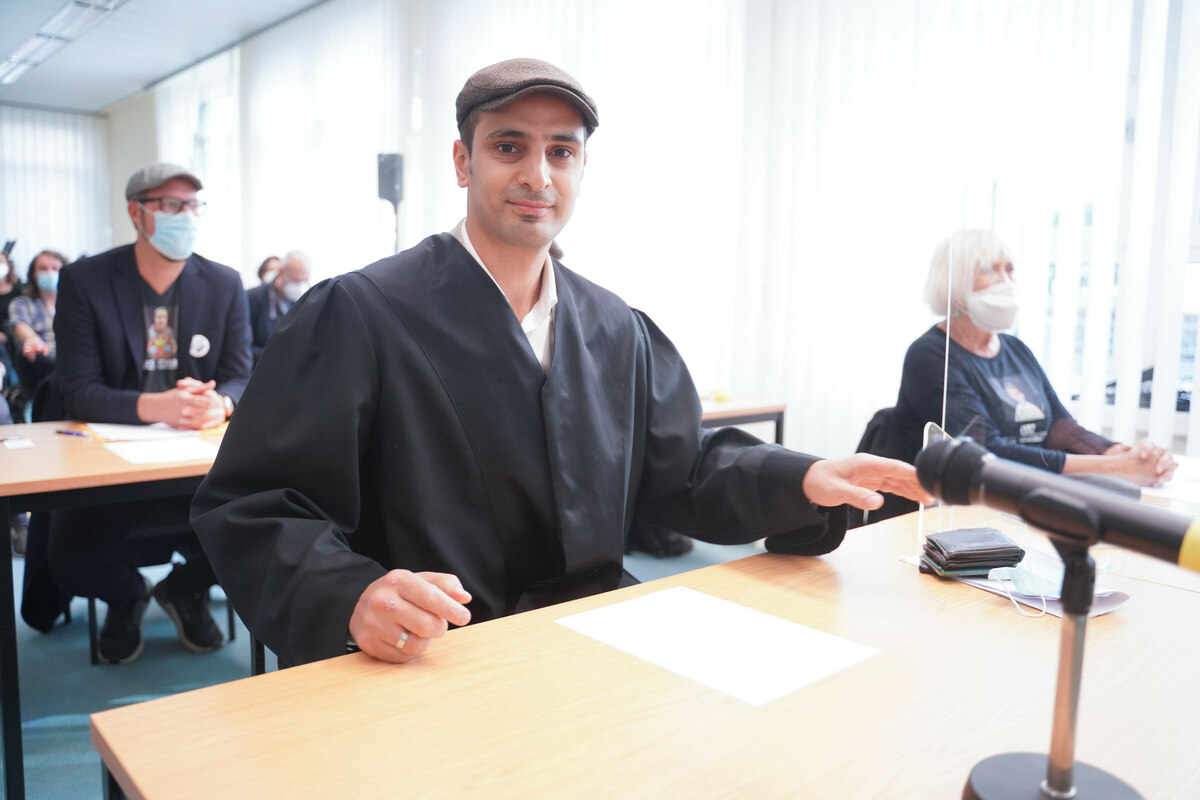
After the Neukölln Left at the weekend Ahmed Abed with 82.1 percent of the votes as their top candidate for the election to the District Assembly (BVV), it was first Bild-Newspaper that hyperventilated: “Left elects Israel hater as mayoral candidate.” The appointment of the previous group leader represented the “anti-Semitism problem” of the left, it was said in a largely fact-free article.
But the tone was set, Abed’s nomination became a national issue, driven by sharp demarcations by politicians from competing parties. CDU district chairman Falko Liecke called Abed’s nomination an “attack on Jewish life.” The SPD board said that the candidacy was “the result of a worrying development in the Neukölln Left Party.” The Greens also doubted that the Left had an interest in “responsible governance” in Neukölln.
The core accusation that has been repeated over and over again: Last fall, Abed insulted the mayor of Neukölln’s Israeli twin town Bat Yam, who was a guest in the town hall, as a “genocider.” Undoubtedly not the fine English way. The fact that Tzvika Brot, as a politician from Benjamin Netanyahu’s right-wing Likud party, presumably supports the war in Gaza ideologically, was ignored in the criticism. Brot’s answer to Abed was accordingly: “Genocidal – surely you mean Hamas?”
The lawyer Abed is also accused of defending demonstrators in solidarity with Palestine or the controversial BDS campaign. The refusal of the Neukölln left-wing faction to support a motion for a resolution by the BVV condemning the movement also caused a stir Threats against the operators of the Bajszel pub to agree.
Abed rejects accusations of anti-Semitism
In an interview with the taz, Abed defended his statements against the Israeli guest and said: “Genocide supporters belong in prison, not in the BVV.” At the same time, the German-Palestinian, with relatives in Gaza, “some of whom were murdered,” as he says, rejects accusations of anti-Semitism: “I have always been against all forms of racism and anti-Semitism.” Attacks from the CDU, which he describes as “cross-border”, are also an attempt by the CDU to be responsible for “Embezzlement of funds against anti-Semitism to distract.”
“It is clear that I focus on social issues in Neukölln, on housing shortages and child poverty.”
Abed feels supported from the left. At the beginning of the week, Federal Managing Director Janis Ehling pointed out that inviting an Iranian politician in times of massacres was “out of place” and that Abed’s criticism was therefore “understandable”. In view of the “unspeakable smear campaign,” party leader Ines Schwerdtner also felt compelled to defend her comrade: He stood “for social politics and Palestine solidarity in Neukölln.”
The top candidate of the Berlin Left, Elif Eralp, was more reserved: Neukölln needs a “district mayor who will take care of the pressing challenges of the district, in particular the sharp rise in rents, cleanliness in public spaces and social coexistence.” One could also say: not primarily about the Middle East. Abed does not see the statement as distancing himself: “It is clear that I focus on social issues in Neukölln, on the housing shortage and child poverty.”
Nevertheless, the Middle East is also an issue that plays an “important role” in Neukölln and his election campaign. Because there are many people in the district with relatives in Gaza, many who have experienced losses and at the same time those who demonstrate are experiencing “police violence”. His goal as mayor is to “end support for positions that violate international law from within the district office” and “recognize anti-Muslim racism as a problem.”
Does Abed think he would be elected mayor by MPs from other parties? Abend refers to the victory of the Neukölln Left in the federal election: “If the Neukölln women have a clear vote, we want to negotiate our demands,” he says.