

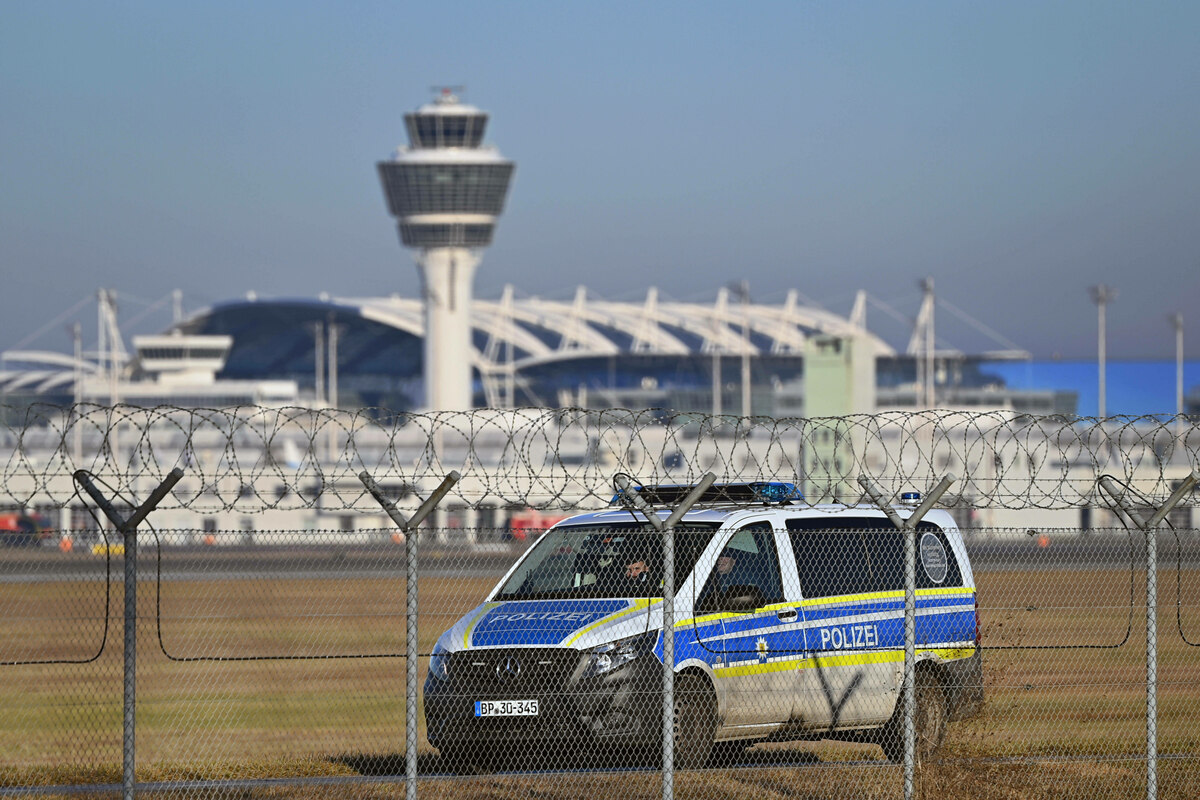
The state capital doesn’t want to be as right-wing as the rest of Bavaria. The deportation terminal planned there could still be stopped.
M an could say: “It’s just Bavaria” and would somehow be right. It shouldn’t come as a surprise to anyone that a separate airport terminal is to be built in the state capital of Munich just for deportations, from which up to 100 people could one day be deported every day. Politically it fits. Alexander Dobrindt, a CSU man, is serving as Federal Minister of the Interior Deportations forced. With Markus Söder, it is a CSU man who governs Bavaria. And it is Joachim Herrmann, a CSU man who sits in the Bavarian Ministry of the Interior and who made the decision for the terminal.
But it’s also Munich and it may not be the most likeable city in Germany, but it’s not as right-wing as the rest of Bavaria. And This is how resistance is forming in the city in the form of the “Prevent MUC deportation terminal” campaign. It is supported by almost fifty organizations from the VNN-BdA to the Independent Flight Attendant Organization (UFO). It’s a glimmer of hope.
The campaign proves that something of what became a symbol of the welcoming culture in the summer of 2015 still exists in Munich. Thousands clapped when the trains carrying refugees arrived. Tens of thousands donated clothes, toys or whatever else was needed.

The planned deportation terminal represents the opposite. As the Munich Refugee Council writes, the new building could “act as a deportation hub not only across Bavaria, but across the country and possibly the EU.” The Nazi documentation center in Munich speaks of a “clear sign of isolation” that is to emerge. It is the gloomy Dobrindt vision for the state capital.
It doesn’t have to become a reality. Not only the Bavarian state government sits on the airport’s supervisory board, but also the Munich city government. So far, Mayor Dieter Reiter (SPD) has apparently supported the construction plans. He should change his mind.
Together for a free press
As a cooperative, we belong to our readers. And our journalism is not only 100% non-corporate, but also accessible free of charge. We make all articles freely available, without a paywall. Especially in these times, classifications and information must be accessible to everyone. Our readers don’t have to pay anything, but they know that critical, independent journalism doesn’t emerge from nothing. We are very grateful for that. So that we can continue to do our journalism tomorrow, we need more support. Our next goal: 50,000 – and with your participation we can do it. Set an example for the taz and for the future of our journalism. With just 5 euros you are there!
Support now