

taz: Mr. Maier, the first Winter Games in Central Europe since 2006 are a particular logistical challenge due to the distances. For you as the DSV sports director, this means that you will spend many hours in the car. Or have you decided on a location?
Wolfgang Maier: Andreas Schlütter, managing director of performance sports GmbH, and I are splitting up. He is predominantly in the Nordic disciplines. I’m focusing on the alpine men in Bormio and the ski crossers in Livigno. After the men’s slalom, I’m going to Cortina and checking in on the biathletes.
taz: You have to make the decision Alpine-Competitions in two different locations, a good five hours’ drive apart, have already been criticized a few times.
Maier: In the entire history of Olympic winter sports, Alpine skiing has never been as separated as in these Games. The fact that women and men don’t start at the same place is something that doesn’t happen in any other sport at the Games. Although a very good World Ski Championships were held in Cortina in 2021, with good routes and sporting challenges, the men were still allowed to ski elsewhere. This is difficult to convey to anyone interested in alpine skiing. You can publicly criticize the fact that these games are broken down into individual world championships, but that has no effect. The IOC ultimately decides everything.

taz: Let’s get down to sports. They are not only responsible for Alpine, but for all sports organized in the DSV. Is there a target?
Maier: There are. We have concluded an agreement with the German Olympic Sports Confederation (DOSB) and the Federal Ministry of the Interior for ten medals that the DSV should achieve with its Olympic disciplines at these games.taz: Is that realistic?
Maier: Yes. In the past games, the DSV has always delivered between eleven and fourteen or fifteen medals. Of course, the situation is a little different this time because we have fallen a little short of our own targets so far this season. In addition to increasing competition in sport, this also has to do with the topic of the Olympic Games and qualification for them.
taz: So far it has been mainly the biathletes and the biathletes who have delivered Ski jumper not the usual successes. Are there any explanations for this?
Maier: The biathletes have always delivered three medals at the past world championships. In this current World Cup season we have not performed at the usual high level of previous years, that’s true. However, you should first let the athletes compete in the games before you throw the baton over them. In biathlon, as in most other sports, there is a considerable, international concentration of performance that never existed before. In all of winter sports, there is only one nation that demonstrates almost untouchable strength and consistency across multiple sports: Norway. Therefore, you should be able to view all results from a distance and make the right assessment.
taz: For ski jumpers it’s more of a material issue, isn’t it?
Maier: In preparation for this Olympic season, people were aware of the material changes required by the regulations. However, the impact on jumping behavior was not foreseen as much as it happened. One or two established ski jumpers have therefore lost their consistency and personal flow.taz: On the other hand, it seems that German athletes have caught up a bit in freestyle and ski cross. Muriel Mohr achieved podium finishes in big air before her cruciate ligament injury. Daniel Maier and Florian Wilmsmann are among the medal favorites in ski cross.
Maier: In Muriel Mohr we have developed a good athlete in freestyle, that’s true. But I can’t say that we’ve caught up in freestyle in general. If Muriel makes it into the top eight, that’s nice, but in Germany the only thing that counts in terms of publicity is the medal. In ski cross, however, we have actually caught up significantly. There is a clear concept behind it because we have trained the athletes strategically and in very good collaboration over the years in the basic discipline of alpine skiing, and this strategy is now proving to be correct. In Germany, ski cross and alpine are no longer competing systems, but rather intertwine in the training of athletes.taz: But your core competence is alpine. Things have been going well for women since the beginning of winter. The men have at least delivered some hopeful results recently, especially Linus Straßer with third place in Kitzbühel. Does that make up for the difficult situation among the alpine men?
Maier: Reconcile may not be the right word. We make a significant investment in alpine ski racing to stay competitive and I just think we are often undervalued. The last few races just show that all the effort the entire team put in was not in vain. Over the years we have been declared dead again and again and yet we have always achieved remarkable achievements. Also because we have people in the coaching team who work on the topic with extreme passion. We have to make a significantly different, higher effort to develop Alpine racing drivers than the Swiss, Austrians or Italians. If only to keep up with the volumes, because with a few exceptions we don’t have any ski areas in our own country that offer children good training opportunities.
taz: And then, due to a complicated quota system and also the early nomination of the DOSB, Luis Vogt cannot start at the Olympics in Kitzbühel despite meeting the qualification standard with eighth place. Isn’t that grotesque?
Maier: Ultimately, we don’t need to blame anyone else. Of course you can cite a thousand arguments now, but the fact is that we simply should have provided the services earlier, then the starting quotas would also be higher.
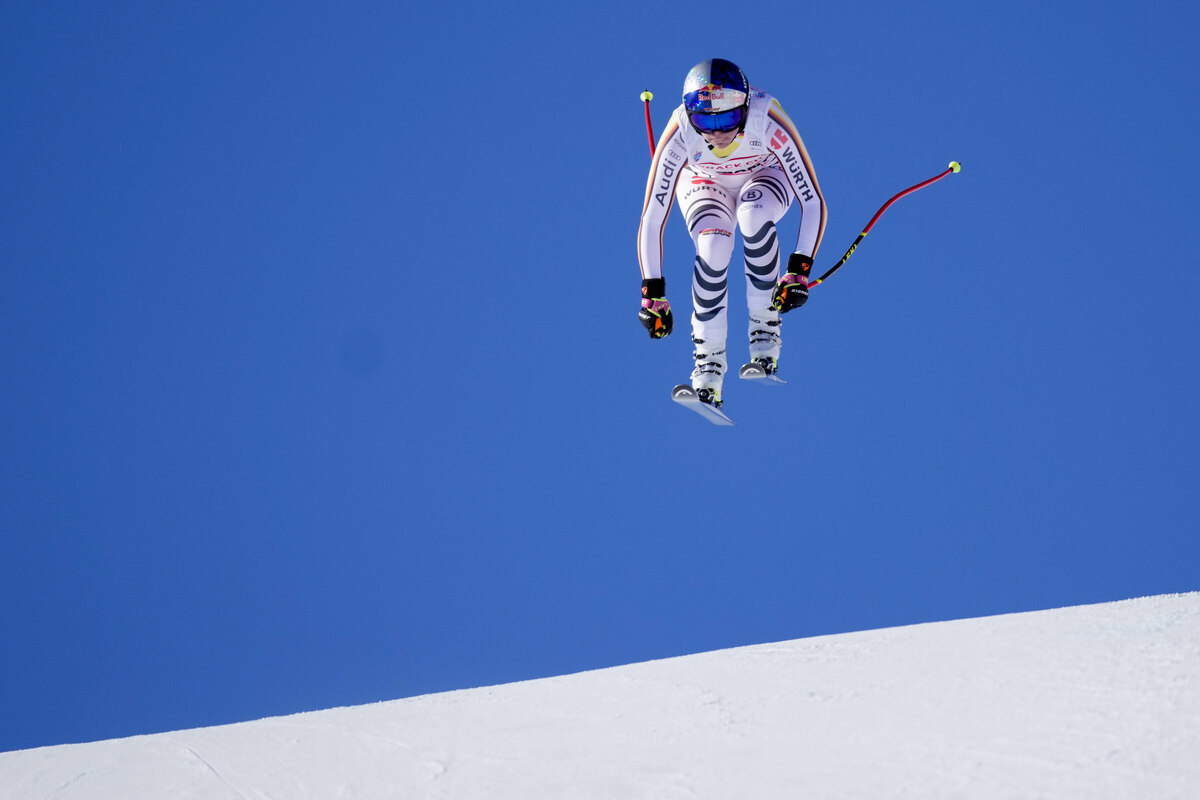
taz: So the women have to do it again. Emma Aicher, Kira Weidle-Winkelmann and Lena Dürr took eight of the nine German podium places. Hopes rest particularly on Aicher. Do you share the impression that, despite being the favorite at the Olympics, she still doesn’t feel much pressure?
Maier: Now she still has this calmness. But that has already changed for many athletes at a major event. This public focus obviously makes a difference in the minds of athletes. Emma now still has the lightness of being; she doesn’t think much about the possibilities and consequences of her actions. It will be crucial that you give her this ease and that she doesn’t let the joy of skiing, regardless of the discipline, be taken away from her.