

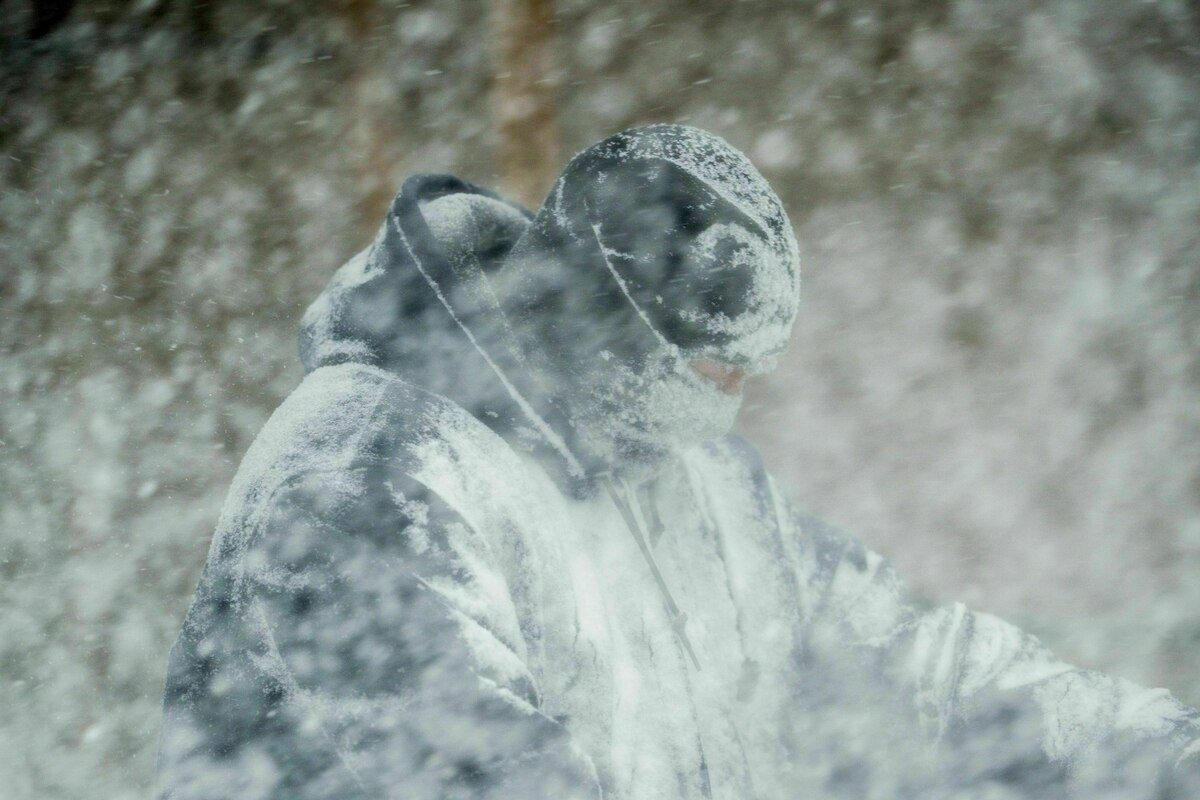
afp | Icy cold, snow chaos and slippery conditions: large parts of the USA continue to groan under the ice Impact of extreme winter weather. The latest toll of at least 30 deaths also included seven passengers in a small plane that crashed in Maine on Tuesday. Due to persistent heavy snowfall, more than 530,000 households were without power. A state of emergency continued to apply in around 20 states and the US capital Washington.
According to media reports, the storm has now cost at least 30 people their lives. The causes of death include hypothermia and accidents related to traffic, sleigh rides and snow plows.
Seven people also died when a small plane crashed. As the US Federal Aviation Administration (FAA) announced, the plane got caught in a snowstorm while taking off from Bangor in the east coast state of Maine on Sunday evening.
Todesopfer in New York
In New York, authorities reported eight more deaths. The causes of death are currently being determined. It was initially unclear whether all of the deaths were related to the winter storm. In New Jersey, a man was found lifeless in the snow with a snow shovel in his hand.
According to the website Poweroutage.com, more than 540,000 households, especially in the southern United States, were still without power on Tuesday. Power outages affected more than 175,000 households in Tennessee and more than 140,000 households in Mississippi. In Louisiana, nearly 100,000 homes were without power.
Air traffic disrupted
After massive flight cancellations over the weekend at several major airports such as Washington, Philadelphia and New York, air traffic was still disrupted on Tuesday. More than 9,000 flights were canceled. “We don’t know if we’re going to get out of here or not,” said traveler Alan Vazquez, who has been stuck at Texas’ Dallas Fort Worth airport since Sunday.
The polar cold front moved from the south to the northeastern United States on Sunday, hitting states from New Mexico to Maine with a heavy mix of heavy snow, strong winds and freezing rain. The east coast cities of Washington and New York as well as the south of the country, which is otherwise used to milder temperatures, were also affected.
Authorities called on people to stay at home. In northern states there have been warnings of life-threatening cold temperatures of up to minus 45 degrees Celsius in the coming days.
Persistent power outages
The National Weather Service (NWS) warned that temperatures across much of the northern United States could remain below freezing “consistently through February 1.” There were “record-breakingly low temperatures,” particularly in the south. The authority warned of a dangerous situation, particularly in view of the ongoing power outages.
The storm has now largely subsided, but the icy cold still has many places firmly in its grip. There is now a risk that the restoration of electricity will be delayed due to the consequences of the storm.
Nashville Mayor Freddie O’Connell told reporters that trees in Tennessee’s capital city continued to fall under the weight of icy ice. The power supply, which has already been partially restored, will be interrupted again. Nashville and other communities across the country have since set up heated emergency shelters.
Restoring the infrastructure is particularly difficult
The texture of the snow is “very dry” and “flaky,” according to New York NWS meteorologist Dave Radell. The snow masses could therefore easily be stirred up, he told AFP. This impairs visibility enormously and also makes it “massively difficult” to clear the streets.
NWS meteorologist Allison Santorelli told AFP that restoring infrastructure after this storm would be particularly difficult because of the many states affected. The northern states, which are significantly better equipped for winter, would now be unable to share their resources with the southern regions, which are less well equipped for winter.
The extreme weather conditions in the USA are triggered by a deformation of the polar vortex, which means that cold air from the Arctic travels south. According to scientists, there is evidence that the increased occurrence of this phenomenon could be linked to climate change.