

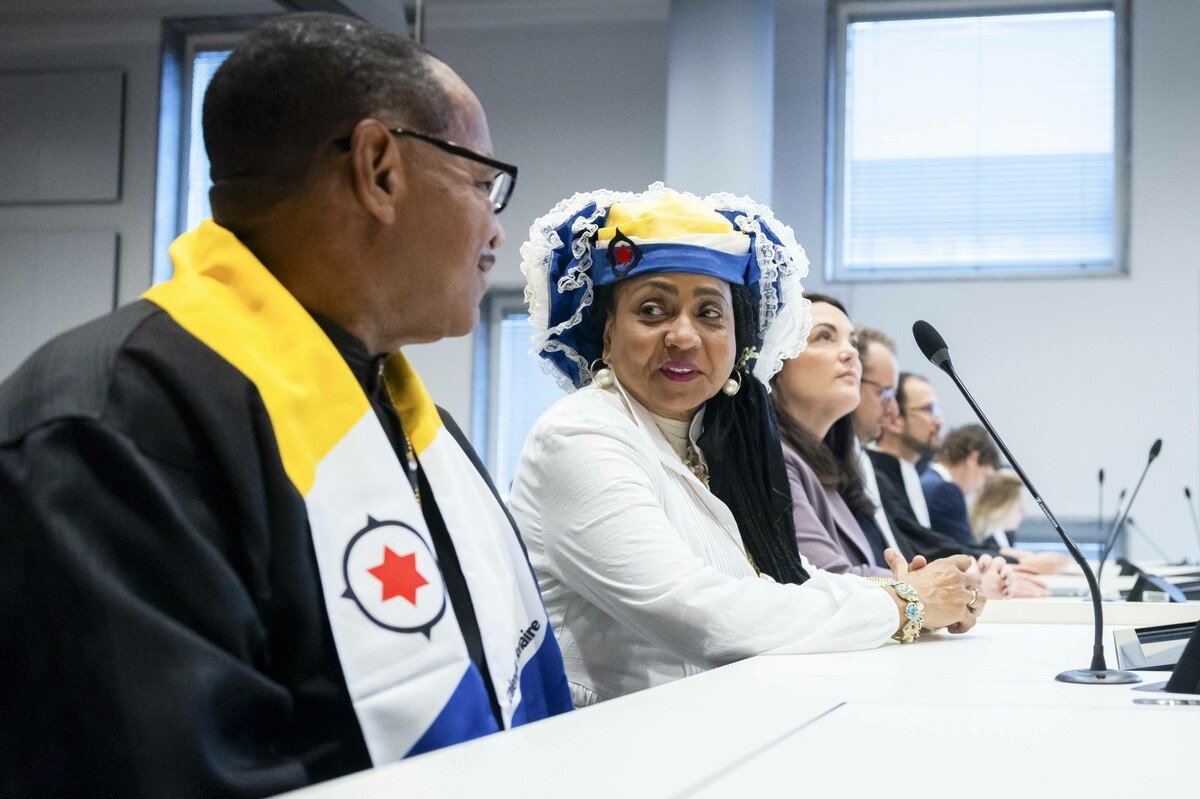
The Dutch state protects the population of the Antilles Island Bonaire not sufficient to combat the consequences of climate change. A court in The Hague came to this conclusion on Wednesday. Eight residents of Bonaire and Greenpeace filed the lawsuit. The jury ruled that the state was treating the island’s population unfairly compared to citizens in the European part of the Netherlands. This violates the ban on discrimination and the European Convention on Human Rights.
Bonaire, the largest and southernmost island in the Caribbean part of the Netherlands, has 26,000 inhabitants. The court relies on studies on the situation of small Caribbean islands. These are particularly vulnerable to the consequences of global warming: floods, small size and economic dependence on tourism and imports make them vulnerable. Officially, one in three people on Bonaire is considered poor. The disadvantage compared to the Dutch heartland remains a central problem in the former colony, which today has the status of a special municipality of the Netherlands.
By 2030, the Dutch state must present and implement an action plan to better protect Bonaire from the effects of climate change. This involves rising temperatures, which could climb to an average of 29.8 degrees by 2050 and 31.8 degrees by 2100, as well as sea levels. This could happen by the end of the century with low CO2-Output increase by 16 to 37 centimeters, with high output by 55 to 127 centimeters. For the population of the volcanic island, this “very likely means an increased risk of physical and mental illnesses” associated with heat stress and food insecurity.
The Netherlands must also submit a climate action plan by 2030
The ruling states that Bonaire is already suffering from flooding caused by tropical storms and extreme rainfall. “According to various studies, this will get worse in the next few years.” While the European Netherlands, itself highly endangered due to its coastal location and river deltas, is leading the way with spectacular coastal and flood protection, the much more vulnerable Bonaire is falling behind.
The historian Arthur Sealy, who is involved in many social initiatives on Bonaire, told the public TV station NOS after the verdict: “Everyone knows that parts of Bonaire will be under water.” Nevertheless, the topic is often postponed, as if the climate was “something for 2050 and the next generation”. The judgment, on the other hand, underlines that this postponement cannot be maintained. Greenpeace Netherlands spoke in a statement of a “historic victory”. The plaintiff Onnie Emerenciana said he was “very happy” about the verdict. “Finally, The Hague can no longer negate us. Today the court has drawn the line. Our lives, our culture and our country are being taken seriously. The state can no longer look the other way.”
The court not only obliged the Dutch state to fulfill its responsibilities towards Bonaire, but also to include binding climate targets in the legislation within 18 months in order to reduce CO2-to reduce emissions. Both parts of the judgment confirm previous decisions in Dutch climate processes, which make the state responsible for protecting its citizens from the consequences of global warming.