

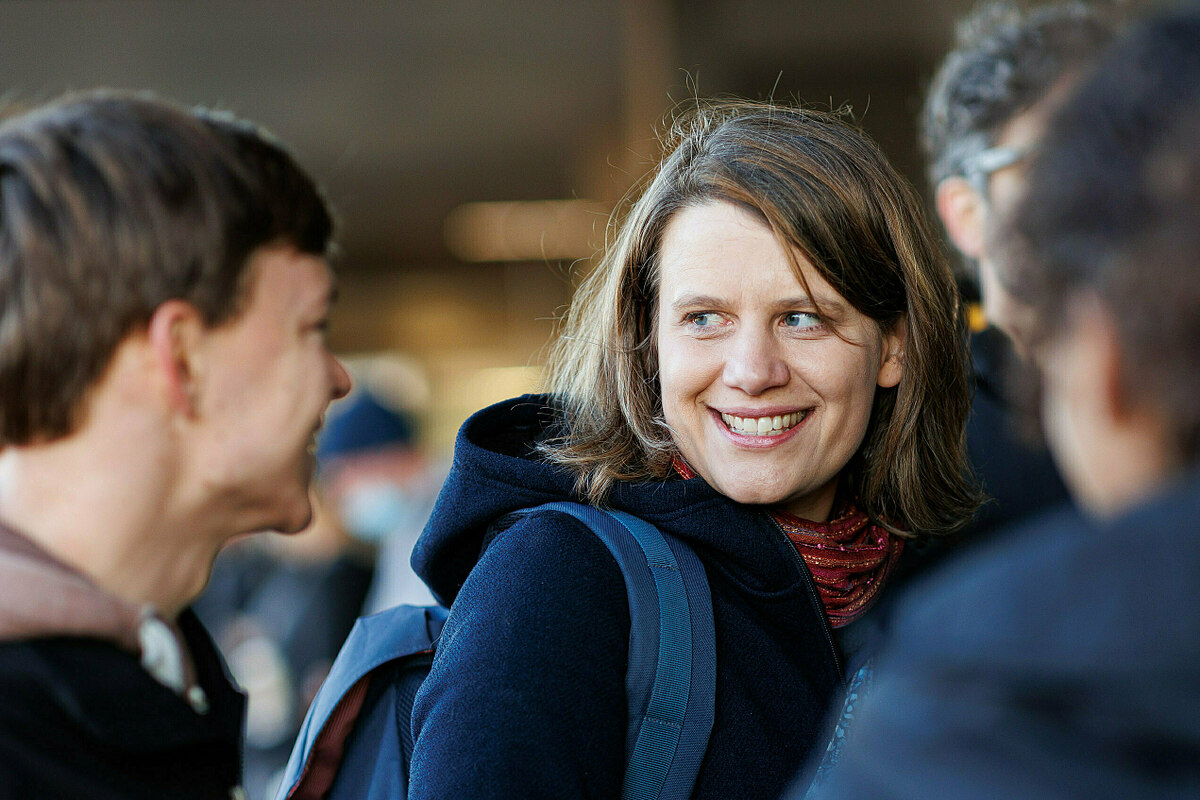
dpa | Die Changes in division at Lower Saxony’s schools continue to cause controversy: In the state parliament, both the CDU and the AfD sharply criticized the change. Lower Saxony’s Minister of Culture Julia Willie Hamburg defended the reform against it.
“What annoys me is that it is suggested that we would abolish the written division. We are not doing that,” said the Green politician to the German Press Agency. Rather, elements would be added to ensure safe learning of written division in secondary school.
With the change that will take effect from 2027/28, so-called semi-written division will mainly be taught in primary schools, in which the numbers are broken down into clearer partial numbers and then divided. Classic division is only taught compulsorily from grade 5 onwards.
Foundation stone for Nobel Prize winners from Lower Saxony?
“We are not reducing standards, we are increasing understanding,” emphasized Hamburg. “I firmly believe that this will make the children better at math.” The students would be able to do mental arithmetic more confidently and also find their own solutions to mathematical problems. “In this way, we are laying the foundation for children to really jump in later on and be able to develop completely new models of their own during their studies and maybe even win a Nobel Prize.”
CDU sees a move away from meritocracy
The opposition sees it completely differently. Sophie Ramdor from the CDU complained about a general move away from meritocracy. “If the ministry continues to create a world for children in which nothing is expected of them, in which they are not allowed to strive and grow beyond themselves, then in the future there will be no more top athletes, no more innovation from this country,” she said.
AfD MP Harm Rykena said that learning written division used to be possible for most students. “Always problem-free? Certainly not. But the students learned how to fight their way through a difficult project in elementary school.”
SPD: Division is being inflated into a culture war
Rykena further spoke of a “softened green world of pedagogy” in which such requirements would rather be ignored.
However, the division’s new placement is not a green project: the adjustments are based on the educational standards of the states, as set by the Conference of Ministers of Education and Cultural Affairs (KMK). Several experts also spoke out in favor of this. According to the state government, in addition to Lower Saxony, five other states have already initiated the change.
SPD MP Thore Güldner also referred to this. He criticized that a joint agreement was now being “inflated into a culture war.”