

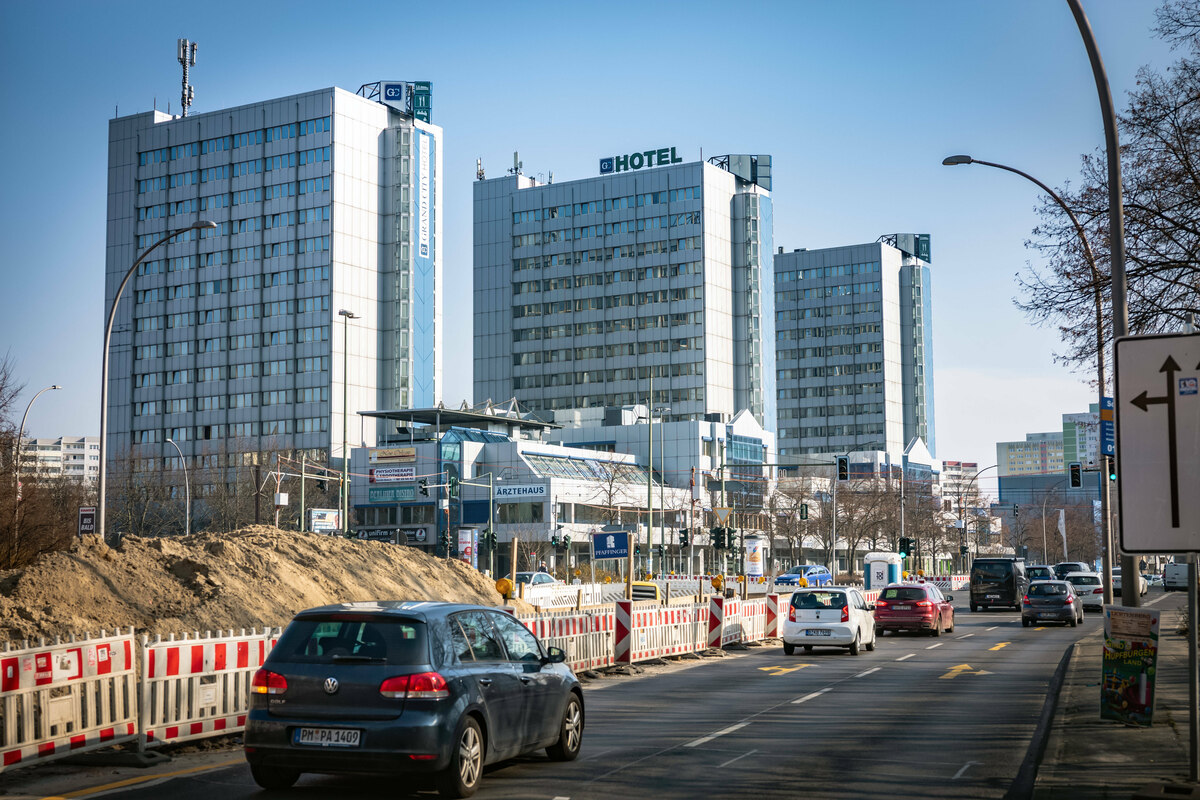
Refugees who come to Berlin are increasingly being accommodated in hotels. At the end of 2022, the State Office for Refugee Affairs (LAF) rented hotels for the first time, when there were particularly severe bottlenecks as a result of the Ukraine war. At that time, 311 people were accommodated in hotels. At the end of 2025, this number rose to 3,489, as a taz query to the LAF revealed. This means that almost 10 percent of the refugees accommodated by the office (currently around 38,000) now live in accommodation facilities, some of which have been converted according to the office’s specifications and some of which are still open to tourists in normal operation.
This development has unpleasant consequences for those affected, but also for urban society as a whole. For refugees, hotel accommodation does not mean a better situation, as one might think – on the contrary. On the one hand, most hotels lack “infrastructure for long-term stays,” as the LAF calls it: primarily kitchens for self-catering and common rooms. Of the 16 hotels and hostels with which the LAF currently has contracts for room contingents, 12 do not have kitchens – people there receive full board from a caterer.
Of course, this is not a permanent situation. No one wants to live on food like the ones in the hospital or school cafeteria for months – maybe even years. In addition, cooking yourself, especially for refugees, represents an important piece of “home” in a foreign environment, where they often initially have no job or other employment.
What is perhaps even more serious is that the refugees in hotels receive less support with integration. In normal shared accommodation, there is at least one social worker on site for every 100 refugees who can be contacted with questions about benefits, looking for work and housing, school attendance, health and language courses. Although the LAF also has 49 full-time positions of this type available for the hotels, these employees only come to the hotels two to three times a week for consultation appointments. The rest of the time, people can only turn to hotel staff with their questions and problems.
The stand In January 2026, the LAF accommodated around 38,000 refugees (January 2025: 41,400). Of these, around 33,000 people lived in regular state-owned accommodation, another 5,000 in “non-regular” accommodation (arrival center: around 500, Tempelhof emergency accommodation: around 1,400, hotels/hostels: almost 3,500).
The need The number of regular accommodation places will hardly increase in 2026, the LAF states in its monthly balance sheet report. The reason for this is the Senate’s decision not to build any new refugee accommodation. The office therefore only expects 346 new places this year. “This is offset by a need for 5,000 people who are still accommodated in emergency accommodation or hotels,” states the authority.
The development Last year, the number of asylum seekers fell sharply, from around 11,000 people in 2024 to around 6,000. There were also around 9,000 Ukrainian refugees (previous year: 10,400). The number of Ukrainians has been increasing “by leaps and bounds” since September. (sum)
The LAF also finds that this development is problematic. Due to the lower staffing ratio in social care, “those in need of protection who have an increased need for care and advice are less well cared for in hotels,” explains a spokeswoman for the taz. In addition, the costs are higher than in regular accommodation – even if they cannot be quantified more precisely because of “contractual secrecy”.
Higher costs for a poorer type of accommodation that also prevents integration? This trend has become apparent since the SPD switched sides and returned to coalition with the CDU, as the latter has since then repeatedly stopped construction projects for new refugee dormitories.
With the Decision of the coalition committee from last autumn, not to build any new buildings at all, but to rent more hotels if additional space was required, the Senate has now made the step, which was initially born out of necessity, into a guideline. Emergency accommodation – as such, the LAF not only runs large camps like Tempelhof, but also hotels – is apparently no longer a temporary matter, but the new normal.
The CDU obviously wants to keep its constituencies free of refugee accommodation in the election year
Katina Schubert, left
The motive behind it is obvious for the Left Party. “Obviously the CDU wants to keep its constituencies free of refugee accommodation in the election year,” commented the refugee policy spokeswoman for the parliamentary group in the House of Representatives, Katina Schubert, to the taz. “For ideological reasons, the Senate is throwing millions out of the window instead of focusing on decentralized and humane accommodation and empowering people to lead a self-determined life as quickly as possible.”
But the CDU’s calculations don’t work. Residents are also protesting against hotels being used as refugee homes. That’s how it was in 2024 Lichtenberg at the City Hotel and recently in Reinickendorf. The district office and employees of the Ibis Hotel near the Residenzstrasse subway station apparently only found out on December 1st that the hotel, which had been operating normally until then, would only accept refugees two weeks later.

Dispute: A hotel in Reinickendorf that was quickly converted into emergency accommodation
Photo:
Maurizio Gambarini/image
In contrast, a non-party politician and bar owner who sits on the district council for the CDU started a petition. According to his own statement, he sees the local economy in danger. And the CDU district mayor complained about the lack of infrastructure, such as school places Reinickendorfer Allgemeine Zeitung reported. For the Greens, Jelisaveta Kamm, direct candidate for the House of Representatives election in the fall, explained that the “communication failure” was creating “mistrust and unnecessary unrest, even though we depend on cooperation and reliability when it comes to accommodation.”
The new emergency accommodation as normal policy can hardly be reconciled with an extensive legislative proposal that the House of Representatives is due to pass this month: the law on “city-wide control of accommodation”. It provides software into which all Berlin accommodations, for refugees and… for homeless peoplerecorded and managed centrally. To this end, the LAF is to become the state office for accommodation and will also be responsible for homeless people in the future.
In addition to the goal of a better overview, it is also about raising the quality standards of all accommodations to an equal and good level. The infamous “lice boarding houses”, in which districts accommodate homeless people, sometimes for a lot of money, should come to an end at some point.
But if quality no longer plays a role because you prefer expensive emergency accommodation, you can actually save yourself the reform.