

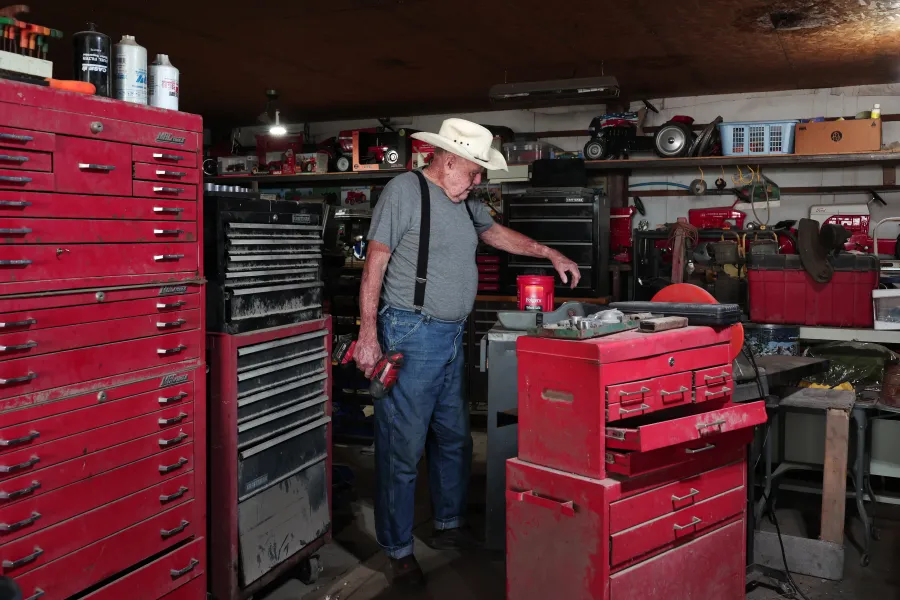
For nearly 70 years, Katie Newberry and Gerald “Buster” Newberry have managed the rhythms of agricultural life in Parnell, Missouri. Their tenure on the land has seen the couple produce a wide variety of commodities, ranging from livestock like sheep and cattle to row crops including corn and soybeans. Now, the machinery and fields that defined their careers have largely fallen silent.
The transition marks the end of an era for the Newberry family. The couple is the final generation of their lineage to work this specific Missouri soil. While the farm was once a hub of constant activity, the intense cycles of spring planting and autumn harvesting have concluded. The physical reminders of their decades of labor are also disappearing; Buster has parted with his primary machinery, and the ceramics studio Katie once operated for the local community has closed.
A Lifetime of Diversified Agriculture
The Newberrys built their livelihood on a diversified approach to farming. Throughout the mid-20th century and into the 21st, they adapted to the changing demands of the market by shifting between livestock and grain production. This flexibility allowed them to maintain the farm for seven decades, a significant feat in a modern agricultural landscape often dominated by large-scale industrial operations.
In addition to the outdoor work of the farm, the property served as a creative and social center. Katie Newberry’s ceramics studio was a well-known local fixture, providing a space for artistic expression alongside the more grueling demands of rural life. The closure of the studio represents the loss of a community gathering point that existed parallel to the farm’s commercial output.
Transitioning the Family Legacy
The decision to step back from active farming comes as the tools of the trade sit at rest. For many multi-generational farm families, the question of succession is a complex one. In the case of the Newberrys, the conclusion of their active farming years signifies that the land will no longer be worked by their direct descendants.
Despite the quiet that has settled over the property in Parnell, the legacy of their 70-year commitment remains. The couple has witnessed the evolution of Missouri farming from the post-war era through the technological shifts of the new millennium. While the best machines have been moved off the property and the fields are no longer being tilled by the family, the Newberrys remain the stewards of a long-standing agricultural tradition that is now reaching its final chapter.
As the Newberrys look back on their time in Parnell, they represent a disappearing segment of American agriculture: the small-scale, multi-generational family farm that sustained both a household and a local community through a lifetime of diverse production.