

taz: Ms. Schneider, why do you use the term “post-Soviet” in quotation marks?
Norma Schneider: The term “post-Soviet” is rejected by many people who come from or live in the region because they do not want to be defined by the past. In this country, people often only associate the term with Russia and forget that that there are so many other countries in the territory of the former Soviet Uniont for whom their independence is very important, especially in the face of Soviet colonialism and Russian imperialism.
taz: What was the situation of queer people in the Soviet Union?
Schneider: In the Soviet Union, male homosexuality was banned and punished with prison. But there was hardly any talk about queerness and homosexuality was highly taboo. In addition, collectivism and the idea of serving society were ideologically widespread. Deviations from the traditional family image were frowned upon as harmful individualism.
taz: And what is the situation of queer people in the “post-Soviet” era?
Schneider: In fact, the situation of queer people in the “post-Soviet” space is very different. For example, gay marriage is legal in Estonia, while in Uzbekistan there is a prison sentence for gay men. There are countries where Russian influence is still very strong.

taz: Which countries, for example?
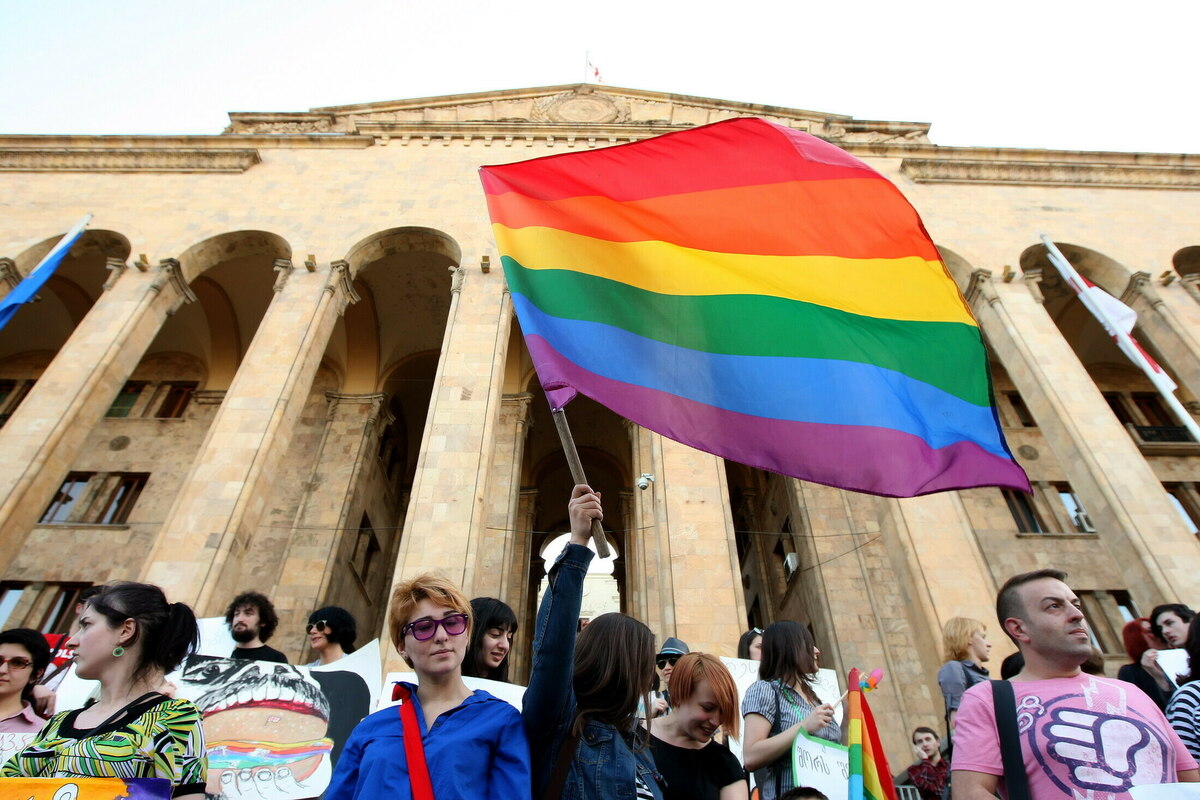
Schneider: Laws against so-called homosexual propaganda have recently been introduced in Kazakhstan and Georgia. This shows how powerful it is anti-queer narratives from Russia in the “post-Soviet” area. Russia still considers the countries of the former Soviet Union to be part of its sphere of influence and many countries are economically dependent on Russia.
taz: For example?
Schneider: Kyrgyzstan because there is no prospect of membership in the European Union there. Unlike in the case of Georgia, where this perspective existed for a long time. Accordingly, the political orientation there is towards both Russia and China. In addition, the Russian media is very widespread there.
Russia still considered the countries of the former Soviet Union as its sphere of influence and many of these countries are economically dependent on Russia
Norma Schneider, journalist and author
taz: And why is there still such a big discrepancy in the legal situation in the countries of the “post-Soviet” area?
Schneider: Russia is not the only point of impact. Another influence of anti-queer narratives is religion, for example, as in Georgia. The Orthodox Church is very influential there and there are many nationalist Christians who support anti-queer laws. In the Baltic countries, which are part of the EU, they have a Western-influenced set of values. These narratives are still powerful there, but there is still more openness in society.
taz: Most of the successor states decriminalized homosexuality immediately after the collapse of the Soviet Union in 1991. Why is there currently a regression in LGBTQI* rights?
Schneider: With the beginning of Putin’s regime in 2000, anti-queer sentiment was increasingly used as a means of political power. This isn’t about the queer people themselves – they serve as scapegoats. They are seen as a threat from outside and as an expression of the decline of Western values. This enemy image strengthens nationalist narratives. In Uzbekistan and Turkmenistan, the paragraph banning homosexuality was never abolished.
Speech “Queer life in the “post-Soviet” space”: Thursday, January 29th, 7 p.m., Haus des Engagements, Eifflerstrasse 43, Hamburg
taz: What does it look like for queer communities in the “post-Soviet” states today?
Schneider: There are Despite everything, there are queer communities in these countriesculture and mutual support. Depending on the situation, however, this takes place in secret. When I was doing on-site research in Kyrgyzstan two and a half years ago, I visited a hidden gay club – but unfortunately it had to close due to pressure from the authorities.