

On Friday, the Kurdish-led Syrian Democratic Forces (SDF) and the central government under interim President Ahmad Al-Sharaa agreed on a new agreement. This appears to have laid down a roadmap for the full integration of the SDF into the Syrian state.
What is known so far: SDF fighters are to be gradually integrated into the central government’s army. According to the SDF, they are allowed to form a new military unit made up of three brigades. Another brigade is to become part of a government unit in Aleppo province. A government representative confirmed the agreement on state television.
The Kurdish-Syrian politician Ilham Ahmed also explained: The agreement states that forces currently stationed on the front line should withdraw to their bases. The Asayish security forces – essentially the police of the self-government and responsible for internal security – should remain in place and be officially recognized. In addition, some units of the Syrian Interior Ministry are to be deployed in the northeast.
The return of displaced people from Afrin, the predominantly Kurdish districts of Aleppo – Sheikh Maqsoud and Ashrafiya – and other cities should be prepared, accompanied by security guarantees. The recently besieged city of Kobanȇ will be militarily subordinate to the governor of Aleppo, but the city’s institutions will continue to be run locally.

Central government institutions will have a presence in northern and eastern Syria, but local administration and civilian staff will remain. Furthermore, qualifications from schools and universities in northern and eastern Syria are to be officially recognized throughout Syria. Further discussions about a new constitution and Elections be held.
The core of the conflict is that the Kurds want to defend their autonomy, interim President al-Sharaa wants a unified Syria under his leadership – which his troops are also using force to enforce in other parts of the country.
Al-Sharaa had previously recognized Kurdish as the national language, promised Syrian citizenship to previously stateless Kurds and promised an official holiday on the Kurdish New Year Newroz.
The last ceasefire failed
There was already an agreement between al-Sharaa and the SDF leadership in March 2025. By the end of 2025, the integration of the SDF into the Syrian army and control over the northeast of the country should have been regulated. But further negotiations made little progress.

The fighting between the SDF and the government resulted in many deaths. A funeral in northeast Syria on January 28th
Photo:
Orhan Qareman/reuters
In January of this year, the transitional government’s forces took over areas previously controlled by the SDF in a lightning offensive against the SDF: first in the city of Aleppoin which the SDF controlled the predominantly Kurdish neighborhoods. Then the governorates of Deir al-Sor and Raqqah. In which the majority of the population are not Kurds, who became part of the Kurdish self-government after liberation from the rule of the terrorist group “Islamic State”. And Parts of Hassakah Governorate – inclusive the infamous Al-Hol camp – as well as areas on the border with Türkiye.
The government army was able to advance so quickly because Arab members of the SDF defected to her. The government’s takeover of large parts of the SDF-controlled areas now changed the situation significantly in favor of Damascus.
A four-day ceasefire was last announced on January 20th, which was later extended by 15 days. Nevertheless, the fighting continued; Both the SDF and militias allied with the interim government were accused of breaching it.
Precarious supply situation
It’s bitterly cold
Anita Starosta, Syria consultant at Medico International
There are reasons why the Kurds clung to their autonomy: they were oppressed in Syria for decades and in some cases even deprived of their citizenship. For many Kurds, the Rojava self-government stood for democratic self-determination. However, parts of the Arab population in Rojava, especially in Raqqah and Deir al-Sor, report oppression under Kurdish leadership – curfews, arrests and torture.
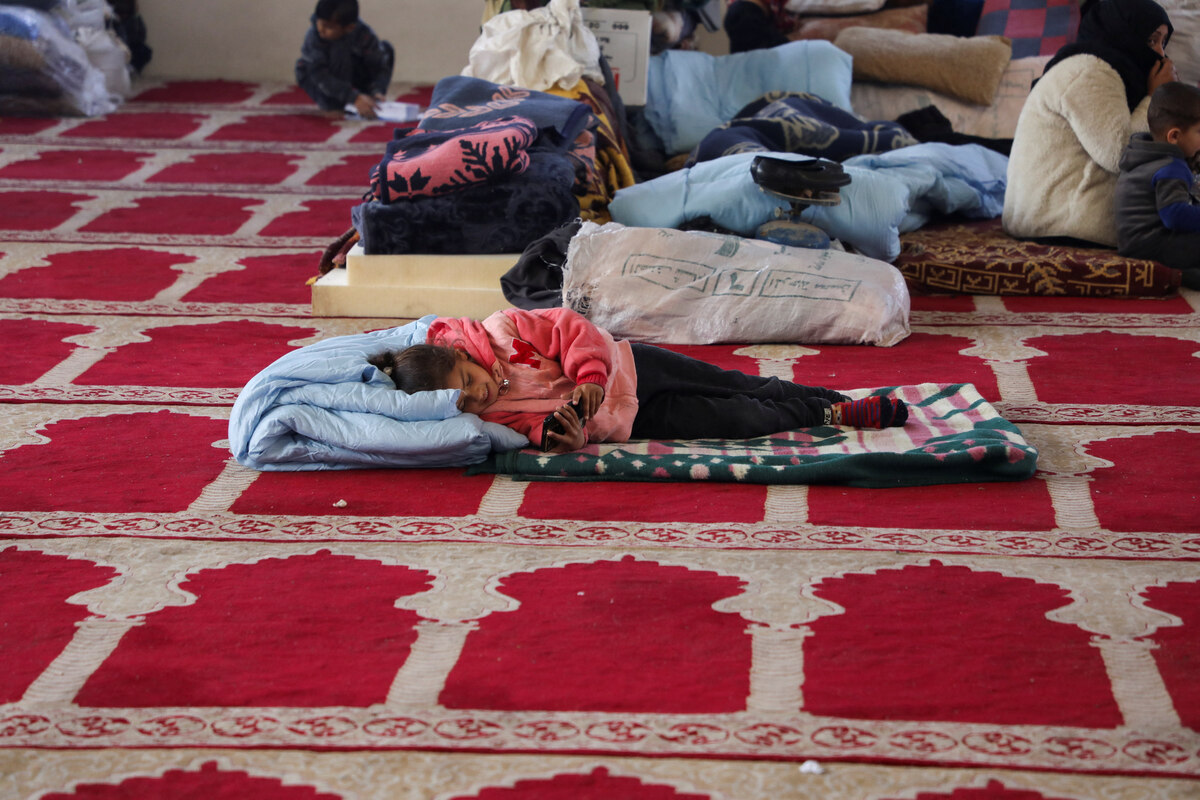
“It is bitterly cold,” reports Anita Starosta, Syria consultant for Medico International, from Qamishlo in northeastern Syria on the Turkish border. Due to the fighting between the SDF and government troops Tens of thousands have been displaced. They fled from areas now controlled by the government to areas still under SDF control.
There are around 130 emergency shelters in Qamishlo, says Starosta. Children and families tried to stay warm with fire barrels, and the Kurdish Red Crescent distributed blankets and heaters. The city of Kobanȇ remains under siege and the supply situation is very difficult and precarious.
6,500 people were now living in tents on muddy ground in the Newroz camp near the town of Derik (Arabic: Al-Malikiya). In the past five days, 300 families have been added, and another 250 families are expected in the coming days, explains Starosta.
Fear of Islamists
Refugees, especially Christians, feared that radical groups would come to power, says Ossama Mohammad, project coordinator for the Syrian human rights organization Rights Defense Initiative (RDI). Reports about IS flags and the Escape of previously imprisoned Islamic State fighters in the chaos of fighting between the SDF and the government, fear increased. In addition, Arab tribes in eastern Syria blocked important aid routes between Iraq and SDF-controlled areas.
“Many people are skeptical,” says Starosta. They were concerned about civil society achievements such as women’s rights programs. The violence shows that Syria is not safe. The fact that the federal government presents Syria as stable in order to enable deportations is “highly problematic”.
What is also fueling fears is that videos of alleged killings and desecration of corpses of SDF fighters by government troops are circulating on social media. Conversely, SDF fighters are also said to have killed civilians. The Syrian Network for Human Rights documented at least 22 civilians killed by SDF snipers in Raqqah in mid-January.
Collaboration: Lisa Schneider