

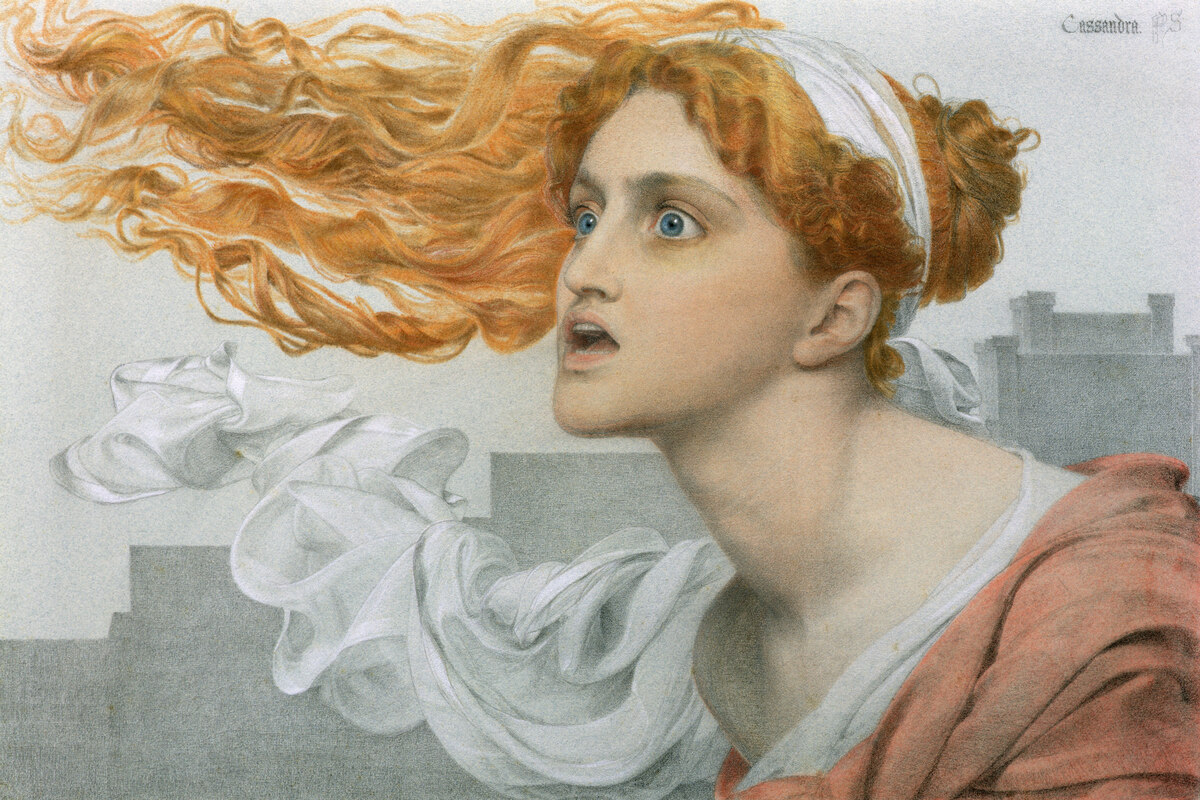
taz: Paula Oscar, for your final project in musical theater directing you wrote the libretto for the opera “Kassandra’s Wrath”. Why are you retelling the ancient mythology of the Trojan War?
Paula Oscar Rüdiger: I studied the composer Connie Converse and her song cycle “Cassandra Cycle”. Not only do you feel that there are parallels to her own biography, but you also get a different view of Kassandra, which I find totally coherent. In a feminist framing, Connie Converse shows her as a woman of logic who is simultaneously insanely knowledgeable and spiritual.
In an interview: Paula Oscar Rüdiger
Born in 1998, director and libretto, studied music theater in Hamburg supported by a Germany scholarship, and received the German Classical Philology Association’s prize for outstanding achievements in the field of ancient culture for his high school diploma in Bremen in 2016.
taz: How did you further develop this idea?
Rüdiger: When I really looked into this myth, I realized: People are totally controlled by others – men by the gods, women by men. Even though a lot of bad things are happening around them, they don’t seem to be able to do anything about it. This realization was enlightening for me because I ponder a lot about the state of the world and my own situation. When I feel like I can’t do anything, I feel so paralyzed. In this respect, I was interested in the question: How do you behave in a situation in which you are actually powerless?
taz: What does this mean for Kassandra’s development in your opera?
Rüdiger: In the myth, Cassandra is cursed by Apollo, which renders her unable to act. I thought: What if she cast the curse herself? If she said: You don’t deserve to be able to use my prophecy for your own good? This gave birth to a character who could act on his own initiative…
taz: … and offers more scope for interpretation?
Rüdiger: Absolutely. You may or may not find it justified that Kassandra takes revenge for being treated like crap. Everything revolves around their emotions and goals.
taz: Why does Kassandra fall in love with Helene?
Rüdiger: Because the two are actually quite similar. They are outsiders, they bear responsibility and guilt. Helene is considered the most beautiful woman in the world, which reduces her to an object. I was interested: What are your own wishes? Who does she love? That’s why she and Kassandra become a couple.
Kassandras Zorn, University of Music and Theater, Hamburg, Forum, on January 22nd and 23rd, 7 p.m. and on January 24th, 6 p.m
taz: What role do men play in your production?
Rüdiger: “Kassandra’s Wrath” is a pure FLINTA* opera. There is a man in Hektor, but he is a trans* person. Andromache is also a trans* character. We don’t care at all about the cis men in this myth.
taz: Why are you bringing a queer opera to the stage now? Do you want to defy the increasing right-wing populism?
Rüdiger: In any case. That’s exactly how I wanted to see: How are we trans* people actually doing in the opera and theater world? There is no question that queer culture is innovative. It was extremely important to me to show that trans* characters and their actors belong in the opera – even though trans* people find it difficult to gain a foothold, especially as singers.
taz: Nevertheless, gender swaps are certainly known in the history of opera, for example the castrati or trouser roles.
Rüdiger: Certainly theater and opera have a long history of crossdressing. If only men appeared in Greek tragedies, that wasn’t a problem. Because women didn’t belong on stage back then. The trouser roles only came about because there were no more castrati. Hansel in Humperndinck’s opera “Hansel and Gretel” is traditionally sung by a woman. That’s precisely why I don’t understand why it should be a problem if a character in a performance suddenly has a different gender than the one intended in the text.