

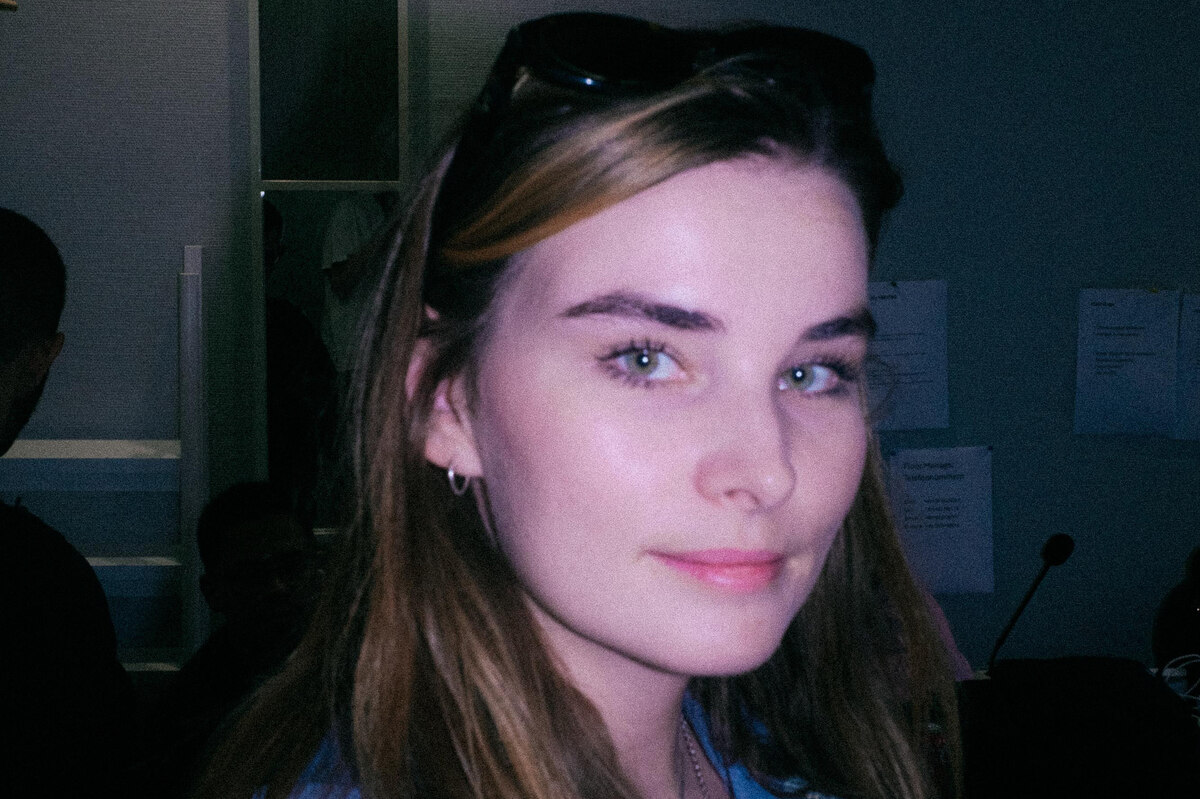
Suddenly there is a noise, it cracks. Is it coming from the door? Pauline is wide awake. She picks up the phone next to her bed. Someone is walking on the street, cold wind rattling the windows.
The days in Berlin are short and dark. In this darkness, Pauline waits and listens to see if anyone is at her door. Is there a shadow on the balcony? No, that would be too high, she thinks, and he doesn’t have that address. As a precaution, she also removed her name from the doorbell and informed the neighbors. The fear is particularly great at night, especially now that she is sleeping alone again, no longer with her mother. Pauline is 31, has an important professional appointment the next day and will hardly sleep again that night.
Pauline has a stalker. In this text he will be called Stan, as his name cannot be mentioned for legal reasons. What may sound like a Netflix series to some people is for them and many other people (especially women*). a life-changing reality.
According to police crime statistics, around 11 to 12 percent of the German population is affected by stalking at least once in their life. Around 25,000 cases are recorded by the police every year. The number of unreported cases is considered to be much higher. According to statistics, around 81 percent of stalkers are men. The victims, on the other hand, are around 80 percent female. The White Ring Victim Protection Association points out: Stalking is not harmless harassment, but violence. Many cases remain invisible because they are not reported or because those affected are afraid of not being taken seriously.
It is also patriarchal ideas of ownership that pave the cultural ground for stalking
Stalking is a social problem. It is also glorified role concepts in “love” and patriarchal ideas of ownership that pave the cultural ground for stalking and other forms of violence. A general rethink has not yet occurred.
The morning after the night with the noises, Pauline sits at her kitchen table and talks. She doesn’t like going out the door at the moment, she says, she feels uncomfortable even in her favorite café. When she speaks, she holds herself very upright, her long hair falling past her face.
After a comment in the “Bild” it starts
Pauline speaks openly about her dating and love life, always has. Last summer she and her friend had it Podcast “Pauli to the power of two” started. In the videos for the podcast you can see the Paulis presenting in a hotel bed in attractive, changing outfits and making listeners laugh with their love stories. The fact that both presenters also talk about sex and have something to do with the porn industry is an aspect that makes their stories more interesting – and unfortunately what attracts Stan the stalker.
It all started at the beginning of October 2025, when shortly after the release of the first podcast episode there was a comment about it in the Bild appeared. That day Pauline’s phone rang. A man who was completely unknown to her engaged her in conversation. “A fan,” thinks Pauline, and hangs up with an uneasy feeling. Shortly afterwards the first email arrives, in which it is immediately clear that something is wrong. There are countless pages of meticulous research into her private habits: sports, friends, work, her parents and where her father lives.
Plus the mix of demands, insults and threats that is typical of stalking. Stan writes pages and pages, including sexually explicit ones, and he repeatedly refers to her job. More emails and calls will follow in the next few days. Pauline goes to the police with it. But she doesn’t even know the name of the man who writes to her for hours and fantasizes about a relationship. The police say they can only file a criminal complaint against unknown people.
In criminal law, stalking means “stalking” (§ 238 StGB), explains stalking expert and psychologist Suse Schumacher to the taz. Repeated, undesirable behavior such as making contact, following, monitoring or threatening is punishable. In addition to filing a criminal complaint, those affected could also apply for protective measures under civil law, such as a ban on contact and proximity. But only when you have a name and an address can you obtain an interim injunction, which will then be served, she says – and advises clear, one-time demarcation of contact, without further follow-up dialogue.
The psychologist criticizes that the laws to protect those affected “often lag behind reality”. There is a lack of clear instructions for the authorities. Although criminal law has been tightened and protection orders have been made easier, victims’ associations still criticize that the procedures are lengthy and that protection only takes effect too late, said Schumacher.
Stalking often leads to anxiety, sleep disorders, social withdrawal and a feeling of losing control over one’s life
Suse Schumacher, psychologist
The Weißer Ring association has developed an app in which you can document everything, what stalkers do digitallyin order to be able to present it in court later. Pauline also documents everything in it, no matter how difficult it is for her not to delete the bad news straight away. The app has been no longer available since the beginning of this year. The association now advises creating your own table with the events.
One day Stan writes: “I’m coming into town now – will get you.” From then on, says Pauline, the fear was completely there. In the counseling center she heard that if you know the perpetrator, violence will occur in two out of three cases. In only one out of ten cases those affected do not know the perpetrators. It is also these numbers that motivated Pauline to make her story public.
The police advised her to inform those around her, says Pauline. She writes to her friends, acquaintances and her sports teacher. Stan had mentioned many of them in his messages. “Still, it was shameful to call everyone,” says Pauline, “I didn’t feel comfortable with it and it was almost embarrassing.” Then the phone rings again. It’s her trainer: “He’s here, Pauline. The man is standing in the studio and asking for you.” When the police arrive, Stan is already gone.
From now on, emails will come every day, including to her parents. The stalker has been blocked on social media for a long time. He writes what he wants to do with her, that he would “take” her “even though she has such a job” and talks about sex.
An important social problem arises here that goes far beyond the suspected mental illness of an individual. Because if a woman* has something to do with sexuality and shows herself publicly in some way, that is considered an alleged target. This is where the tightrope walk between rape culture and consensus culture begins. Because even if a person talks about sex, that doesn’t mean they want contact with everyone. No matter how she looks, dresses or acts.
Screams, a loud no, the door slams
All of this is clear to her, says Pauline. Nevertheless, everything eats away at her self-worth. The bad words she had to read from him to know if there was a real threat. In between, a friend of hers took over reading the news, but who can you expect that in the long run? Sometimes Stan would write in the morning about disgusting dreams, then just about hatred. Something always sticks when someone writes something like that to you.
Suse Schumacher says: “In practice, many of those affected report that the lengthy and expensive procedures get on their nerves and are very psychologically stressful.” Victims often feel this way for years. It is important not to let it get to that point in the first place. “We should all have an early influence on perpetrators in our environment,” says the psychologist.
Pauline hasn’t slept at home for a long time. One day she is with her mother. She is sick, exhausted, lying on the sofa. The doorbell rings and she calls: “Mom, wait, see who’s there first.” Then she hears screams, a loud no and the door being slammed shut again. Stan is at the door. They call the police, but he is already gone when the officers arrive.
A few days later, while Pauline is showering, her cell phone rings. Of course it is ready to hand. The bathroom door is locked even though she is home alone. It’s the sports trainer again, the guy is back. Pauline, still wet from the shower, alerts the police again. This time they catch the man in front of the gym and call Pauline. Actually, they don’t have anything against him, without any ruling. But they finally take his personal details and make it clear to him that he is unwanted. Now there is a name and the writ can be made out to him.
Pauline says: “It just limits life incredibly, work suffers, relationships with others too. The shame that this happened to me is there all the time. Meeting new people or going on dates is out of the question right now. I hardly post anything, it feels strange.”
“Stalking often leads to anxiety, sleep disorders, social withdrawal and the feeling of losing control over your own life,” explains psychologist Schumacher. “Many of those affected change their behavior permanently, change routes, telephone numbers or places of residence.”
She emphasizes that in addition to reforms such as better training for the police, a rethinking of society as a whole is needed. A new culture is needed that no longer asks about the behavior of victims and that focuses on preventing men from becoming perpetrators: “It’s not passionate or harmless when you hear that someone is stalking their ex-girlfriend,” says Schumacher.
When the injunction is about to be served, Pauline happens to notice that her address – which the stalker doesn’t know – is on it. She asks herself: How can this happen to a court? The day the letter is handed over, messages to her stop. But the terror continues for her parents. Now Pauline is waiting for a court order for her parents too.
One night she looks out the window. A man stands on the corner and looks up at a window. Is it Stan?