

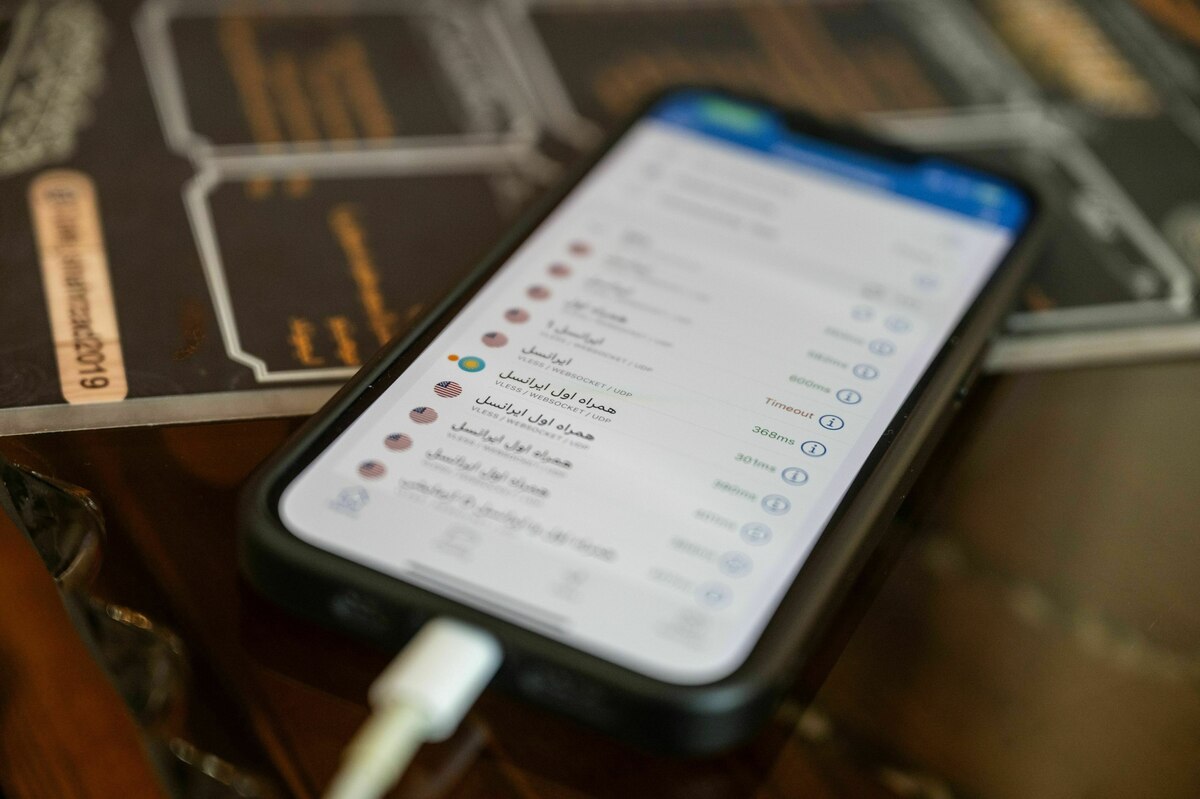
In the wake of the current mass protests against the Iranian regime, reports of mass killings of opponents of the regime are increasing. On Monday The exile broadcaster “Iran International” even reported a massacre of at least 12,000 people. Most of the people are said to have been murdered last Thursday and Friday.
Iran has also been experiencing a complete technical communications blackout since Thursday. It is not the first time that mass murders in Iran have been accompanied by internet shutdowns and information censorship. The regime is trying to cover up its crimes and make it more difficult to organize protests.
The current communications blackout is the most comprehensive Iran has ever seen. The taz spoke to exiled Iranians and IT experts about the current status, technical background and counter-strategies.
What is the status of the Internet blocking in Iran?
The country has been experiencing a nationwide internet shutdown for five days. You cannot access websites, use messenger services or make phone calls. This communication blockade in Iran is unprecedented in this form: Internet connections in the Islamic Republic have been cut since the evening of January 8th. This applies to communication externally as well as internally. Telephone calls via cell phones and landlines are also affected. This has never happened so comprehensively in Iran.
Sea the “Internet Outage Detection and Analysis” service at the Georgia Institute of Technology in the US, internet connections are in the low single digits of normal. Only one percent of IP addresses collected internationally work. According to IT expert Alp Toker, founder of the platform NetBlockswhich investigates internet blockages around the world, what little communication remains is reserved for regime propaganda, which is very selectively permitted.
Has such an internet blockage ever happened before?
During the protests in 2017 and 2018, the regime in Iran specifically blocked certain messenger services such as Telegram and disrupted regional mobile communications. During the revolt in 2019, the internet was shut down and censored for a total of twelve days. The regime already used this in 2019 Communication block for hundreds of murders of opponents of the regime. The mullahs’ regime also partially and regionally switched off the Internet in 2022 and during the Israel-Iran war in June 2025.
Do phone calls work in Iran?
The current communication block in Iran affects not only Internet connections, but also telephone calls via cell phones and landline lines.
Since Monday morning there have been isolated reports that some landline calls from Iran to the outside world are working again. However, IT expert Toker warns that these very few conversations are closely monitored by the regime. Open communication about this is not possible. This makes it difficult for journalists and human rights activists to inform each other about the extent of the regime’s repression and violence.
How is it technically possible for the Iranian regime to switch off all external communications?
The digital infrastructure in Iran is particularly easy to control. It There are only a single-digit number of connections from the country to the global Internet. These interfaces, but also the rest of the Internet infrastructure, are centralized and controlled by the regime.
In Germany, for example, such a complete Internet blockade would hardly be possible. There are too many individual “bridgeheads” on the global Internet for this.
Does the “national” internet work inside Iran?
No. Internet communication is also said to be impossible within Iran.
The regime had actually developed the so-called “National Information Network” (NIN for short) from 2013 onwards for exactly this purpose: Through this country-owned network, banking services, health portals and government communications were to be hosted on Iranian servers. They should therefore also be accessible if external Internet communication is cut off. Among other things, the costs of a complete blackout for the regime should be kept comparatively low. The government has invested more than six billion dollars in the NIN.
As research by taz, Netzpolitik and Correctiv revealed in 2022, A German front company for the Iranian company Arvancloud was also involved in this Iranian censorship project.
How does the regime communicate?
One of the few who is not affected by the internet block is the Ayatollah Ali Khamenei. On the social media platform
It seems as if the regime’s censors were very selective in allowing individual communications – the one percent of connections that can still be observed. Amin Sabeti, exiled Iranian IT expert and founder of Organisation Certfawho specializes in cybersecurity in connection with Iran, explains this with a kind of “whitelisting”, i.e. reverse censorship. All connections are cut off – except for a few individual ones that are specifically permitted. This means that regime institutions with a fixed, identifiable internet address can continue to communicate.
Is it possible to quantify how much the shutdown will cost Iran?
A few years ago, the Iranian Chamber of Commerce estimated the cost to the Iranian economy of completely shutting down the Internet at around 1.5 million euros per hour. The monitoring service NetBlocks expects costs for Iran to be around 31 million euros per day.
How does information even get out there?
One of the few ways to let information out of Iran digitally is through satellite communication. The cheapest variant is the “Starlink” system from US billionaire Elon Musk. Like the specialist portal Netzpolitik.org and also about the British one Independent According to reports, there are said to be tens of thousands of “Starlink” devices in Iran.
“I managed to connect for a few minutes just to say there is a bloodbath here,” said Saeed, a businessman from Tehran. the New York Times.
The satellite devices were probably smuggled into the country by activists, among others. “They help people send information in complete darkness when they are living in the Stone Age due to the shutdown of the Internet,” says IT expert Sabeti. Anyone caught with this can expect to be treated like a foreign spy. There is a risk of the death penalty.
What is the regime doing against Starlink transmitters?
The Islamist regime now appears to have even armed itself against this type of satellite communication. That’s how it reports Exil-Medium Iran Wire citing cybersecurity expert Amir Rashidi, that Starlink connections are now also being disrupted. Since Thursday evening, around 80 percent of Starlink communication has been blocked. This seems to particularly affect cities. The regime appears to be countering this with military jammers distributed throughout the country that could come from China or Russia.
What could be done from the outside to help people communicate?
Individually, it is hardly possible to help the people of Iran in the current situation, at least technically. In previous attempts by the regime to censor the Internet, it was possible to redirect communication through so-called proxy servers and use VPN tunnels, although the communication itself could be encrypted. TOR technology also helps surf anonymously. This infrastructure can also be supported from Germany. But in the current situation of a complete communication blockage, even such technical detours do not help.
The countermeasures also included surfing via the so-called TOR browser, in which user access to websites is routed through various intermediate stations in order to disguise the origin. Anyone who wants to help with this infrastructure can get the free one Browser extension called “Snowflake” install. This makes part of your own internet bandwidth available in a decentralized manner to enable others to surf anonymously.
However, all of these countermeasures mentioned do not help in the current situation. Because at the moment the connections to the global Internet from Iran are simply completely switched off. Where there is no digital traffic, you cannot disguise yourself as someone else.
One of the few effective technical measures against the current communications blackout would be to illegally smuggle more satellite technology like Starlink into the country.
What can I do as an individual?
The regime in Iran will not be able to maintain this type of complete internet shutdown forever. Anyone who wants to show solidarity with the protesters in Iran through technical means can already take part in the TOR project, for example. The easiest way to do this is to Browser extension “Snowflake“. This already helps people who want to surf anonymously, because it expands the network over which communication is concealed. As soon as connections abroad are possible again in Iran, people will have a great need to communicate a little more securely. Commercial providers of VPN services should also prepare for this.