
E There was this one hope that Iranians clung to after decades of oppression: “If there are enough people who dare to take to the streets despite the risk to our lives, this regime can’t shoot us all – then we are stronger than them.”
This hope was dashed in the bloodiest way on January 8th and 9th. Within just two days, the regime stopped Systematically shooting 7,000 and 36,000 demonstratorsthe government does not allow an independent count.
Tens of thousands are now in torture prisons, and thousands are threatened with execution. Relatives of the dead have to pay several thousand euros for the security forces to hand over the bodies to them – officially to pay for the ammunition used.

Theseus The Mark
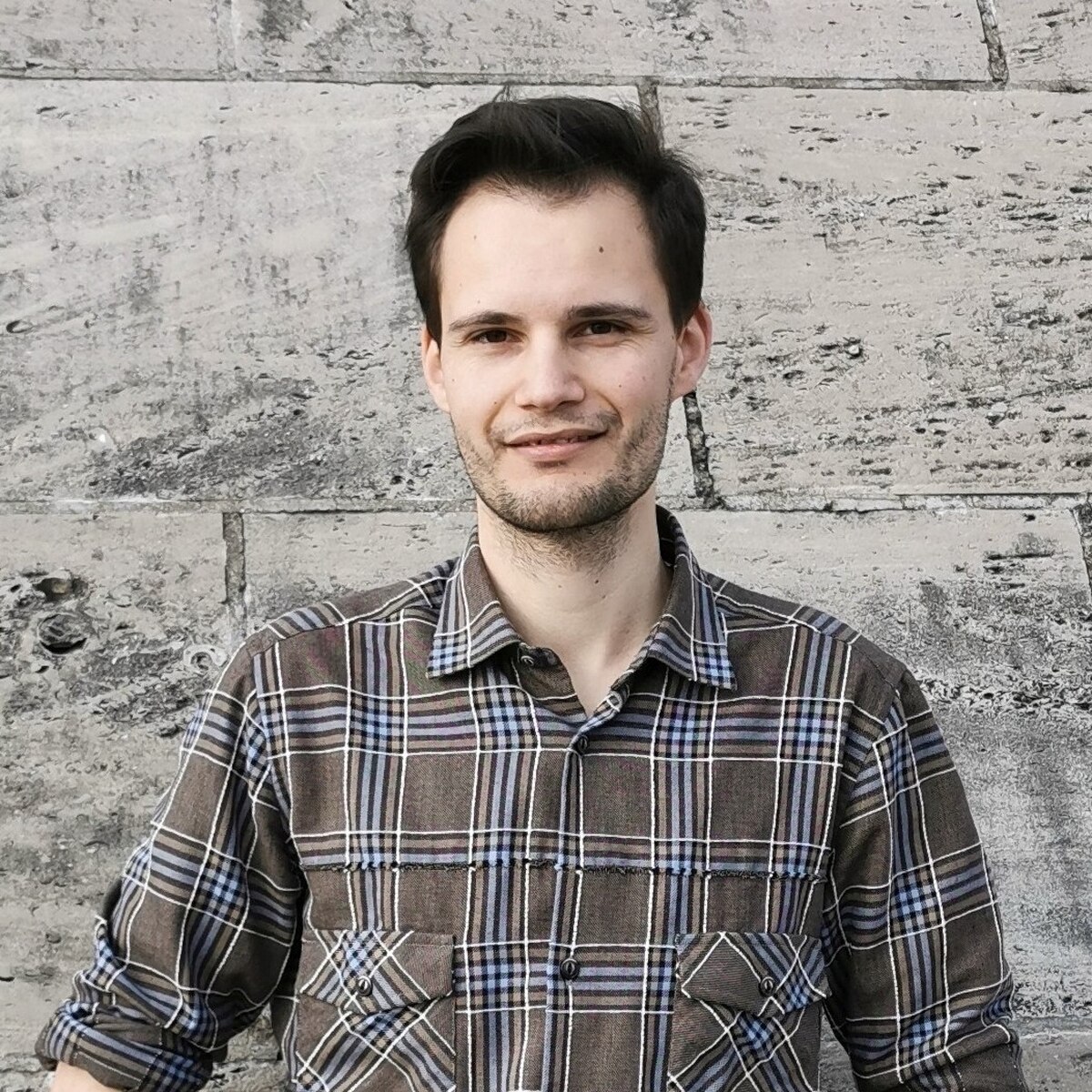
is a freelance journalist and lived in Iran temporarily between 2017 and 2022. During the “Women, Life, Freedom” protests, he himself witnessed the violence perpetrated by Iranian regime forces against demonstrators. In 2025 he published the non-fiction book “The Misguided Islam Debate and Its Consequences” (Westend).
Faced with this horror, many Iranians’ only hope is American military strikes. Not out of naivety, but out of the desperate hope that air strikes will weaken the mullahs’ regime so much that they can return to the streets and liberate their country.
Bitter: Trump, of all people, inspires hope
It’s not nice to call it that, but it is like this: An authoritarian, fact-twisting bully like Donald Trump, who has nothing but contempt for the poor and weak of this world, has more to offer a people who resist the oppression of women and clerical fascism with incredible courage than all left-wing politicians and activists of the last 50 years.
At the moment is the silence of left-of-center activists, politicians and NGOs in particular loud. At best, symbolic statements lament the deaths and in the same breath warn against military interventions. At worst, people remain completely silent or even openly sympathize with the mullahs’ regime – after all, the last bulwark against Israel’s expansionism and Western imperialism, right?
From the French star intellectual Michel Foucault, who romanticized the mullahs’ seizure of power in 1979 as “political spirituality”, to the former “feminist” Foreign Minister Annalena Baerbock, who thwarted the classification of the Revolutionary Guards as a terrorist group for years: Iran has always proven to be the touchstone against which seemingly progressive ideologies fail.
With their feminist thrust, the “Woman, Life, Freedom” protests in 2022 still received some sympathy in left-wing circles. But now that ordinary working-class Iranians are calling for the pro-American son of the deposed Shah, much of the global left seems to have finally turned away from Iran. Virtually no demos. No hashtags. No Hollywood speeches. Instead, Iranians are told that the Shah’s monarchy was just as bad as the rule of the Ayatollahs. Or that “regime change” has never worked in the Middle East.
The suffering is put into perspective
In circles where people are – justifiably – calling for a free Palestine, the reluctance is particularly revealing. When Zohran Mamdani, New York’s left-wing mayor, was asked for his opinion after weeks of silence, he said only that he “does not support Iran’s handling of the protests.”
Left-wing media critical of Israel, such as Dropsite News, spread the regime narrative that the Mossad was behind the demonstrations. Others, however, portray the high number of victims as manipulation to legitimize a possible US intervention. Instead of giving local people a voice, people talk about them. Instead of listening to those affected, people relativize or even deny their suffering.
There are deep-seated ideological reasons why many people with progressive values find it so difficult to support the resistance in Iran without any ifs and buts. It is the beliefs that stand in the way of real solidarity from the left.
The historical Shah phobia
First: the historical Shah-phobia. The son of the deposed Shah, Reza Pahlavi, has become a political identification figure for many young Iranians. Not because of a diffuse nostalgia for the Shah, but because he is perceived as the only opposition politician with a clear program.
Despite his commitment to democracy and a national referendum on the future form of government, ideological leftists continue to see him as a symbol of the authoritarian Shah monarchy before 1979. At the same time, they place his father’s rule on the same level as the Islamist mullah dictatorship (“neither Shah nor Mullah”).
But this equation does not stand up to any historical comparison. The Shah’s repressive apparatus did not kill nearly as many people during the entire Islamic Revolution as the Islamic Republic did in just two days. Not to mention women’s and civil rights, which were abolished in 1979.
The enemy of my enemy
Second: My enemy enemy is my friend. In addition to Sharia, “resistance against Israel and US imperialism” forms the ideological foundation of the Islamic Republic. A countdown to the alleged destruction of Israel has been running in Tehran’s center since 2017. This makes the mullahs’ regime compatible with parts of the anti-imperialist and Israel-critical left.
It should be clear to everyone: a system that tramples on its own citizens has not the slightest interest in the well-being of the Palestinians. For the mullahs, the Palestinians are nothing but a geopolitical pawn.
The Islamic Republic is the main financier of Hamas and Hezbollah. Without it, the only comprehensible argument that Israel can bring forward against a two-state solution would no longer exist. So anyone who wants a free Palestine must also want a free Iran.
Fear of “regime change”
Third: The fear of “regime change”. It is true that Western military interventions and “regime changes” in the Middle East have rarely been successful. But Iran has different starting requirements than Iraq, Afghanistan or Libya – from secular civil society to decentralized administration.
The Iranians have no illusions that the United States is only acting in its own self-interest. But after the systematic massacre in January, they are also asking themselves: “How are we supposed to fight this killing machine empty-handed?”
A repressive apparatus that is financed by oil revenues and is prepared to resort to extreme violence cannot be defeated through strikes and street protests alone. Anyone who rejects foreign intervention in the face of this reality is serving their own conscience, but not the local people. And: Didn’t we in Germany need the Red Army and the Americans to free ourselves from fascism?
Given the horrors in Gaza, it was right to take to the streets, even while condemning Hamas. People who experience unbelievable cruelty deserve unconditional solidarity. It’s the same in Iran. Regardless of how you feel about Reza Pahlavi or Donald Trump: the Iranians’ fight for freedom and human dignity needs all of our solidarity – also and especially from the left.