

The timing could not have been more symbolic: When EU Commission chief Ursula von der Leyen, Italian Prime Minister Giorgia Meloni and their then Dutch counterpart Mark Rutte traveled to the Tunisian capital in the summer of 2023, a wave of indignation swept through the city civil society there. 250 kilometers south of Tunis Thousands of migrants had previously been chased out of the port and trading city of Sfax. They now lived, left to their own devices, in tent cities in the olive groves north of the city, directly on the Mediterranean.
The heads of government from the EU traveled to Tunis to fulfill an election promise: to drastically reduce the number of new asylum seekers. On July 15, 2023, the EU signed the agreement in Tunis that began the strategic partnership with Tunisia’s President Kais Saied. According to participants, the drama at Sfax was not mentioned at all during the negotiations. Saied previously had the Migration described as an attack by foreign powers on the Arab identity of North Africa triggering a wave of arrests of people from sub-Saharan Africa.
Until then, many migrants had worked as day laborers in cafes, restaurants or for farmers. After a few months, they were usually able to use the money to afford a place on one of the boats that set off for the Italian Mediterranean island of Lampedusa. As cheap labor, they saved many Tunisian companies through the Corona crisis.
Fast results
But then the splinter movement “National Party of Tunisia” began on social media to brand the migrants from West and Central Africa as “criminals” and alleged carriers of infectious diseases. The propaganda fell on fertile ground, probably also because the number of migrants had risen sharply since the end of 2022. The government used the campaign to direct general dissatisfaction about the economic misery and lack of reforms onto those passing through instead.
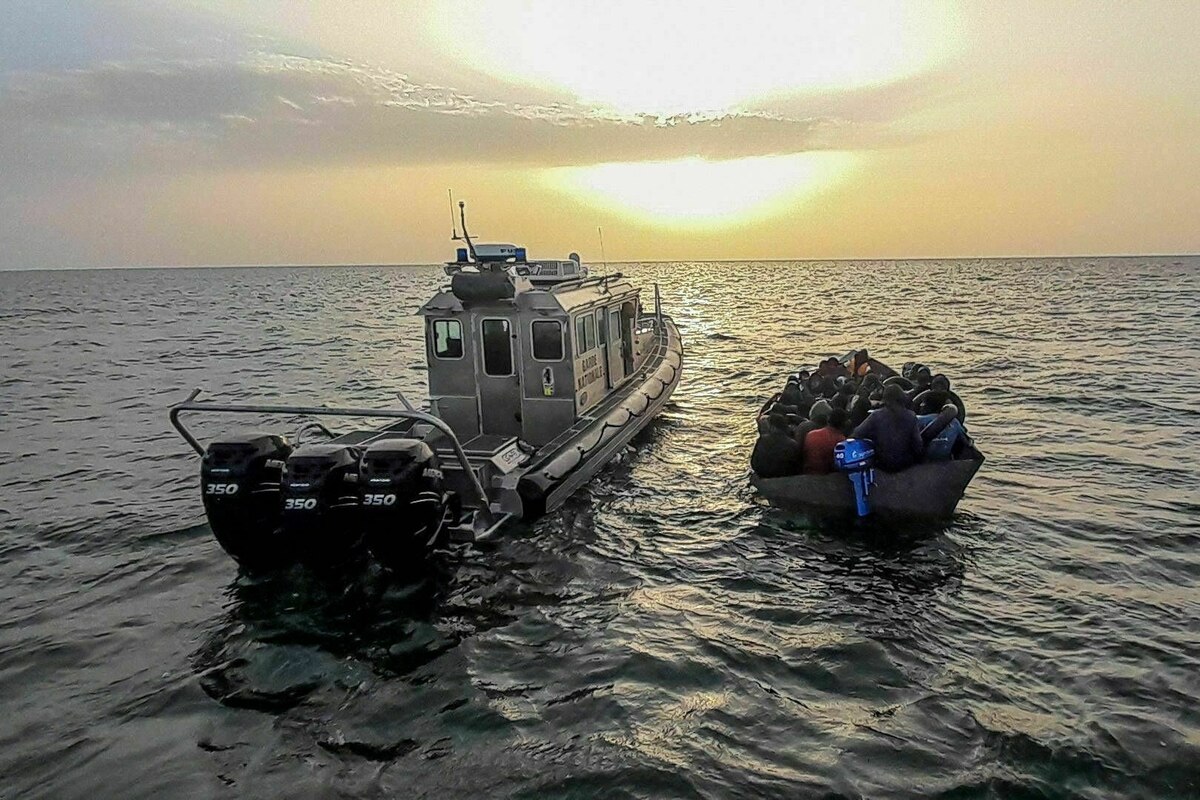
Die “Security alliance” between the EU and President Saied quickly showed results: The Tunisian National Guard received drones and vehicles from the EU, Berlin donated a training academy to the coast guard, and Italy new patrol boats. Single-engine reconnaissance aircraft donated by the US Army now patrol the 1,200 kilometer coastline around the clock.
Until the EU-Tunisia pact, migration in Tunisia was mostly a trivial offense. Today, outboard motors are confiscated during raids. Fishermen who smuggle migrants below deck into international waters face long prison sentences. Only a dozen boats have arrived in Lampedusa this year, but from the EU Commission’s point of view the partnership is a complete success.
The smugglers continue to build
The new self-confidence of the security apparatus and judiciary is also being felt by civil society, which has been massively supported with EU funds since the Arab Spring. The popular TV commentator Sonia Dahmani was sentenced to two years in prison because she criticized the government’s migration strategy and pointed out that Tunisia’s young generation also wanted to emigrate to Europe. Since then, local journalists have hardly dared to report on the topic. Activists from the human rights organization Terres d’Asile spent more than a year in prison without a trial. The public prosecutor says: because of financial irregularities. The activists say: because of their help for migrants.
Meanwhile, in the tent cities near Sfax, the will to leave Tunisia for Europe remains unbroken. There is a lack of restart programs for returnees to their countries of origin, say those whose relatives at home have sometimes sold all their belongings for the trip.
In the backyard workshops of the fishing village of Jebianna, the smugglers continue to build the eight-meter-long metal boats into which up to 50 people later squeeze. But many in the camps suspect that the smugglers often inform the coast guard of departure times and locations themselves after they receive their money. They would hope that this would result in impunity. Recently, brokers from West Africa have been buying the boats and engines, hiding them near the beach and setting the departure times themselves – as was the case with Cyclone Harry, after which 380 migrants went missing.
Since the 2023 agreement, Tunisia has received 164 million euros from the EU, plus 150 million in budget support. The outstanding transfer of 900 million is apparently linked to how successful the closure of the Mediterranean is. Compared to Refugee agreement with Turkey 2016, Some MPs and TV commentators criticize the fact that the route across the Aegean Sea should be closed, especially for Syrian refugees, far too little and call for renegotiations with the EU. Meanwhile, they are trying to satisfy Tunisia with economic programs.