

“Spare no one!” ruft General Johnson People: “Neither the old, nor the children, nor the chickens – not a single house should be left standing!” His soldiers cheer and clap.
South Sudan’s deputy army chief gave this speech on Monday near the city of Bor before sending his troops into battle in South Sudan’s Jonglei state. “Our problems always start from there!” he explains: “I’m going to end this once and for all.”
The signs point to war in South Sudan again. The world’s youngest state has never calmed down since independence in 2011, and the eternal power struggle between the country’s most powerful politicians is now entering a new round.
On Wednesday morning there was a “mood of panic” in the capital Juba, reports Edmond Yakani, human rights activist and managing director of the organization Cepa (Community Empowerment for Progress), to taz on the phone. “I think a new war has already begun and this is just the beginning,” he says, sounding a bit rushed. “The people in Juba are packing their things and fleeing, the children are no longer going to school. It may be that soon all of us in Juba will no longer be safe.”
Power struggle since independence
The background is the power struggle between the president Salva Kiir and his long-time rival and vice president Riek Machar. Salva Kiir from the Dinka ethnic group led South Sudan to independence at the head of the former SPLA (Sudanese People’s Liberation Army) in 2011; his powerful rival Riek Machar from the Nuer ethnic group became vice president. In 2013, Kiir accused his deputy of plotting a coup and put him under house arrest.
Fighting then began between factions of the army. Machar’s troops deserted and formed the rebel organization SPLA-IO (SPLA in Opposition). A peace agreement reinstated Riek Machar as vice president in 2020 – but in war Up to 400,000 people died and over 4 million were displaced.
Now it starts again. In recent weeks, Machar’s rebels have captured large areas in Jonglei state, northeast of the capital Juba. The latest fighting has raged in recent days around Jonglei’s provincial capital Bor, downstream from Juba on the Nile.
“I’ll give you seven days.”
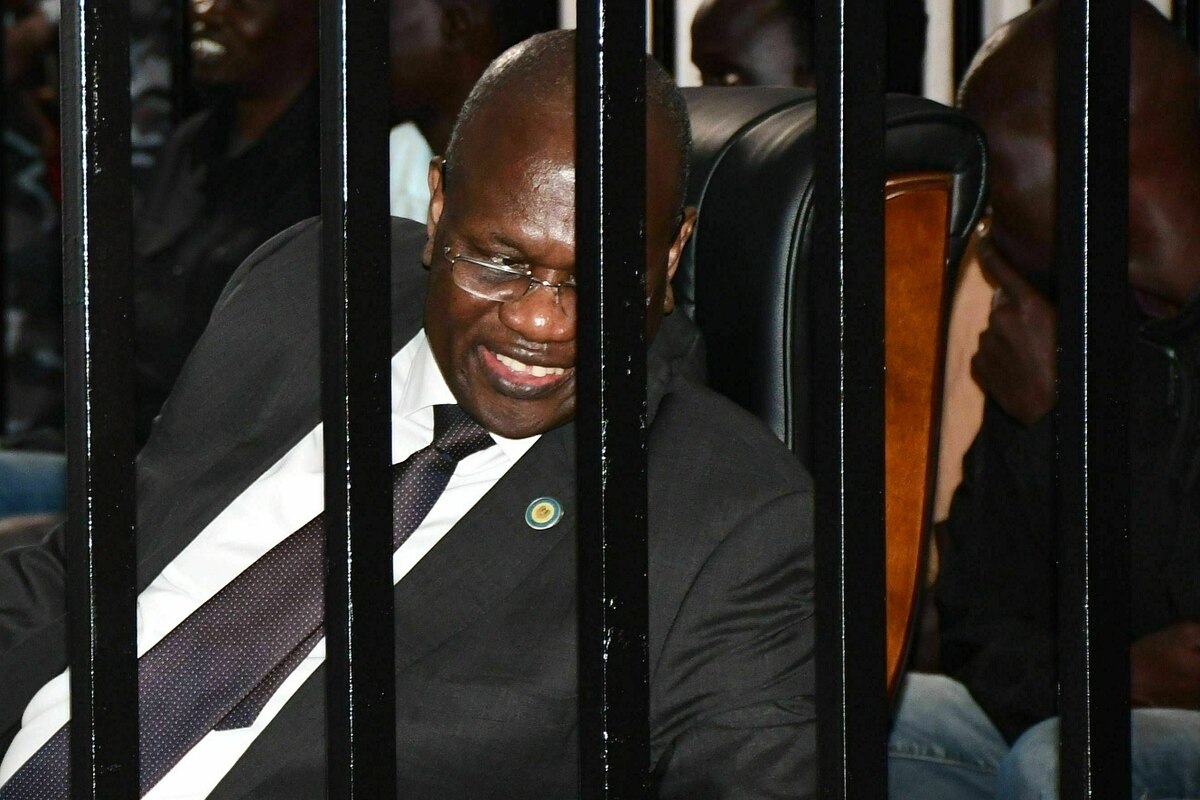
The SPLA-IO last week threatened to march towards Juba to free Riek Machar. Because he has been under house arrest since March 2025. In September he was charged with murder, treason and crimes against humanity. The judiciary accuses him of being responsible for the crimes of the Nuer militia he controls “White Army“, which attacked an army post in Nasir, in the northeast of the country, in March, killing around 250 soldiers and a general.
Machar’s trial continued in Juba on Wednesday – and was postponed after a technician’s illness paralyzed the video installations. The SPLA-IO again demanded Machar’s release in advance and threatened to use force to free him otherwise.
In response, South Sudan’s army chief General Paul Nang Majok sent reinforcements to Bor in recent days – with a clear message: “I give you seven days to complete the mission – to crush the insurgency in these areas and retake them.” The population should leave the contested areas. Around 230,000 people are according to UN information currently on the run in Jonglei.
“The civilian population is caught between the fronts,” says human rights activist Yakani, describing the situation. Parts of the state are flooded due to heavy rains, and the population there only survives through international food deliveries. Therefore, according to Yakani, it is “extremely difficult to escape anywhere.” There is a risk that the warring parties will “use hunger as a weapon of war.”
Leaderless but effective opposition
Bor is a strategically important city. At the beginning of the last war in 2013, the rebels led by Machar had already conquered Jonglei and advanced from Bor towards Juba. At first glance, it currently seems as if the past is repeating itself. “But there are differences from the past conflict constellation,” explains Daniel Akech, South Sudan analyst at the International Crisis Group. The South Sudanese speaks to taz by telephone from Kenya’s capital Nairobi.
Machar, under house arrest, is currently unable to communicate with his followers or give orders, he explains. “Nevertheless, this leaderless opposition is very effective in fighting the government,” said Akech. In recent weeks, under the label of the SPLA-IO, “numerous smaller militias and armed groups that were once against Machar have joined forces against a common enemy,” said Akech:
“They are using the symbol and influence of Machar to mobilize and fight without him giving orders himself. This makes it extremely difficult to find the right person to speak to. Therefore, it will be much more difficult to negotiate a ceasefire under these circumstances.”
No elections and no money
The last peace agreement between Salva Kiir and Riek Machar in 2018 had envisaged that the two would once again share power and fill positions in the government and army with representatives from both sides. Elections were planned for the end of 2024. But due to a lack of financial resources, Kiir has the election dates postponed several timesmost recently on December 2026. Machar and his supporters then accused the 73-year-old president of wanting to stay in power by any means necessary.
As a result, Machar was arrested and many of his representatives were dismissed from the government. Last week, Machar’s wife Angelina Teny, who most recently served as interior minister, was removed from her post.
South Sudan’s national budget depends almost entirely on revenue from oil exports. However, the oil reaches the world market via a pipeline via Sudan. There has been war in Sudan since 2023, which was oil exports temporarily stopped – currently only 30 percent of oil reaches the world market.
This created enormous gaps in the state budget, and wages for civil servants and soldiers have hardly been paid for years. This means that the glue “that held everything together” is now missing, says Akech. Conflicts have so far been resolved by “making an agreement with the elites, bringing them together in Juba and then usually tying them to the oil revenues” that they managed together, explains the analyst.
When the money dried up, President Kiir carried out “a series of purges” to monopolize the reduced resources: “This then collapsed the power-sharing and security agreement.” The president even fired his loyal second vice president and the heads of the central bank and tax authority in November.
Fear of genocide
In order to find a solution, numerous civil society organizations and community representatives from various communities as well as human rights lawyers from the affected areas came together for an online meeting last week. “People are running for their lives. Families have been torn apart, houses have been destroyed and children are being forced to fight. The suffering of our people is increasing daily,” said the closing statement of their meeting.
They called on President Kiir to negotiate a ceasefire. “An immediate cessation of fighting will save lives, allow displaced people access to humanitarian assistance and give South Sudan the chance to move towards peace.”
Human rights activist Yakani was there. He fears a “genocide,” as he puts it. Vice Army Chief Johnson Olony’s inflammatory orders would lay the foundation for “widespread crimes against humanity.”