

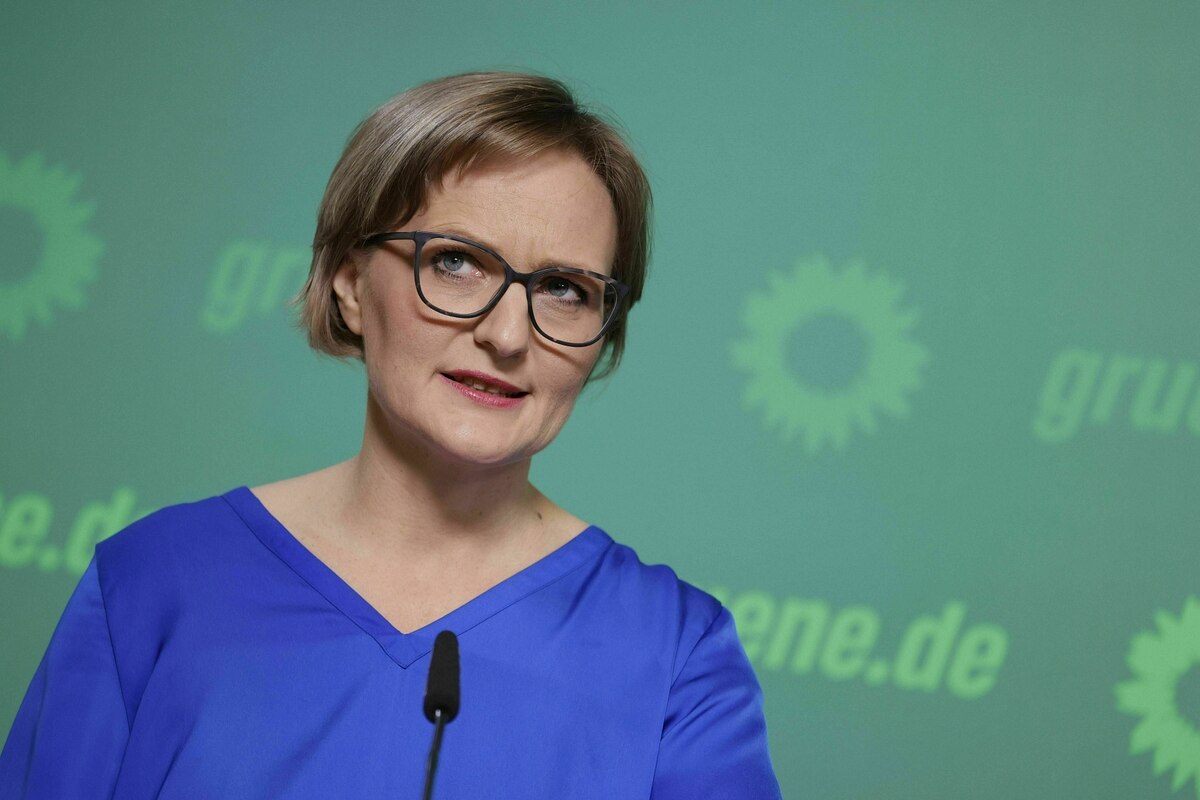
The Greens are now really for free trade: five days after the controversial Mercosur vote in the European Parliament, the leadership of the German Greens continues to try to prove this. “More trade agreements are needed and let me say this very clearly: We stand by Mercosur,” said party leader Franziska Brantner on Monday on the sidelines of a board meeting in Berlin.
Its co-chair Felix Banaszak added that the European response to Donald Trump must also be an economic one. “Unfortunately, the signals of European unity and determination (…) that we believe were necessary were not sent from the parliament in Strasbourg last Wednesday.” It was a “quite euphemistic formulation,” when he said after the vote that he was “not happy” with the result.
The EU Parliament had a narrow majority on Wednesday a critical resolution on the Mercosur agreement between the EU and Latin American countries. This does not stop the agreement, but it will be sent to the European Court of Justice for legal review. Members of various parliamentary groups voted for this – from Germany, among other things, leftistsGreens and right-wing extremists, but not conservatives and social democrats.
The decision was praised by organizations such as Greenpeace, which criticized the details of the agreement. But the Green Party leadership is now making it clear: such a process should not be repeated. For example, a currently planned free trade agreement with India is “in our interest,” Banaszak said on Monday. “Be sure: the Green group in the European Parliament will not pay attention to every comma when it comes to securing our strength.”
Merz and the French are also to blame
However, the Green Party leaders did not only repent. Brantner referred to the massive cross-party opposition to the agreement from MPs from France and Poland. The national governments of both countries had previously voted against the agreement in the European Council. For Brantner, this was the fault of Chancellor Friedrich Merz (CDU), who did not go the “extra mile” to find a “common compromise”.
Against this background, Banaszak also defended his own people in the EU Parliament. There are also “people from France, for example, who made their decision against the background of their national debates” in the Green group there. According to him, the eight German Greens who voted with them for the resolution acted in the interests of group peace: According to the party leader, one should not now break the baton of those “who tried to hold the European group (…) together”.