

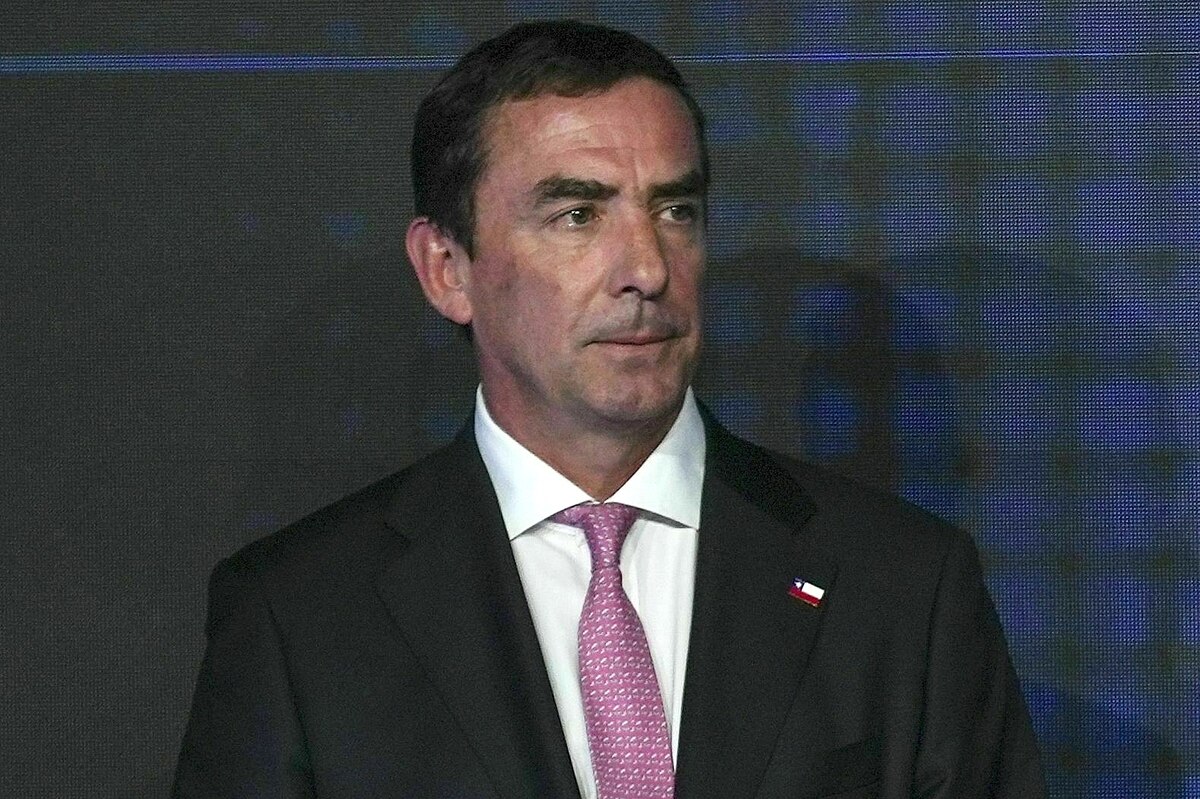
He is one of the ministers who sealed Chile’s return to Pinochetism: Fernando Rabat. The 53-year-old lawyer was part of the legal team that defended dictator Augusto Pinochet after his arrest in London in 1998. Chile’s new far-right President José Antonio Kast, who takes office in March, has now appointed Rabat as the future Minister of Justice and Human Rights. Kast is the first president since the return to democracy in 1990 to openly support Pinochet.
Under the government of left-wing President Gabriel Boric, who is still in office, the Ministry of Justice and Human Rights had the Search Plan launched – a state search strategy for more than 1,000 peoplewho forcibly disappeared during the military dictatorship. To this day, many of the junta’s crimes remain unsolved.
A defender of the perpetrators
As a new minister, Rabat is unlikely to contribute much to further addressing these human rights crimes – on the contrary. As a lawyer, he specialized in defending perpetrators. At the law firm Rodríguez, Vergara y Compañía, he worked with Pablo Rodríguez Grez, one of the founders of the right-wing extremist paramilitary organization Patria y Libertad, which carried out attacks against the government of Salvador Allende. With the same law firm, Rabat defended Augusto Pinochet in the so-called Caso Riggs – an investigation that revealed that Pinochet had deposited millions of US dollars with the US bank Riggs.
Rabat was also part of the defense in proceedings relating to the Operación Colombo – an operation by the Chilean secret police Dina in 1975 to cover up the murder and disappearance of 119 opposition figures. Misinformation was spread in the media claiming that those affected had died in internal fighting.
This is a direct insult to the memory of the victims of the dictatorship and their families
From a statement by victims of the Pinochet dictatorship
Along with Rodríguez, Rabat also represented Pinochet’s wife, Lucía Hiriart, when the Supreme Court ordered the confiscation of $5.1 million and several properties from Pinochet’s estate in 2018. Rabat is also closely linked to those elites who benefited politically and economically from the dictatorship. He is married to a niece of Ricardo Claro, an influential entrepreneur who was close to the military regime.
Sharp criticism from relatives of the dictatorship victims
As Minister of Justice and Human Rights, Rabat could press ahead with pardons for convicted dictator criminals, the search for the missing detainees stop and, similar to Javier Milei in Argentina, cut funding for memorials and places of remembrance.
Organizations of relatives of dictatorship victims therefore sharply criticized his appointment. “This is a direct insult to the memory of the victims of the dictatorship and their families,” they said in a joint statement. The decision “glorifies the dictatorship” and continues impunity.
Rabat helped ensure that Pinochet was never convicted of his crimes against humanity. With his appointment, Kast is sending a clear signal and setting the course for the ideological direction of his government. He joins the ranks Group of Latin American leaders who glorify the legacy of bloody military dictatorships and trivialize their crimes. This is not a good sign for Latin America.