

Still standing the possibility of a US attack in the Islamic Republic of Iran in the room. The US aircraft carrier “USS Lincoln” arrived in the region with several destroyers last week. The US military also continues to deploy aircraft to Jordan, including Boeing Growlers – fighter jets that can jam, deceive and neutralize enemy radar systems – and Stratotankers – aircraft that can refuel fighter jets in mid-air.
The continued misplacing of equipment probably points to war. Even if US President Donald Trump continues to talk about negotiations and warns Tehran: “Talk to us, we will see if we can do something, otherwise we will see what happens.”
In addition, there is also great interest among the states in the region in weakening the Islamic Republic.
There is – not surprisingly – Israel. The twelve-day exchange of blows in the summer of 2025 had shown this: Iran is certainly capable of firing rockets with high firepower into Israel over a longer period of time.
Israel advises USA
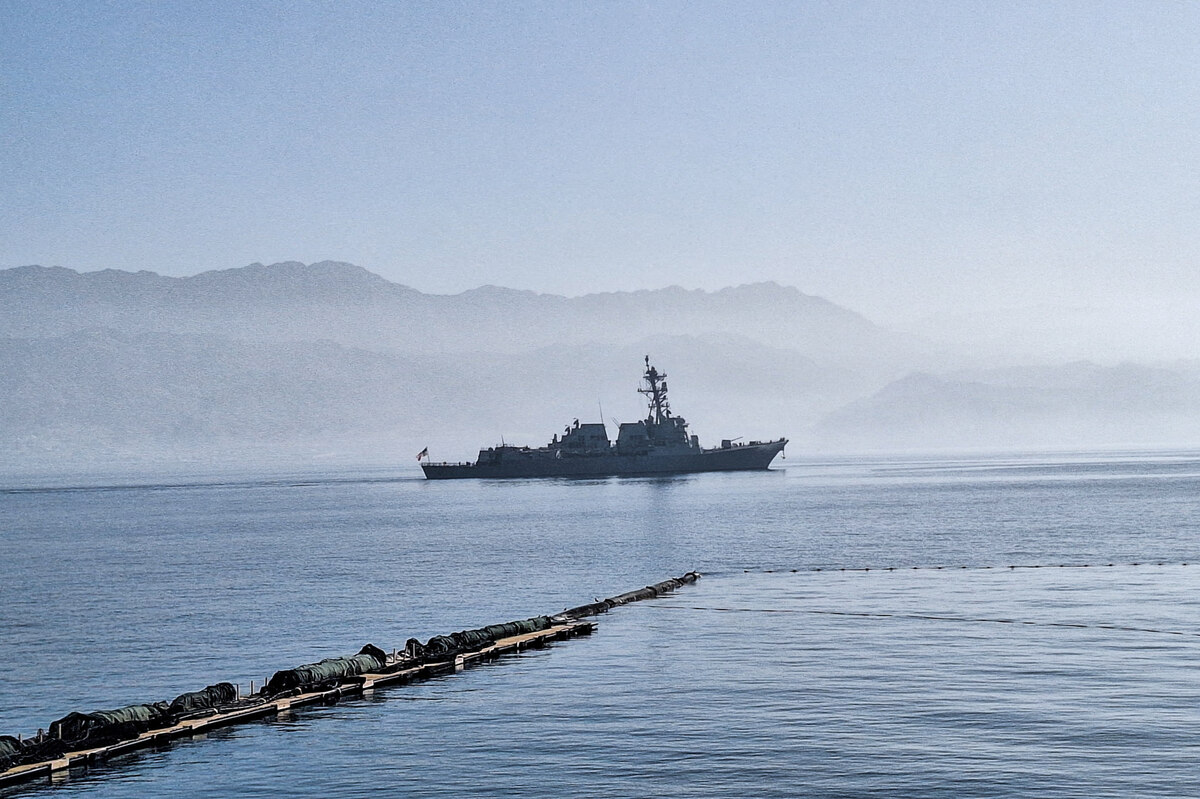
In the 2025 war, Israeli media reported after a short time that the missiles in their own defense systems were running out. Israel had already ramped up production last summer. In addition, the US destroyer “USS Delbert D. Black” arrived in the port of Eilat in southern Israel on Friday.
Even if Israel does not participate in US attacks in Iran, Tehran would most likely attack Israel in the event of a war. In addition, representatives of the military and the Mossad secret service recently traveled to Washington and, according to media reports, were said to have advised on the selection of possible targets in Iran.
Representatives from Saudi Arabia also recently arrived in Washington. Just as the US’s deployment of equipment was gaining momentum, Riyadh publicly announced that it would not make its airspace available for attacks on Iran. Loud a report from the news portal Axios Saudi Arabia’s Defense Minister Prince Khaled bin Salman then explained: Not attacking Iran after the US has built up its capabilities in the region would strengthen the regime.
And that is hardly in Saudi Arabia’s interest. There had recently been a rapprochement with the Islamic Republic – but a cold one. Iran’s policies in the region, especially the use of proxy groups such as Hezbollah in Lebanon or the Houthis in Yemen, are a thorn in Riyadh’s side. And in some cases it even became dangerous for the kingdom: for example, when the Houthis launched a Saudi Arabian seawater desalination project in 2022 and attacked oil and gas facilities.
A weakened Iran that exerts less influence in the region is probably in Saudi Arabia’s interest. But not a wildfire that covers the entire region. From their perspective, the USA should proceed with moderation. But – according to the Axios report – just do it.