On Nollendorfplatz in Schöneberg you don’t immediately notice it during the day, but in the evening the dome of the subway station lights up the square with rainbow colors. At least that’s how the Tempelhof-Schöneberg district office describes the dome on its website, because I’ve only seen the dome on a snowy, ice-cold winter day, surrounded by a large construction site.
But the rest of Schöneberg is also there Rainbow flags decorated and marked by gay bars, fetish shops or queer-friendly bookstores. This makes Schöneberg a place for diversity and tolerance, the website continues, and on various other sites Schöneberg is described as a stronghold of Berlin’s queer community.
The homosexual scene was already present here in the 20th century, but this came to an abrupt end with the beginning of the Nazi regime. The Nazis closed the bars and persecuted, murdered and deported gays and lesbians to concentration camps. After the World War, queer life reemerged in the neighborhood, which is why Schöneberg has been known as the Rainbow Neighborhood ever since.
Therefore, the Nollendorfplatz subway station should now have the additional sign “Regenbogenkiez”. This was preceded by a proposal from the Tempelhof-Schöneberg CDU parliamentary group. The suffix “Regenbogenkiez” is an important political signal for diversity, acceptance and pride in the neighborhood’s queer tradition and against hatred and violence, says the CDU parliamentary group’s queer policy spokesman, Klaus Hackenschmied.

The “Metropol” on Nollendorfplatz, a well-known house in the Regenbogenkiez, seen from the subway station
Photo:
Max Moorfeld
A gay hotspot
Together with a taz intern who takes photographs, I set out to explore the neighborhood and its queer life. But first I ask my friend Melih Özdemir if he likes going out there himself. He tells me via WhatsApp message that it is a good gay hotspot, but a gay one and not a queer one.
When we arrive at Nollendorfplatz, we see a bus stop in rainbow colors and, further to the right, a rainbow-colored column. We walk towards Winterfeldplatz, where there is a weekly market on Wednesdays. But this Wednesday it’s below zero, and from a rainbow-colored bench we can only see five food carts.
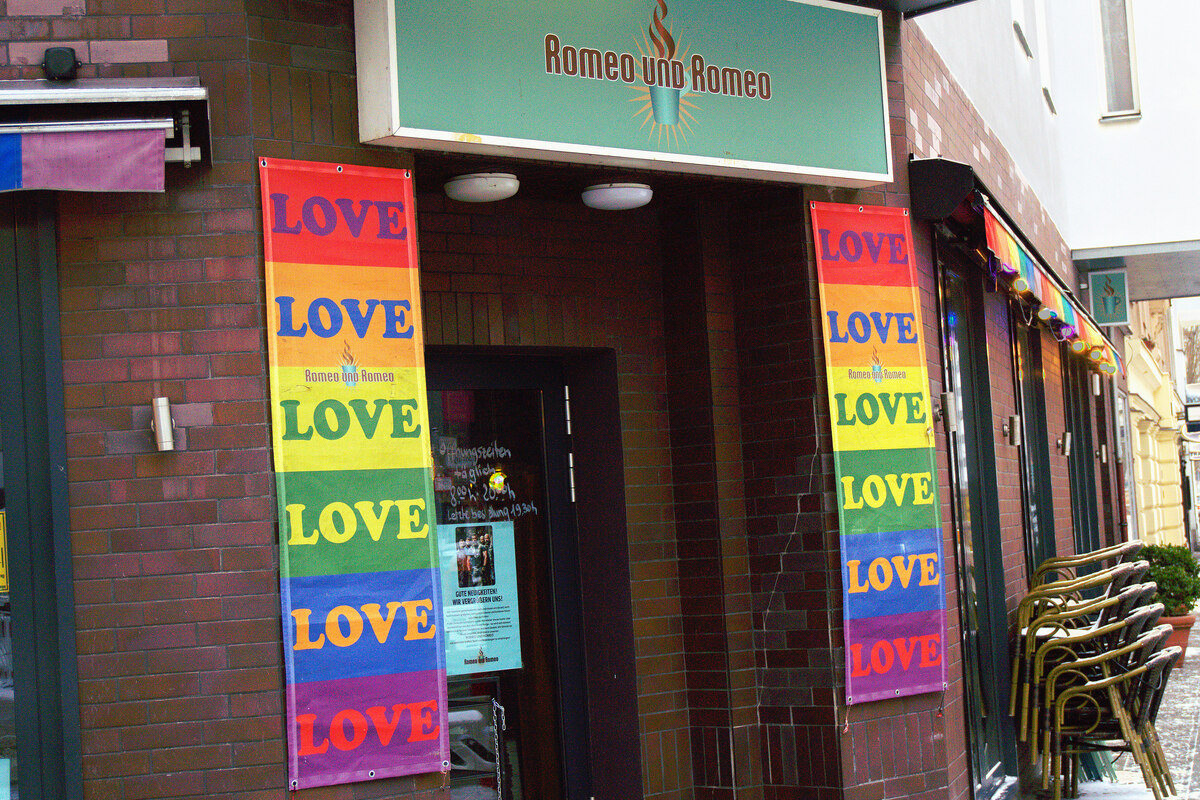
We walk further and see queer-friendly bars, book and fetish shops. As described by my friend, I don’t see any representation for lesbian love. On Motzstrasse we talk to Domenik Leutloff, an employee of the Romeo and Romeo café. “We don’t need an additional sign because the neighborhood is dead,” he claims and explains how more and more bars and shops are having to close. This is due to gentrification, rising rent and costs.
For me as a non-Berliner, the Regenbogenkiez seems like a legend, more appearance than reality, lots of rainbows, but little substance and the suffix to the name is possibly just a political or advertising strategy. But the name addition is “much more an expression of pride in a rich, courageous queer history,” says Alfonso Pantisano, the Senate’s queer representative. At the same time, the addition is also a warning: “Queer shelters and queer lives must be protected, especially because they are more threatened today than they have been for a long time.”