

taz: In public there is sometimes talk of “homeless people” and sometimes “homeless people”. How do you deal with the two terms?
Swen Huchatz: I almost no longer use “homeless people” and “homeless people” but rather “homeless people” and “homeless people”. I also use “experience experts on my own behalf” or “peers”. I now prefer “people looking for a place” or “apartment seekers” because that’s what everyone is called, including refugees who don’t have a place to live, for example.
taz: You were homeless yourself for years and founded the homeless self-help group “Randnotiz Hildesheim” in 2024. What is it about?
Huchatz: My experiences help me to support those looking for accommodation with advice and support and on an equal footing. It is important that this support only takes place to the extent desired so that pressure is not built up at any time. We also provide multilingual information for people with language barriers about what assistance for housing they can apply for. We also get involved politically.
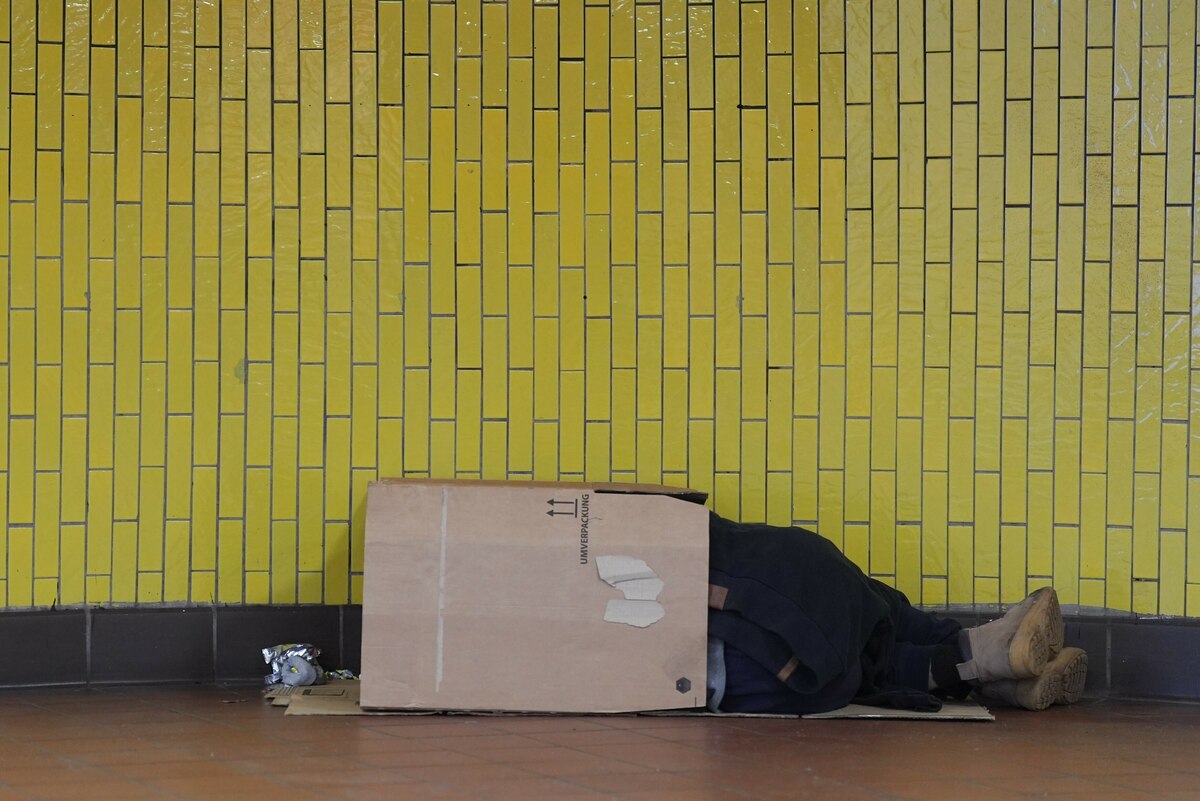
We are often loudly rumbling. This annoys many people in Hildesheim more than they are annoyed by the fact that people have to sleep outside in sub-zero temperatures
taz: Who is us?
Huchatz: There are only five of us in Hildesheim at the moment. The work is made more difficult because many supporters are in extreme life situations themselves and don’t have the energy to get involved. Nevertheless, we often rumble loudly. This annoys many people in Hildesheim more than they are annoyed by people having to sleep outside in sub-zero temperatures.
taz: Do you have to? There are none for acute cases Emergency shelter in Hildesheim?
Huchatz: In theory yes. In practice, homeless people are also turned away in Hildesheim. This particularly affects people without German citizenship who have no right to assistance under the Social Welfare Code. The city and the emergency shelters decide whether and how they will be accommodated based on the homeless person’s origin and status. The decision is made based on financial aspects. Because overnight stays in emergency accommodation are very expensive.
taz: But the city has an obligation to provide accommodation according to regulatory law and the UN social pact.
Huchatz: The Department of Social Affairs FB 50 issues the instructions for the emergency accommodation, but the city of Hildesheim is not the operator of the emergency accommodation. Homeless people have a right to physical integrity and to accommodation, regardless of their origin and residence status. But they are often denied this in the assumption that they don’t know and won’t defend themselves.
taz: In one of your last emails you accused the system of racism. Why?
Huchatz: In Germany, only people with German citizenship receive financial help and thus the opportunity to use homeless shelters. This is racism because these discriminatory decisions are made based on origin and attributions.

In the interview: Swen Huchatz
49, grew up in different places, from the age of 10 in Münsterland. He gave up his apprenticeship in his early 20s and was homeless for almost three decades, spending time in Germany, Italy, the Netherlands, Poland and Switzerland. He has lived in Hildesheim since 2021 and founded the homeless self-help side note in 2024.
taz: In 2022, the Hildesheim city council decided to introduce the concept in Hildesheim Housing First to introduce, if the state of Lower Saxony releases funds for this. What happened to it?
Huchatz: Nothing has happened so far. How the city will deal with the decision internally is not communicated. Apart from that, the Hildesheim Housing First concept is discriminatory and exclusionary.
taz: To what extent?
Huchatz: Conditions are imposed that are… Original concept by psychologist Sam Tsemberis doesn’t exist. The original concept states that homeless people who previously had no access to help and housing are taken into account. In the German version, however, only people who can take care of the rent payments themselves, either through their own income or through social benefits, are taken into account.
taz: Chancellor Friedrich Merz says the welfare state in its current form can no longer be financed. It sounds like funding for Housing First is completely out of sight.
Huchatz: What Merz says is nonsense. You simply have to do everything you can to ensure that the expenditure reaches where it is needed. Instead of living space, replacement accommodation is being created, which is very expensive and does not help to curb homelessness. The state prefers to maintain an expensive aid system rather than solve the problem in the long term.
taz: Why are alternative accommodations the more expensive solution?
Huchatz: The institutions want to spend as little as possible of the money they receive. They are not providing the help they should be providing. This has gotten worse since many of these facilities were privatized. The system is very opaque. The financial interests of the institutions are clearly in the foreground.
taz: Can you give an example?
Huchatz: The rooms are often between ten and 15 square meters in size. At least two to four people are accommodated there. A bed in a shared room in the emergency accommodation costs between 385 and 500 euros. This means that the facilities can make a huge profit.
In Hamburg, 14 homeless people have already died between January 2nd and 21st. This was announced by the public prosecutor’s office.
Seven people died outdoors, four in hospitals and three in an emergency shelter. A necropsy was ordered for four people.
According to Street Magazine Hinz&Kunzt The first 11 deaths of the year were only 45.5 years old on average. The magazine demands that there urgently need to be warm places for people.
taz: What would be the better solution?
Huchatz: The money would have to be spent on individuals and on apartments. The people looking for an apartment first need an apartment without any prerequisites in order to organize themselves and deal with financial matters, because debts often arise during homelessness due to a lack of accessibility. The state would save money even if it paid full housing rents because homelessness and its costs would decrease in the long term.
taz: You were homeless yourself for almost three decades. What is your story?
Huchatz: I fled my family situation for the first time when I was 17. My mother’s partner wanted me to train as an electrician. I rebelled against this because my wish to continue going to school was ignored. So I stopped the training shortly before the end and ran away. Later I realized that the experiences of violence and alcoholism in my childhood also played a role and that this was the actual reason for my homelessness.
taz: What was the first thing you learned on the street?
Huchatz: I found out where there were hostels for people traveling through without a home, and through contacts with other homeless people I found out what support I could get.
taz: Does that mean you traveled a lot?
Huchatz: I traveled a lot in Germany, but also in Italy, the Netherlands and Poland. I did unskilled work there to survive. I also made money through artistic activities on the streets and by selling homeless newspapers. Or I asked private individuals for help.
taz: How did you come to Hildesheim?
Huchatz: I went to Hildesheim in July 2021 and worked on construction sites and in cultural businesses, but contrary to previous promises, I was not registered. It often happens that homeless people are exploited. I only spent two and a half months in an emergency accommodation in Hildesheim. Then I managed to get an apartment from a municipal housing provider. On January 1, 2022, I moved in and started networking.