

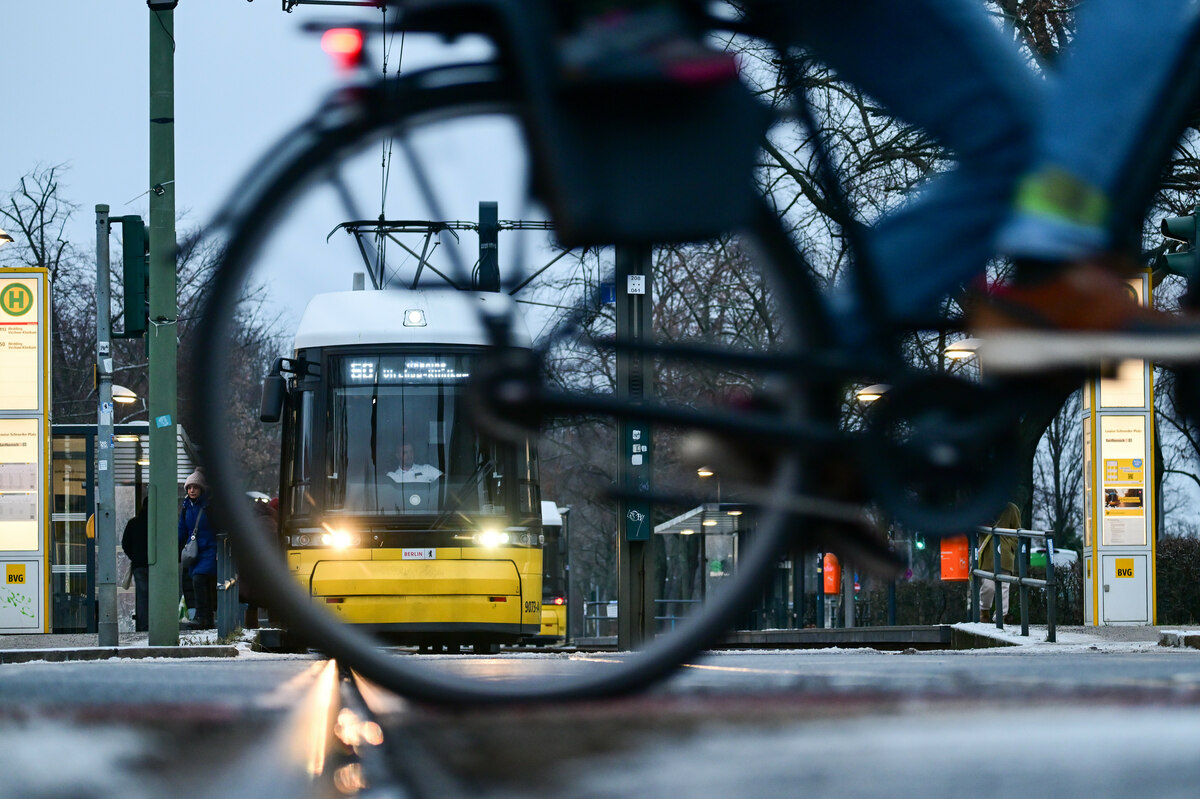
dpa/taz The patience of the people of Berlin is currently being put to the test. It’s not enough that freezing rain paralyzes tram traffic for days the Verdi union has now announced an all-day warning strike for Monday. Tram, bus and subway traffic should be on strike all day long. Only the S-Bahn continues. It is operated by Deutsche Bahn.
The freezing rain settled around the overhead lines like a tank on Monday night and brought the entire tram fleet in the capital to a standstill. BVG workers standing on crane trucks have tried to clear the 200 kilometer network of crust meter by meter over the last few days using manual tools. Although a large part of the tram network is now running again, it is expected to be cold again over the weekend. Anyone who recently avoided taking buses and trains in Berlin due to the slippery conditions will likely be left behind there on Monday.
Also in the other federal states Verdi called for warning strikes among transport companies. The background to this is the collective bargaining rounds in local public transport that are currently running in parallel nationwide. In Berlin, only the S-Bahn should not be affected. It is operated by Deutsche Bahn.
BVG reserves the right to take legal action
The BVG reacted to the warning strike with incomprehension and criticized a “disproportionate escalation”. “In view of the current extreme weather situation and the ongoing challenges, especially in tram operations, the hour-long work stoppage is once again endangering tram traffic in Berlin,” the company said.
“The BVG appeals to the union to withdraw the strike call for Berlin in the current exceptional situation and to find solutions at the negotiating table.” At the same time, the company reserves the right to take legal action against the industrial dispute.
The union accuses the employers of blocking the ongoing negotiations. “The BVG board refuses any serious discussion of the reality of the employees,” said Verdi negotiator Serat Canyurt. “Good working conditions under which colleagues can continue to practice their jobs in the long term are central to retaining employees in the company.” There are also expected to be labor disputes in other federal states.
No result after two rounds of negotiations
Two rounds of talks between the two collective bargaining parties have so far produced no results. Verdi is currently negotiating in parallel with transport companies in all 16 federal states. While last year’s collective bargaining round was about more money, this time in most countries it is about the so-called collective agreement, including in Berlin. This primarily regulates the working conditions of employees.
Verdi is demanding, among other things, more vacation days for employees, a minimum rest period of eleven hours between shifts and more vacation pay with the possibility of converting it into days off. The union also wants the so-called turnaround time to be increased to six minutes without exception. This affects the time that drivers have at a final stop before setting off again in the opposite direction.
According to the BVG, the union expanded its list of demands again in the first round. This also includes a 35-hour week, which the union wants to enforce. Verdi himself had not yet commented on this.