

“Mahtob, darling, tonight marks nine nights since I last spoke to you. My body, my heart, my soul, my entire being is tired. I miss you so much. We are all disoriented. It is as if we are trapped between heaven and earth. We have a huge lump in our throats. It is as if someone is grabbing us by the throat so that we cannot scream. When we will be able to scream again, no one knows.”
I get this message from Iran. A few days ago she typed the sender on her smartphone. And now, in a brief moment of connection to the network, it was sent and reached me.
The Islamic Republic has been blocking internet access for almost three weeks. Telephone lines also cannot connect outside Iran. This is one of the recurring methods of oppression by the Islamic Republic. You turn off all communication channels, so that they can murder and shed bloodwithout pictures of it or news about it getting out.
Meanwhile, according to reports – about Iran International – At least 12,000 people were killed. And Mai Sato, that United Nations Special Rapporteur on human rights in Iran saidthat the possibility of crimes against humanity in Iran must be investigated.
Online for a few minutes
But while those in power were able to completely cut off the Internet in the past, today there is Starlink. This plays an important role in still spreading Iran’s voice and the crimes against its people. Before the current events, many citizens had managed to obtain Starlink modems at exorbitant costs. This allows them to anonymously pass on the horrific, bloody images from the country’s streets to outside media.
On the twelfth day the nationwide internet shutdown I suddenly received a lot of news from Iran. Suddenly there was a small window of connectivity. Without a clear explanation as to how exactly this was possible. Using various proxies and VPNs, some people bypassed the domestic network and connected to the outside world. And for a moment Telegram was filled with a flood of painful messages.
Many sent names and photos of their killed relatives. Hoping that their names would be documented and preserved. Others sent messages like this: “We are dying here,” “Be our voice,” “You have no idea what we saw.”
Many asked me: “When will Trump attack?” A question that comes from deep desperation – from people who no longer see any other path to “freedom” than a military strike by the USA. One sentence has become a code among many Iranians: “Our eyes are on the sky.”
After Reza Pahlavi’s call, things started
During this short phase of connection, some Iranians told the taz what happened during the dark days in Iran.
Amirhossein – a pseudonym to protect the young man – is an IT engineer and lives in the capital Tehran. He sends voice messages: “This has happened since the first day the internet was shut down: After Call from Reza Pahlavi on Thursday (8. Januar, Anm. d. Red.) to the Iranians, to protest that day at 8 p.m. we were full of hope. When the time came in the evening, people in dark, mostly black clothes suddenly streamed onto the streets. When I saw the crowd, I was really shocked and impressed. I had never seen such a crowd in Tehran.”

He called for protest: Reza Pahlavi. Seen here at a protest in Chile three days ago
Photo:
Esteban Felix/ap
He continues: “In the first few hours, people drew enormous courage from the mass alone. Unlike all previous protests, where fear of the security forces and their oppression was high, this time the sheer force of the crowd was able to push back these oppressors. For more than two hours, the security forces were unable to approach the crowd of protesters.”
But then the violence began, he says: “So they changed the security forces their strategy and positioned themselves at the points where the crowds gathered. To prevent them from forming a platoon. They attacked with live ammunition, shotguns, stun grenades and tear gas. They forced people to disperse.”
“They had no qualms about killing.”
Amirhossein’s voice trembles as he continues: “I saw bodies covered in blood lying on the streets. Others who had been shot and could no longer run or run were dragging themselves along the ground with their hands. As I ran, I saw armed men calmly approaching the wounded lying on the asphalt and giving them a final shot in the head.”
Nevertheless, some refugees tried to help their injured fellow human beings: “When they saw someone lying on the street, they bent down and picked him up, risking their own lives. So that he would survive.”
At this point his voicemail stops mid-sentence. Apparently his internet connection has been interrupted again.
A few minutes later, more news comes: “On Friday, the demonstrations were as big as on Thursday. But the behavior of the security forces – to us the repressive forces – had become more aggressive. They used drones to identify crowds. Snipers were positioned on houses and private buildings. They killed many with a single shot in the neck, heart or head. Elsewhere they had mounted machine guns and suddenly opened fire.”
He emphasizes: “They had no qualms about killing. They had come with the intention that they would kill everyone until the crowds were gone.”
Hoping for a military strike by the USA
And continues: “You see scenes like that usually only in the middle of war. There was blood everywhere, blood on blood. The streets were full of blood, wounded people and corpses. Wounded people begged us to take them with us. Bodies lay on the asphalt, nameless and unnoticed. The two big days of protests came to an end. On Saturday and Sunday, Tehran smelled of death. All lines of communication were interrupted. We couldn’t reach our families or our friends.”

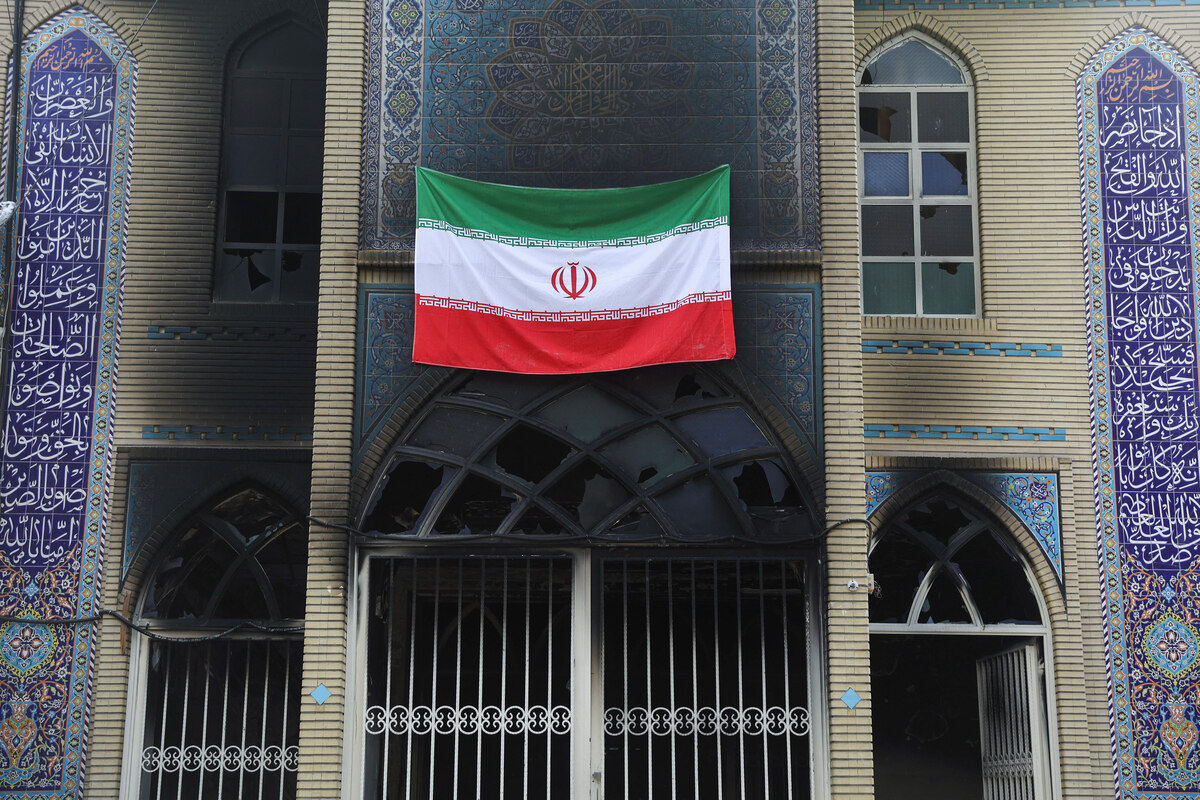
“The authorities deliberately made no effort to clean the streets. So that people could see the blood. So that it served as a warning that they should never take to the streets to protest again. As a lesson.”
And finally says: “We only have one thing left: the hope that a military strike will come. On US President Trump and his allies. The world has become dark. We have seen the end of our path. And yet even darker days await us.”
Translated from English: Lisa Schneider