

Is that possible – an open-air concert on a bitterly cold Berlin winter evening? In fact: around 25 people, thickly wrapped in gloves, scarves and hats, stood in front of the house at Liebigstrasse 14 in Friedrichshain on Monday evening and listened to the musicians Paul Geiger Counter and Mary Ocher for almost two hours.
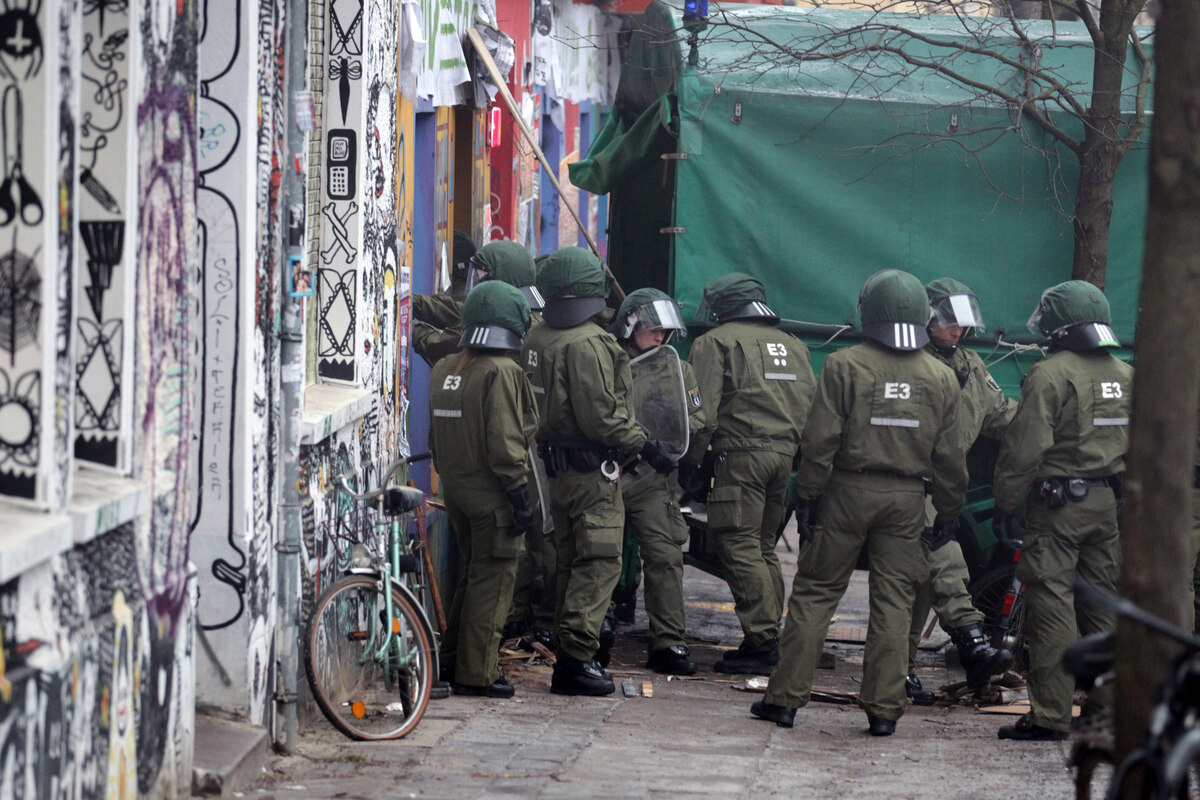
The fact that the atmosphere seems chilly is not just due to the icy weather. It is also the reason for the concert: the anniversary of the Clearance of the house project at Liebigstrasse 14 exactly 15 years ago. After long legal disputes, the housing project, which had emerged from a squat shortly after reunification, was evacuated by a massive police force. There were all around the mission Protests and street riots.
But today the history of Liebigstrasse 14 is almost forgotten. “I have no memory of the eviction. I was three years old then,” a neighbor told taz on Monday evening: But he still has it very well Eviction of the queer-feminist house project at Liebigstrasse 34 in October 2020.
“There was a long fight for the house and angry demonstrations with several thousand people,” emphasized the musician and activist Paul Geiger Counter to the taz. On Monday evening, the protesters reconstructed the history of resistance from old leaflets and calls, from which they read out.
The large protests have saved other left-wing projects such as the Chocolate Cultural Center in Mitte from being evicted
Paul Geiger Counter, musician and activist
They are reminiscent of the owner Suitbert Beulker, who owned several houses in Friedrichshain’s Nordkiez – including Rigaer Straße 94, where the house project was built continues to exist to this day. They tell the anecdote about co-owner Edwin Thöne, managing director of the child protection association in Unna. At that time, he received thousands of postcards asking him to prevent the eviction of residents, including children: “Occupied house in Berlin – protest spills over to North Rhine-Westphalia,” was the headline Westdeutsche Allgemeine Zeitung.
At that point, the squatters had long since become tenants. But all attempts to avert the eviction failed. A “round table” did not provide a solution and a purchase by a Swiss foundation did not work either. The case then ended up in the regional court, where judge Regina Paschke saw the installation of a steel door that was supposed to protect the residents from attacks by right-wing extremists as a reason for eviction. Paschke issued numerous eviction judgments against tenants – and became involved in the real estate industry because of her sideline activities into the headlines. That too is a bitter memory.
Despite everything, Paul Geiger Counter doesn’t just want to talk about defeat at the rally: “The big protests saved other left-wing projects like the Chocolate Cultural Center in Mitte from eviction and also gave impetus to the Berlin tenants’ movement.”