

taz: Ms. Ewe, what cultural policy did Hamburg pursue during the Third Reich?
Enter Yes: As was the case throughout the country, the cultural policy orientation within the National Socialist movement was initially controversial. There was no consensus as to which art movements should be accepted and which should be excluded. Whether one should build on a bourgeois canon or open the cultural sector to other classes.
taz: How was that expressed?
Ewe: In 1936 an exhibition by the artists’ association took place in the rooms of the Hamburg Art Association: “Painting and sculpture in Germany“. Works of classical modernism were also hanging there, approved by Hamburg’s cultural politicians. But after ten days, the head of the Reichskunstkammer Berlin closed the show himself. After that, classical modernism was no longer allowed to be shown in Germany.

taz: What role did the cultural authority play in the Nazi regime?
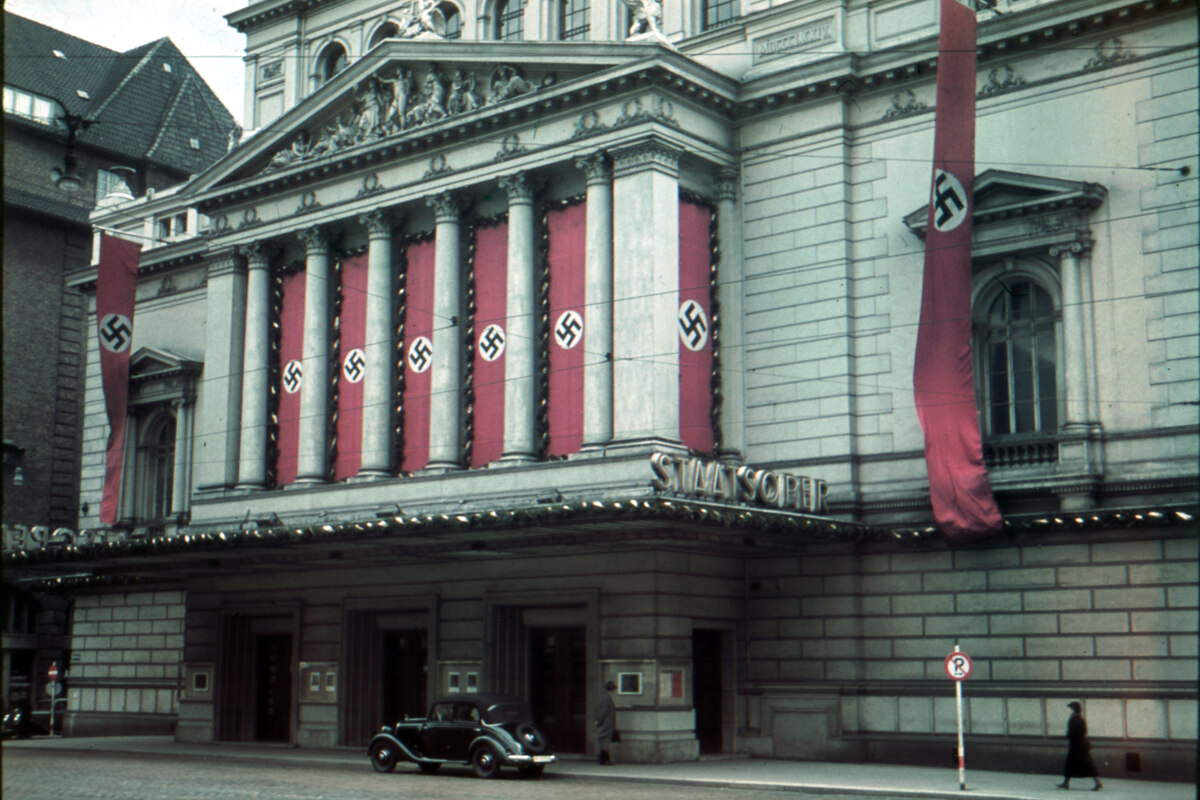
Ewe: It was only founded in 1933, so it did not have to be brought into line. Until then, cultural policy had been a private matter, the responsibility of patrons – although responsibility slowly shifted to the state in the 19th century. Before 1933, there were several commissions in Hamburg that decided on the distribution of state subsidies.
taz: Who headed the new authority?
Ewe: Convinced Nazis who belonged to the Gauleiter’s close circle Karl Kaufmann belonged. From 1933 to 1938 that was Wilhelm von Allwörden, a member of the NSDAP since 1925. Helmut Becker headed the authority from 1938 to 1945 and had been a party member since 1932. In 1940 he also became Senator for Culture.
taz: How much power did these people have?
Ewe: They primarily filled management positions in theaters and museums, for example. Later, Jewish employees were gradually pushed out. In the first few years, the head of the cultural authority was also head of the art gallery, the museum for art and industry and the state art school. An enormous amount of power.
taz: How did the theater schedules change?
Ewe: Plays critical of the time and those by Jewish authors were no longer allowed to be played for political or anti-Semitic reasons. The program shifted to classics and entertainment. The aim was to use such pieces, which were attractive to large parts of the population, to generate sympathy for the regime and to provide continuity that would cushion the other changes.
taz: And artists close to the Nazis were supported.
Ewe: Yes. But the Nazis had the problem that because of everything they excluded, a lot of high-quality art was lost. They were unable to fill this void from within their own ranks. Because many who now sensed their chance, They may have been convinced Nazis, but not necessarily talented artists.
taz: What did Nazi-compliant exhibitions look like?
Ewe: In 1937, the Kunsthalle showed the exhibition “People and Family”, designed together with the SS. Paintings from different eras that – from the perspective of the Nazi regime – showed ideal German families were hung next to contemporary photos of German farming families. Here the Nazi understanding of art was directly linked to racial ideology.
taz: How well has the role of cultural authorities been dealt with?
Ewe: Barely. Our project is essentially doing pioneering work. An important source is the documents of Albert Krebs. Although he was a convinced Nazi as a former department head of the cultural authority, after 1945 he was commissioned to research the cultural authority during the Nazi era. His manuscript is important for us to reconstruct details. But it is also a difficult source because cancer uses it to whitewash itself.