

Happy Fourth of July weekend everyone. Hope you had a relaxing one that filled your cup. In the spirit of easy summer dressing, being out and about while sweating and the age old, most requested topic, we are talking summer dresses this week. Five dresses to get you through summer barbecues, beach days, city lunches, holiday strolls and general to-and-fro-ing. These are not necessarily work dresses or party dresses, just dresses for life. Here’s to living well in them, in a heat dome, the unexpected phrase of summer 2026 if there ever was one.
The only guiding principle today is: would I happily put this on during the day, to meet a friend? Because I’m wildly particular about dresses, I figured this was the narrowest, most eagle-eyed way I could edit this down into a complete summer shmatta capsule. And really, you don’t need so many.
A seriously easy LBD
I say I’m wildly particular about dresses because I hate them for the same reason most people love them – they are one and done. And when you have a deep-seeded need to feel at home in your style, there is not a lot of flexibility there for injecting personality.
But there is also a time and place for ease – high summer being one of them. And a washable, comfortable little black dress makes these months more bearable for this squarely fall/winter dresser.
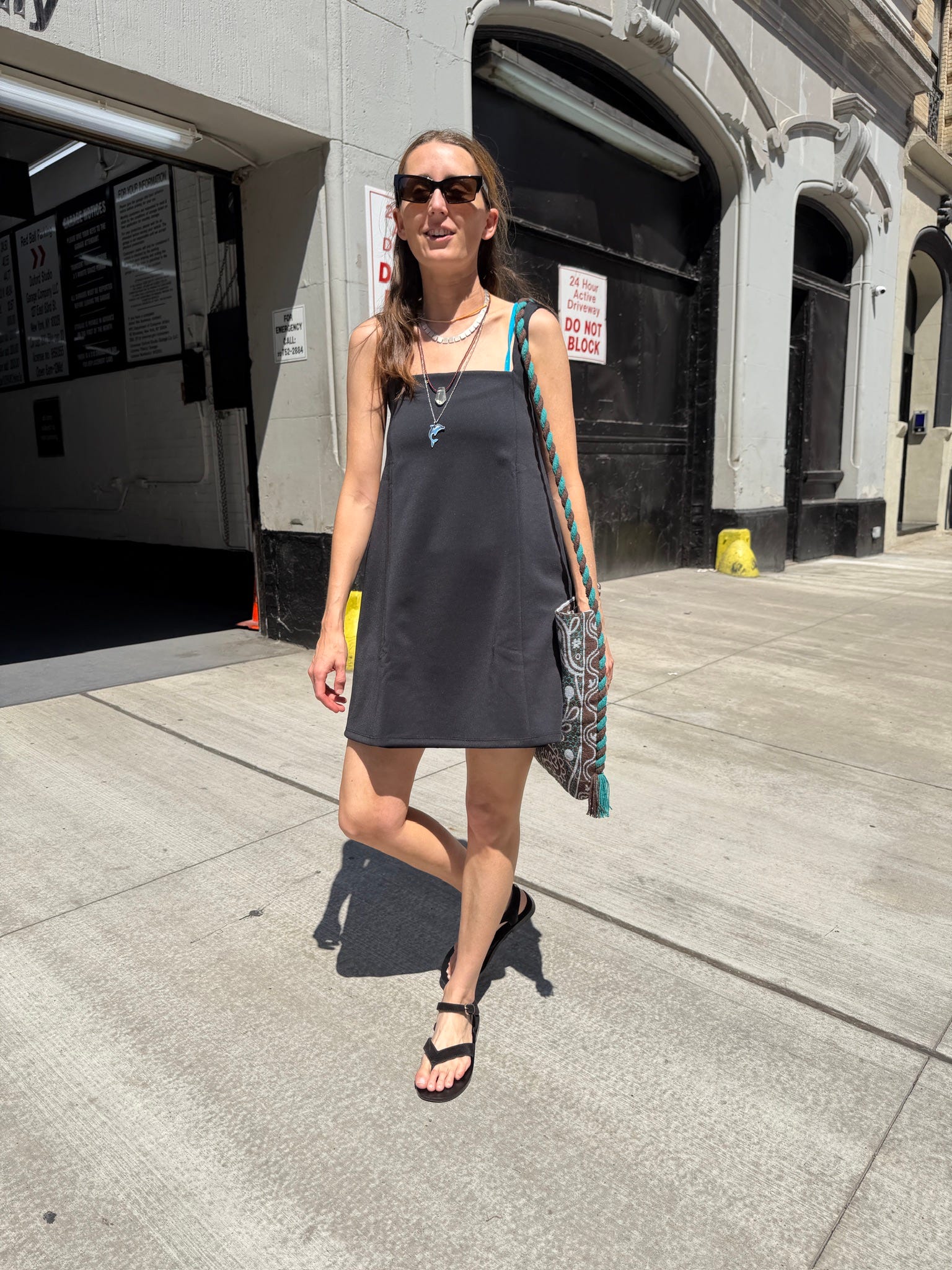
This one from The Park is two layers of jersey – the double layer giving it a sense of structure. It sits tight at the shoulders and bust (read: will not droop down your arm) but then, and here is where it gets really good, it creates a tulip shape from the empire waist to the mid-thigh, meaning you may eat what you please and wear whatever underwear you please and sit as you please and just go about it without really thinking too much.
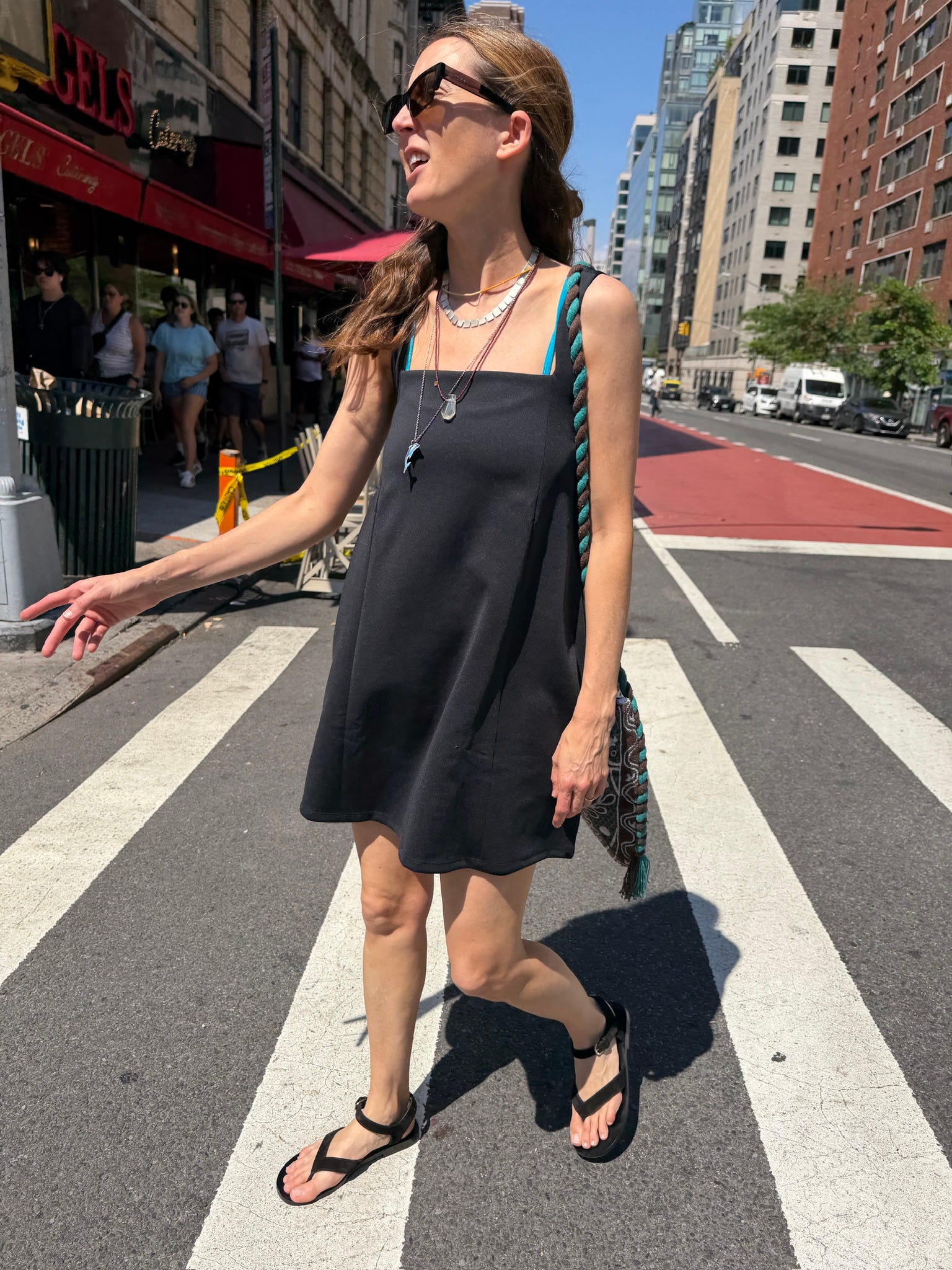
She is also a nice canvas for layering all the necklaces (Ileana Makri, Milne Watson and old Celine here respectively) we collect and then never end up wearing. Layering all my beads and things feels right with this much skin and simple black.
A Perfect White Poplin
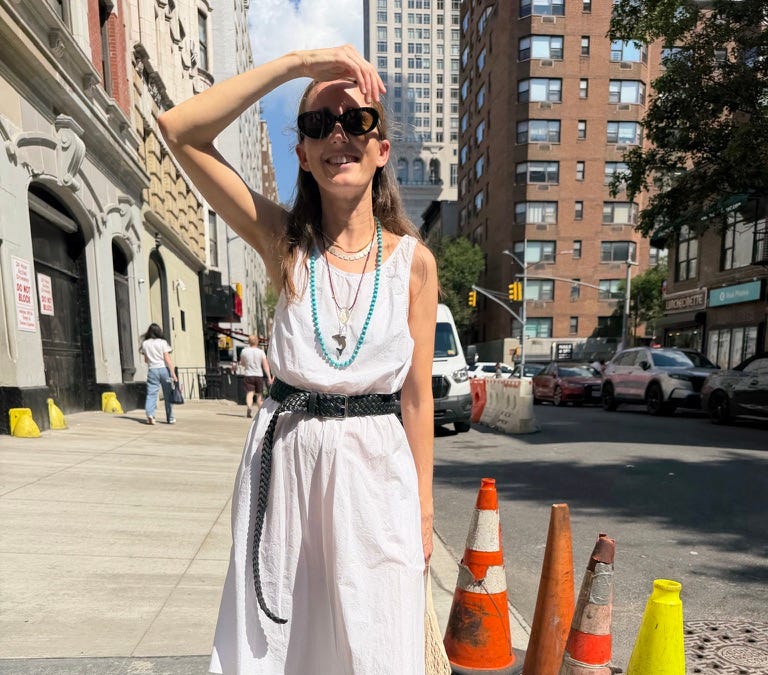
I bought this dress last year after being FORCED to try it on against my will. A friend said – this is the best dress for you, to which I rolled my eyes and whined a little (I think I know my personal style, thank you very much!!) and said I would to humor her but I was “pretty sure it’s not going to work.” Well. I should not have been so cocky friends. This dress is perfect and you better believe I am about to list out all the reasons why:
-
Feminine neckline but not so low it shows any cleavage. CHECK.
-
Hides bra straps. CHECK.
-
Extremely high quality poplin that washes well and more importantly wrinkles well. CHECK.
-
Knee legnth for coverage but not so long and voluminous it becomes intrusive (hate so much fabric that I trip up the stairs or brush against god knows what.) CHECK.
-
Waistband creates a fantastic silhouette and surprisingly (which I learned in hot hot hot Venice last summer) it collects your sweat so the rest of your dress stays dry as you scorch in the dome. 🫠 CHECK.
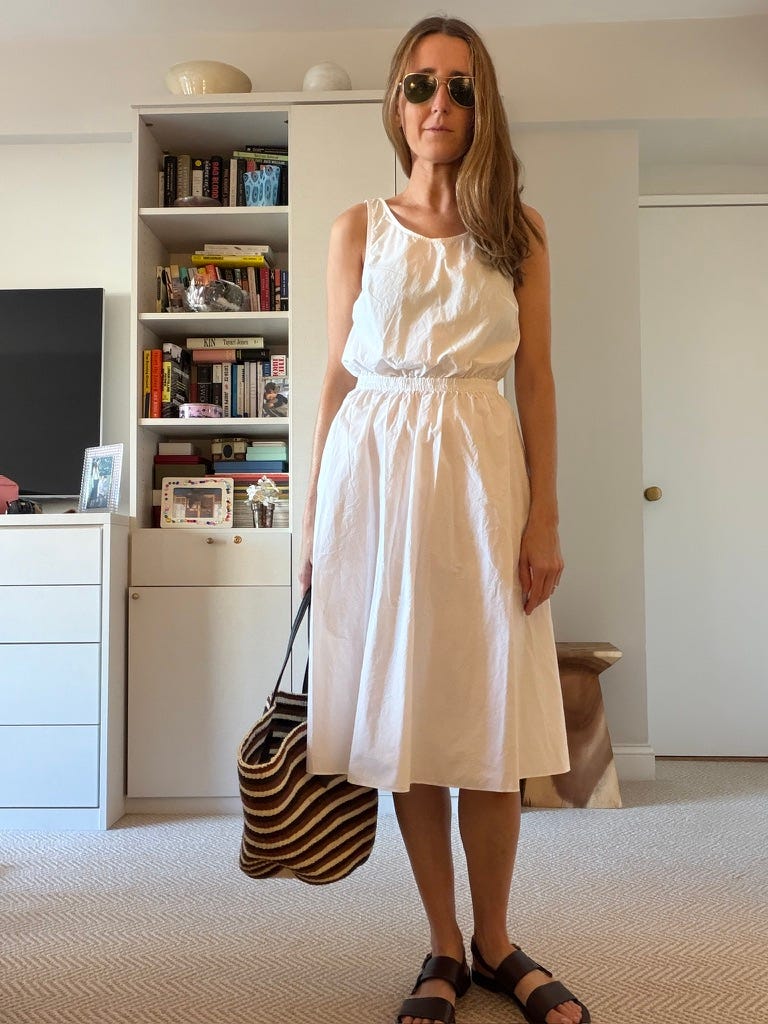
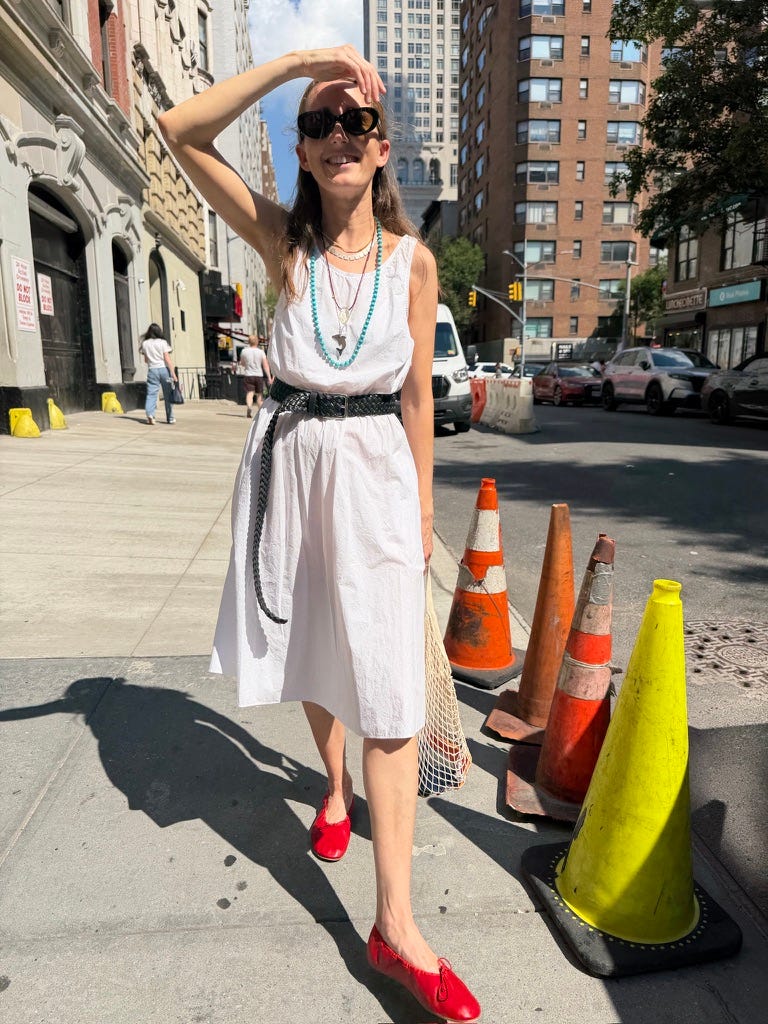
Might I add she is a great blank slate for layering. I love her with a wide belt or maybe try a colorful charvet variety here if you have a pitstop in Paris this summer! Lots and lots of necklaces and fun shoes.
A to-and-from-water throw on
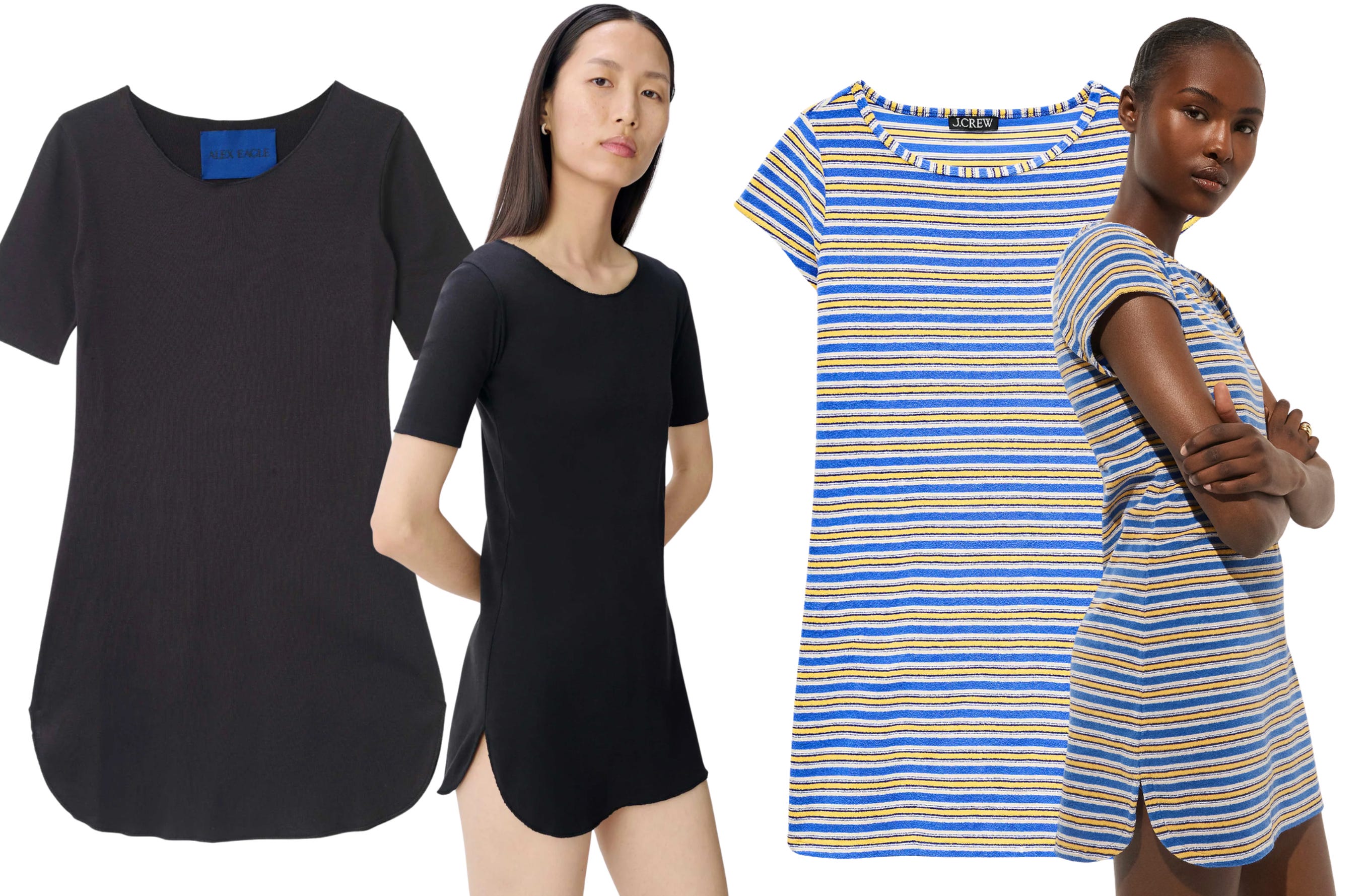
Last weekend I invited myself and my family to my cousin’s Westchester country club for the afternoon, for a dip. Which made me realize this week’s letter must include the to-and-from dress that needs to be washable, unfussy, slightly small and can go from home to pool/beach easily. To me this is some form of t-shirt dress because I don’t want to be wearing a cover up to go get the car from the garage (or run into a gas station, or grocery store, etc.) but I also don’t want to be fully dressed. I wore my striped APC dress that I wrote about in the summer of 2023 but here are two that are equally great available now.
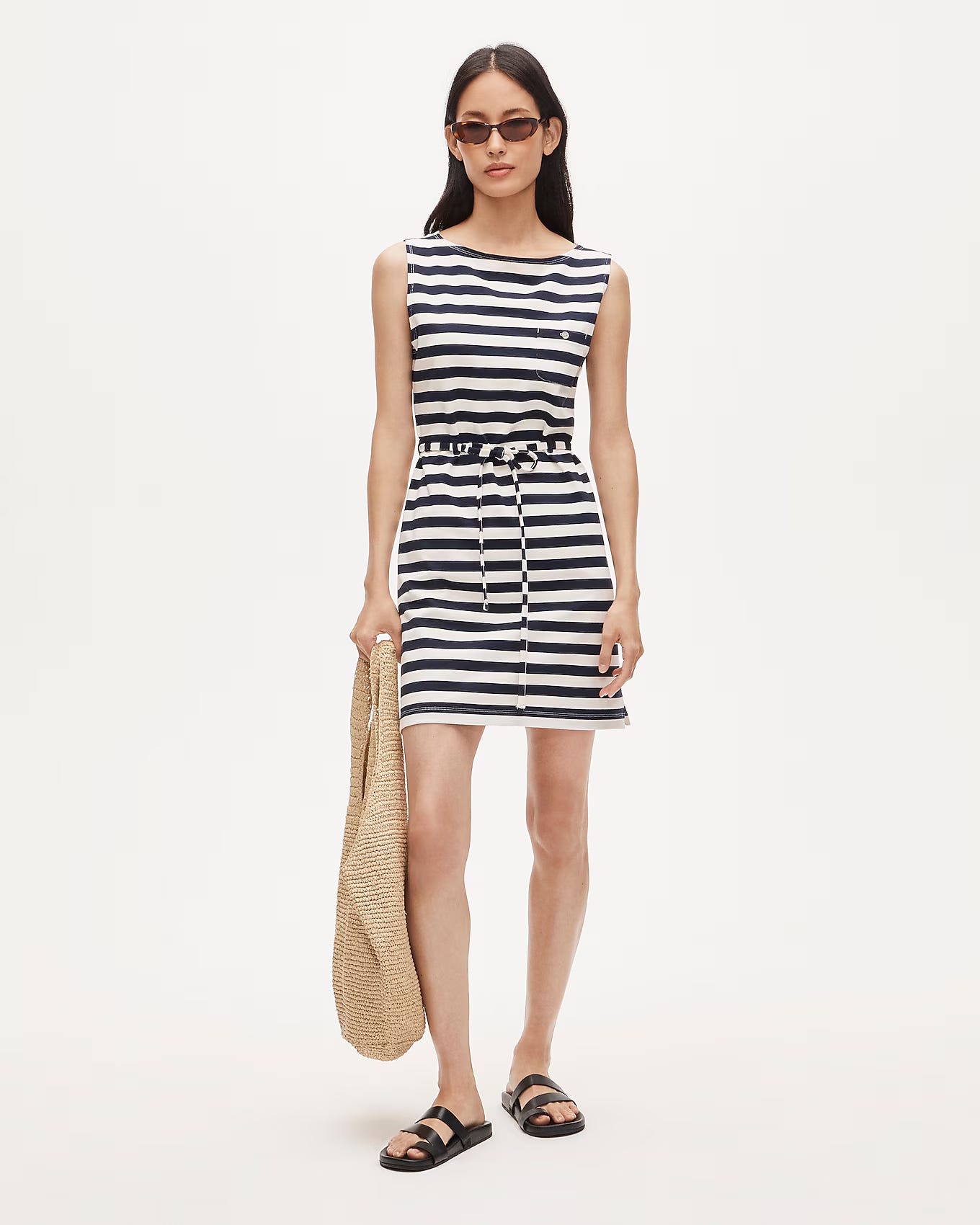
And actually…speaking of J.Crew, if you are looking for something a bit less bum-skimming, she looks beyond easy. That little pocket, and the A-line? Oye, so cute. Put a little flower pin on her or a braided leather belt. Or ditch the belt altogether!
Something that reeks of a criterion collection summer movie
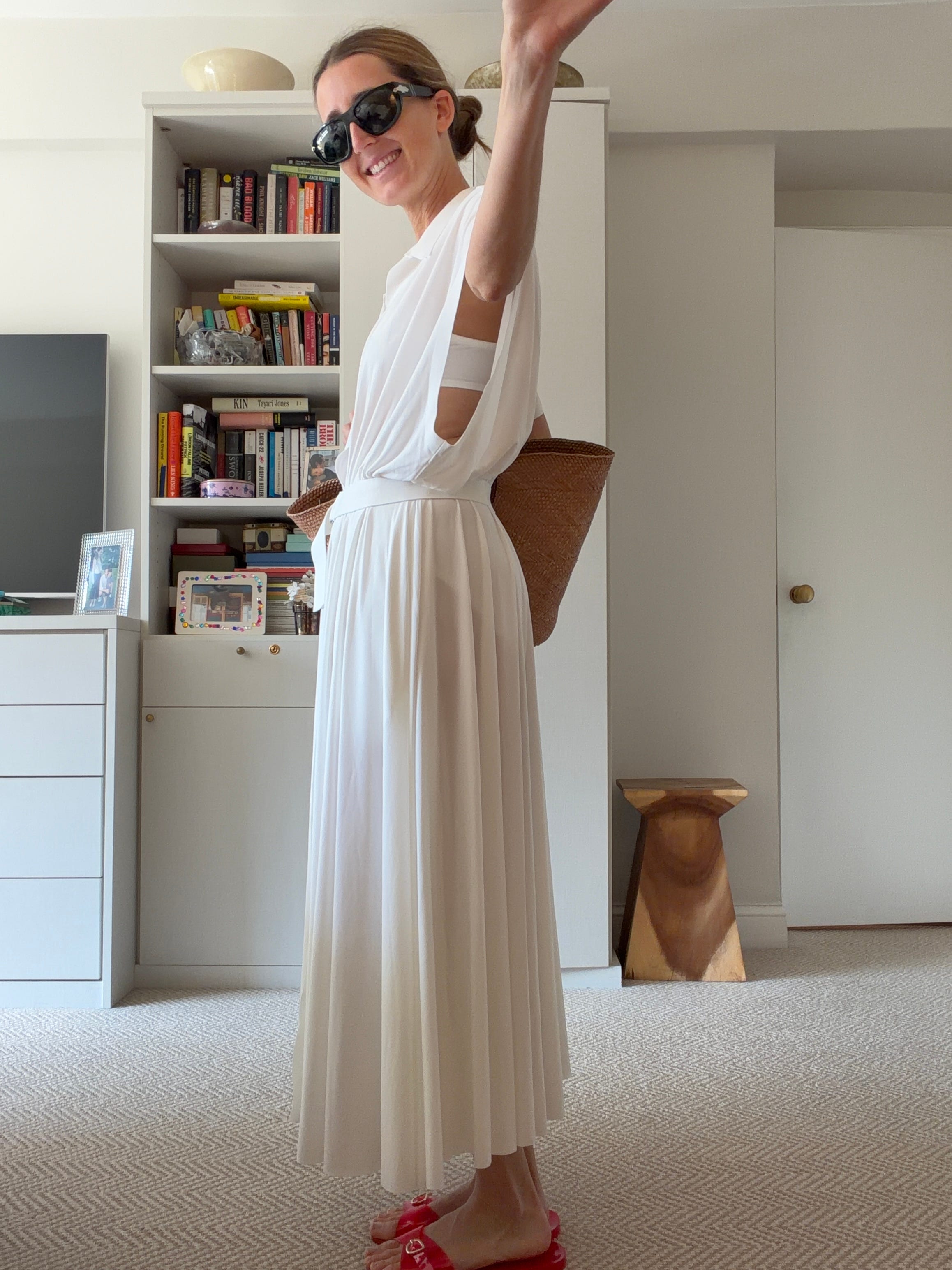
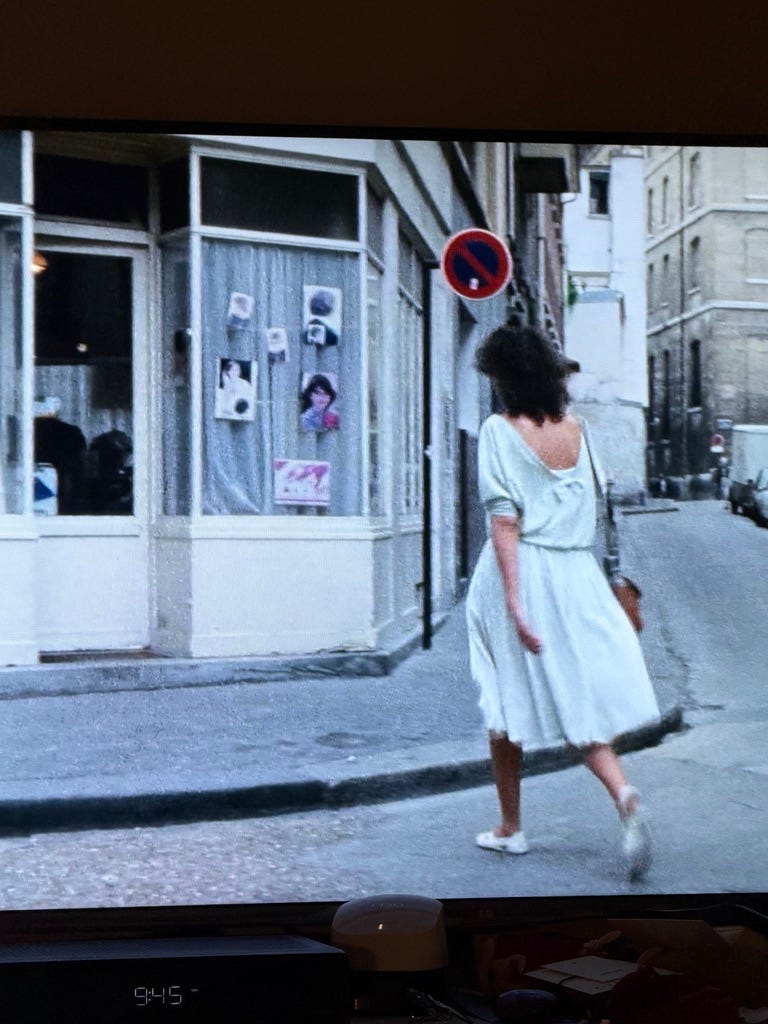
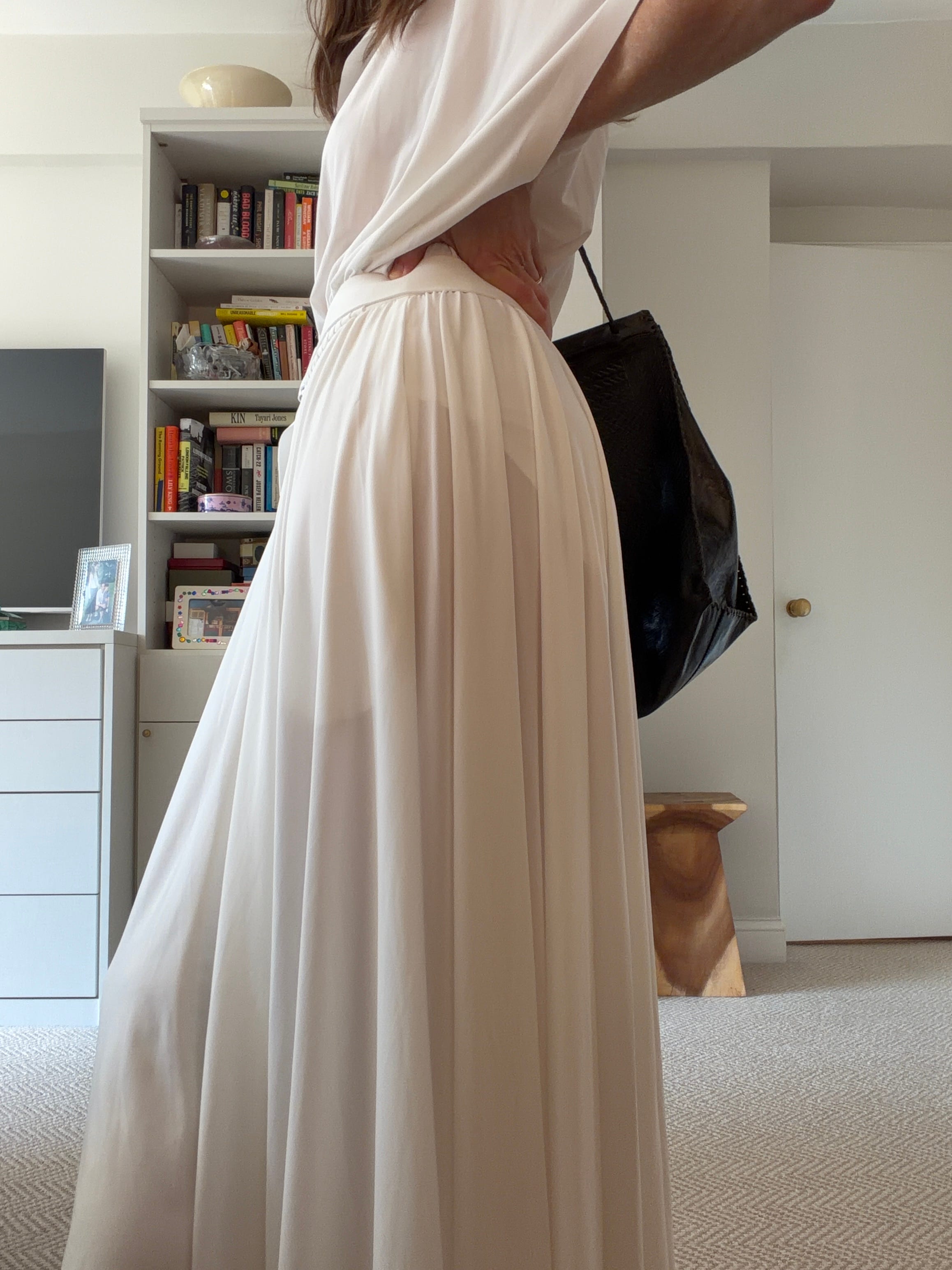
I went down an 80s summer movie spiral last week, staying up way past my bedtime multiple nights. It inspired this purchase of a classic Norma Kamali dress that truly lives up to all my 2026 summer aspirations. It’s slightly cheeky (built in undies!) as the fabric is a little sheer. But fear not, it is made from so much bouncy, gathered fabric that it really doesn’t feel see through. And the tag claims it is washable.
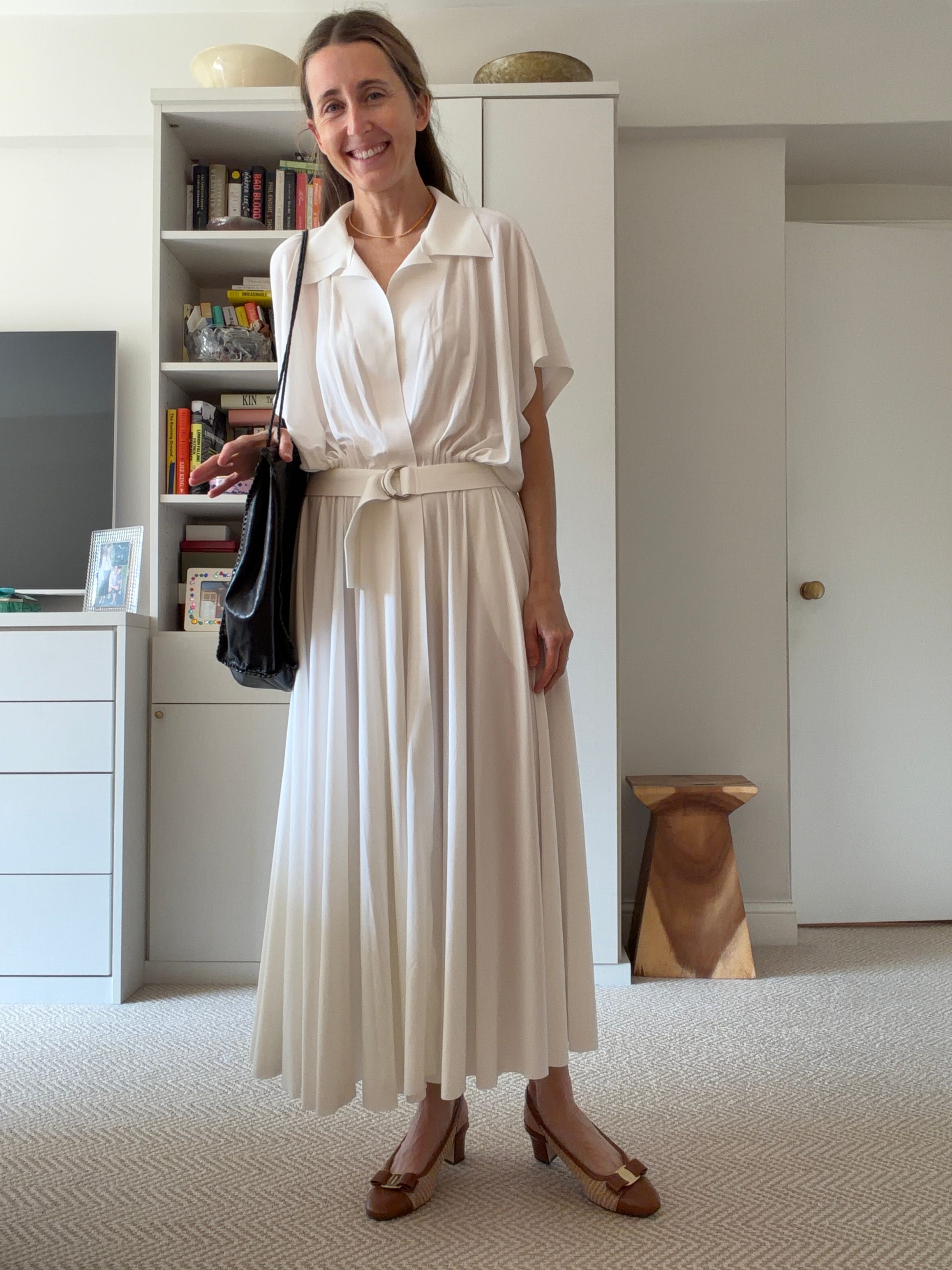
The neckline is weighted so even though it doesn’t fasten (which your tailor could easily do if you insist) it hangs well and not so open unless you really want it to. Big collar, drapey sleeves, ballerina-like in its swooshing when you walk. It’s the summer in the city look I’m AFTER!
A Breathable Tent
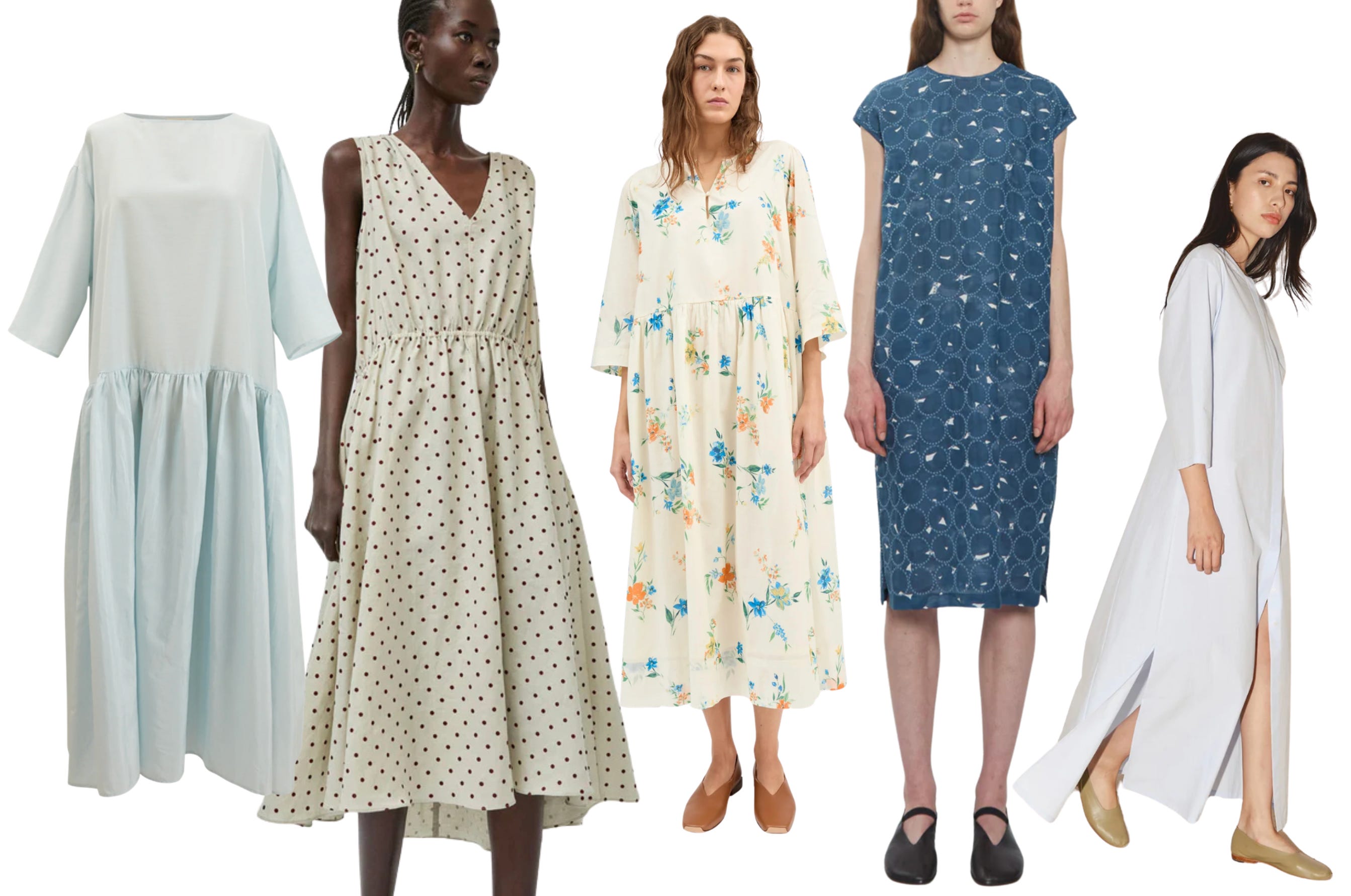
In the vein of Daniela Gregis – the eyewateringly-priced patron saint of the summer tent dress – a pretty, lightweight floral that you can throw on, that feels airy and romantic rounds out our five. My Daniela Gregis tent, which I bought in London two years ago (read: purchased in sterling and almost died at the register even then!!!) still sits in prime real estate in my closet. When I bought it, the shopkeeper showed me how to twist and swirl it into a cinnamon roll to pack it so it comes out of the suitcase with the perfect wrinkles – how fun is that!! I imagine you could do the same with these.
Crumple these up, get them a little wrinkled. Throw them on with Birkenstocks and a basket and have a lovely day.
I love the print on this Skall dress – it’s sophisticated and uncluttered and reads much more French countryside than Love Shack Fancy, if that gives you a visual.
Or try this light as air long sleeve (which you will roll) version from Apuntob. These No.6 polka dots are voluminous but have a cinch at the waist and a v-neck to not swallow you. La Garconne has the most selection and is a great store to learn about brands in this particular category and of course, Datura, another queen of the summer dress makes this full coverage tunic that would look great with a sweater wrapped around the waist.
THE END. Happy Birthday America. God willing we have 100 more. Singing off until next week.
Yours TRULY,
Becky